Delicate Yet Durable Components Support Satellite Connectivity
The smallest satellites fit in the palm of your hand. Larger installations are critical to telecom, datacom, surveillance, and electronic warfare systems. Regardless of size, satellites must be built to withstand the harsh low temperatures of space, the heat and g-forces of launch, radiation and vacuum conditions, and protect the precise instruments inside to deliver reliable data for as long as possible. This reliability comes from rugged interconnects that are ready for orbit.

A group of 29 new satellites joined Starlink’s mega constellation on January 4, bringing SpaceX’s total in the sky to almost 10,000 active satellites. By 2030, NASA expects there will be 70,000 satellites in orbit around Earth, from SpaceX as well other company and government operators. These devices range from palm-sized CubeSats to the 2,400 square foot Bluebird 6, put into low Earth orbit in December 2025 by AST SpaceMobile. (That one’s about the size of a three-bedroom apartment.) Regardless of size, satellites have become an essential tool for Earth’s communications and navigation systems, weather forecasting and scientific research, and surveillance and military operations. To ensure longterm performance and reliability under the harsh conditions of space, connector suppliers are collaborating with space agencies and satellite firms to create powerful new components.
“Our collaboration with customers is based on co-engineering. We are, for example, involved in the development of connectors and cable assemblies with ESA (European Space Agency) and CNES (French space agency), and support programs like ARTES, TRP (ESA), and RT CNES,” said Emilien Fournaise, sales engineer in charge of the space market at Axon’. “We are involved in a large number of space programs, including Galileo, ExoMars, Juice, Solar Orbiter, Sentinel, Meteosat, Maven, SWOT, and more.”

AXON’ supplies wires and cables used in the internal cabling of electronic boxes and LEO satellites in compliance with ESA standards. From single core hook-up wires to coaxial cables and data bus cables, these products are lightweight and highly resistant to meet the challenging requirements of launchers and satellites, like Gaia, Proba-V, and Sentinel.
The French company has a long history of supplying precision cables and connectors to satellite projects. “Axon’ components are used in all types of satellites operating in GEO, LEO, and MEO orbits. They are in communication satellites, earth observation satellites, and scientific satellites. Our components are also onboard satellite constellations.”
Axon’ is the only interconnect provider in a consortium of six European organizations working to develop a disruptive electrical propulsion power processing unit for gridded ion thrusters for GEO, MEO, and deep space missions. By integrating a radio frequency generation unit within the power processing unit, the electric propulsion system will be simplified and the overall costs will go down, said Fournaise. He says that it will accommodate gridded ion thruster (GIT) systems in platforms currently implementing Hall-effect thrusters (HET), which control the orientation and position of orbiting satellites.
“As our strategy is based on vertical integration of conductors, cables, cable assemblies, connectors and mini-systems, we offer complete interconnect solutions, which is a real added value for customers. One of our next objectives is to contribute to the European IRIS satellite constellation.”
Other Axon’ interconnects used in satellite equipment include Micro-D connectors, ESA wires, Axomach high data rate links, Versatys power connectors, and optical fiber solutions with MT ferrules, said Fournaise. The company is launching a new range of fast-locking SnapLite connectors, available in 2 or 4 ways and with dismountable lines. An ESCC specification has been issued by ESA for the products. “They were originally developed to replace splices to interconnect wires. but their use is ideal for space-constrained applications like satellites,” said Fournaise.
Amphenol Pcd supplies components to Small Low Earth Orbit (LEO) satellites for companies like MDA Space, SpaceX. A range of interconnects and adjacent products like brackets and snap-in rivets help engineers replace heavy, expensive metal parts with injection molded plastics.
“Amphenol engineers meet with customers to discuss requirements needed. Designs are proposed and using Amphenol’s Rapid Part Development (RPD) process, the team 3D prints a cavity to mold low volume production grade parts within weeks of design freeze,” said Randy Gautreaux, product manager at Amphenol Pcd. “Using production grade parts, confidence tests are made, customers are able to do fit checks before committing to larger volume orders. The RPD process saves time and resources to finalize a new design.”
Modified standards and tried-and-tested interfaces
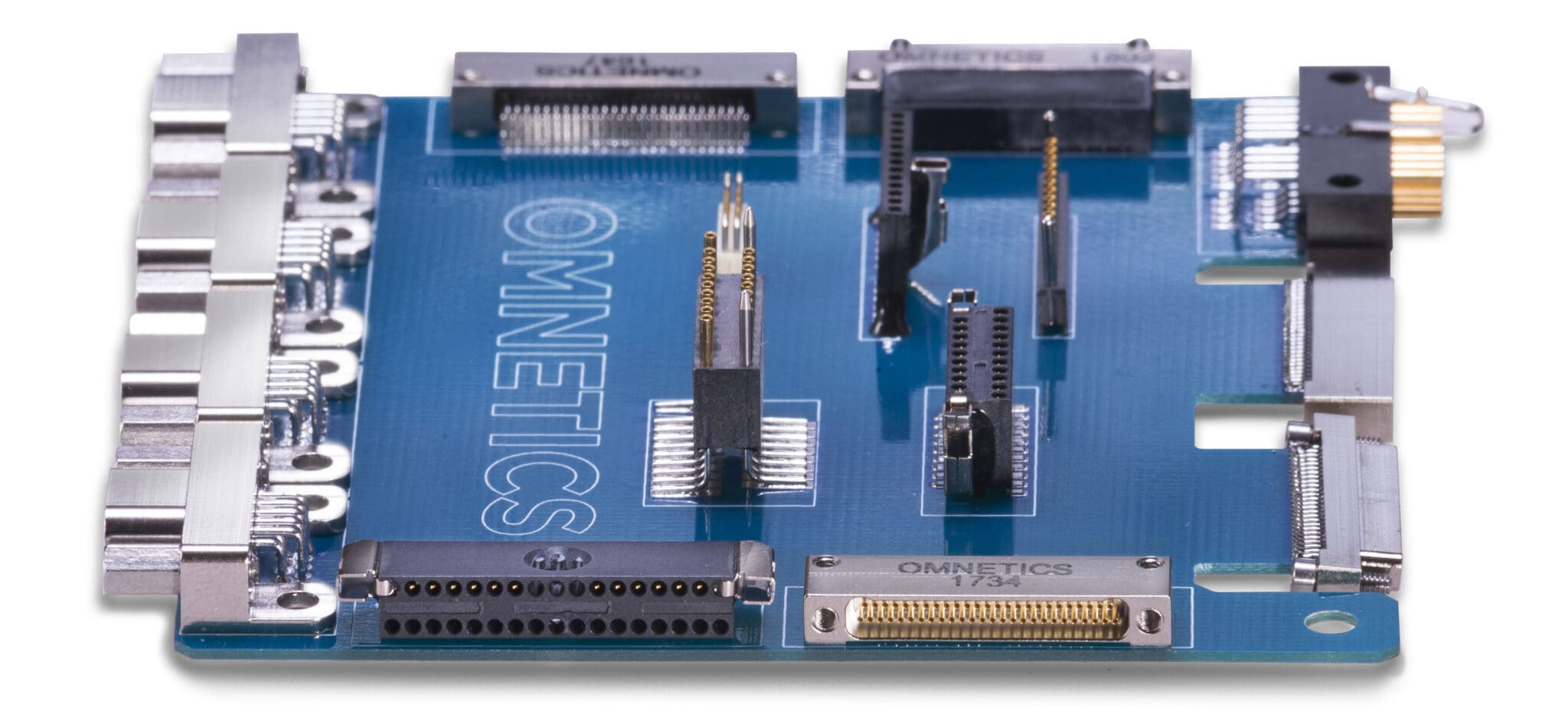
Omnetics has been involved in the satellites industry for decades, supplying high reliability interconnects for commercial, military, and research equipment ranging from CubeSats to large satellites. “They aren’t sending up ‘school bus’ satellites anymore, but after years of focus on ultra-small, the size is starting to migrate back up to larger craft,” says Travis Neumann, engineer at Omnetics.
A combination of factors favor larger satellites, including a resurgence of interest in more durable, high-reliability, and “rad-hard” components that contribute to longer lifespans. Longer lifespan of devices in orbit contributes to space junk, and deorbit becomes a front running topic. Recently there’s been a push from a 25 year deorbit schedule to 5 years, and some wanting even less. “There was a period in which many various entities were building satellites using fairly cheap materials with the idea of anyone can build a satellite out of parts from the local store. Well, for every 100 satellites put up, only 30 were actually successful on their deorbit timeline. Some of those entities didn’t have the same standards as NASA, for example, with testing and conformity,” said Neumann. “Now the industry is facing a huge problem with non-functional space junk creating hazards.”
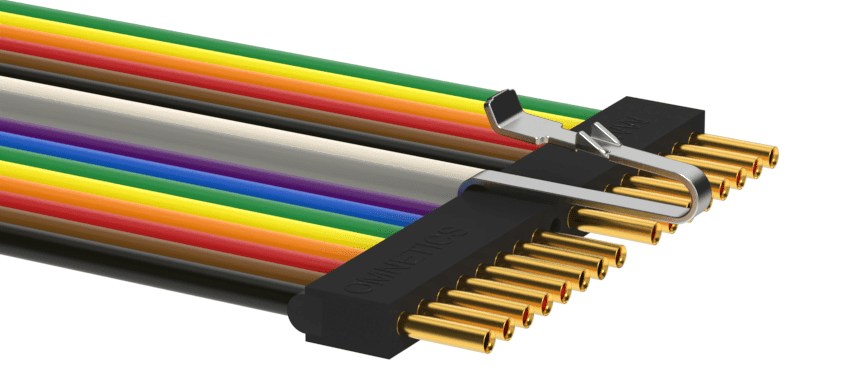
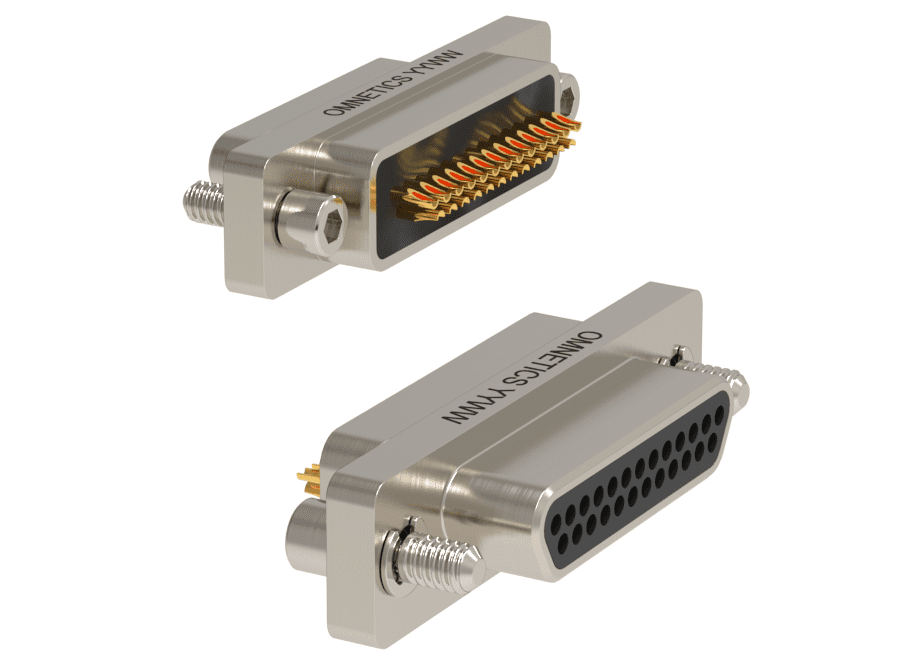
The interconnects that Omnetics is supplying for satellites include micro-strips, small D-subs, and custom harnesses with features like strain relief and braided shielding to protect against interference and radiation. These are tried-and-true products, but there is room for adjustments. “We call them ‘modified standards,’” says Scott Unzen. “These products can provide the precision and reliability assurance of a standard but there is room to meet specific needs. We are doing things that extend product life, such as exterior shielding, radiation shielding, and materials like gold plating or beryllium. “If you can extend the product lifespan, that longevity equals value, because it costs a lot of money to break gravity. The longer you can keep a satellite up and functioning, the more cost-effective it is. Some missions are only intended to be short-term, but others can last for 20 or more years, and we can help achieve that through better components.”
The satellite industry is still growing with a lot of opportunity for innovation, says Unzen. Omnetics is watching trends such as the inclusion of lasers on satellites, new launch vehicles and propellants, and military efforts to develop mesh networks over battlefields for greater situational awareness. “At the satellites shows, we see a lot of new ideas. One company is growing diamonds to spec to use as heat sinks. Another is proposing literally selling sunlight through a solar array on a satellite. Ideas that could help equipment refuel in orbit supports building for longevity.”
“Everyone is trying to develop the next best thing, or at least the most widely adopted thing,” said Neumann. “It comes down to VHS or Beta. Beta was a better technology, but VHS had more movies. Adoption rate might be more important than engineering in terms of market share. But high reliability components that can handle ‘space weather’ and deliver on data rates are really important to product functionality, durability, and longevity.”
To learn more about the companies mentioned in this article, visit the Preferred Supplier pages for Amphenol Pcd, Axon’, and Omnetics Connector Corporation.
Like this article? Check out our other Ruggedized, Harsh Environment and High-Reliability articles, our Military and Aerospace Market Page and our 2025 and 2026 Article Archives.
Subscribe to our weekly e-newsletters, follow us on LinkedIn, Twitter, and Facebook, and check out our eBook archives for more applicable, expert-informed connectivity content.

- Connectivity Is Reshaping Police and Security Vehicle Fleets - September 8, 2026
- Thermal Management Strategies with Liquid Cooling Connectors - August 11, 2026
- Rodent-Resistant Electronics - July 28, 2026