EU Battery Regulation Prompts Design Changes for Battery Connectors
Regulation (EU) 2023/1542 is the EU’s comprehensive batteries regulation, covering safety, ease of use, labeling, and sustainability for batteries and the products they power. Battery connectors are part of the compliance picture.
Regulation (EU) 2023/1542 is the EU’s comprehensive batteries regulation, covering sustainability, safety, labeling, and end-of-life management for all battery categories, including consumer, electric vehicle, and industrial. The regulation entered into force in August 2023 and will be fully applicable on February 18, 2027. It mandates that batteries for product types, including phones, be replaceable with third-party batteries, rather than glued in. It is estimated that its implementation will reduce electronic waste and save consumers up to €20 billion by 2030.
While the regulation doesn’t regulate connectors directly, it regulates battery-containing products and impacts battery connectors through provisions around the installation and replacement of batteries, putting the impetus on OEMs to specific interfaces that will support the regulation’s focus on usability, safety, and sustainability. This emphasis on user experience is leading to a new generation of compliant battery connectors.
User interface improvements
Regulation (EU) 2023/1542’s most direct impact is defined in Article 11, which addresses removability and replaceability. According to the article, any battery-powered products for sale in the EU must be designed so the end user can easily remove and replace the battery. When tools are necessary to do this, they must be commercially available rather than specialized tools, and replacement must be possible without damaging the battery or the product, whether by a consumer or a qualified professional. Battery connectors are key to this functionality, and new battery connector development activity is now responding to this regulation with designs that emphasize ease of use and maintainability.
“We believe that this new regulation will significantly impact product design, including the exterior design and dimensions,” said Yuki Koyama, Senior Connector Design Engineer at SMK Electronics Corporation. “We may not be able to propose B2B or W2B connectors depending on the number of mating cycles required by the customer. This is because the mating durability of these connectors is basically rated for 10 cycles or fewer as a guideline. Therefore, other leaf-type or plug-in type connectors might become the mainstream again.”
SMK does not manufacture a standard battery connector interface; instead, it develops and manufactures compact battery connectors as custom items to comply with the specific product and regulatory requirements. “Examples of structures that improve workability for end users include a large mating lead-in structure to absorb misalignment, a robust design that does not easily break even under heavy loads during misinsertion attempts, mis mating prevention, and electric shock prevention,” he said. “Of course, other examples include increasing the number of mating cycles, as well as being able to confirm that the connector is correctly set through the locking feeling and click sound during mating.”
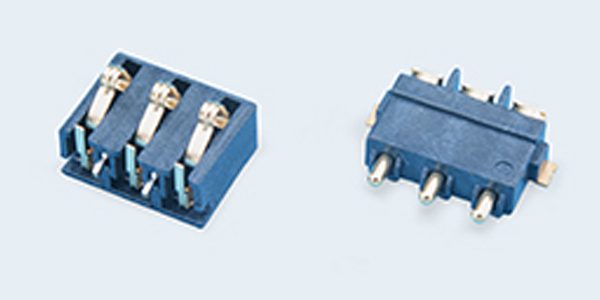
SMK offers a variety of connectors for battery packs with user-friendly connection interfaces including leaf type, pogo pin type, and plug-in type.
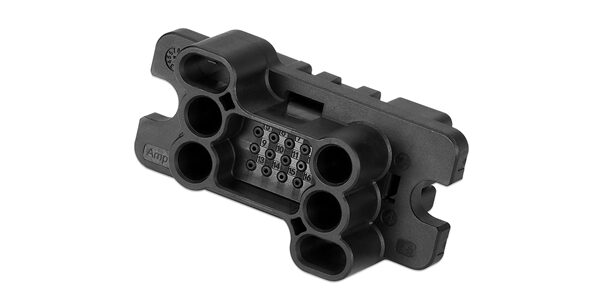
Amphenol Industrial Operations’ Floating Mate Connector Series is a new high-current hybrid interface engineered for modular battery architectures with drawers, slide-in power shelves, or energy modules. This connector supports easy repeatable insertion and removal with a design that combines high-voltage power contacts and low-voltage signal positions in a single connection point. It is intended for fast, easy, repeatable battery insertion, and removal. Finger-proof (IP2XB) power interface protection also makes user safety a priority.
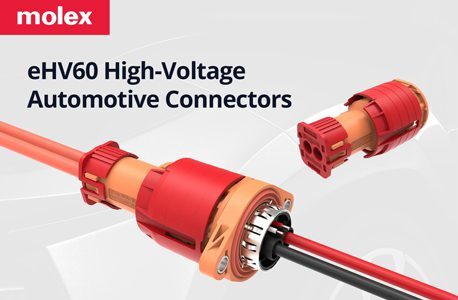
The eHV60 system for the EV market provides straightforward mating, system-level integration with Molex busbars, battery interconnects, cables, custom headers, and 48V automotive systems. This non-proprietary interface is compliant with the EU regulations and compatible across vehicle makers.
Amphenol, Molex, TE Connectivity, Rosenberger, and Phoenix Contact have designed new connectors for EV battery modules, prioritizing compliance with (EU) 2023/1542’s usability, safety, and sustainability. As the EV market continues to see rapid adoption in the EU, this regulation will help vehicle owners and repair specialists facilitate safe, convenient battery maintenance. It will also enable more battery materials to be diverted from the waste stream and recaptured for recycling.
Consumer-level battery access
The portable device market is heavily battery powered, and in recent years, consumers have been frustrated with battery interfaces that are inaccessible or filled in with glue, leading to early product end life and escalating e-waste volumes. Now connector suppliers are helping manufacturers meet the regulation’s mandate for replaceability with re-mateable, tool-accessible, non-proprietary battery connector interfaces that serve the whole product spectrum.
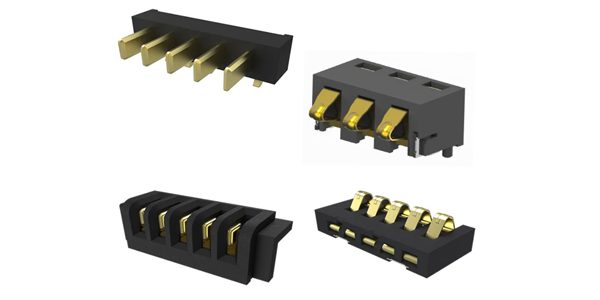
Amphenol FCI’s Basics Battery Connectors are designed for smart home devices, medical devices, and rugged handhelds. With spring and blade types in 2.0 to 4.6 mm pitch supporting up to 10A, these connectors comply with Article 11’s end-user replaceability mandate.
Battery connector interfaces that prioritize usability include leaf, plug-in, ID/crimp, pogo pin, and FPC-to-battery formats. These, combined with an access panel or cover, enable users to remove and replace batteries using common tools — a huge development that addresses the desires of the hobbyist and self-empowered product owner as well as the professional repair community. While the regulation is focused on the EU market, companies that wish to access the rest of the world’s market will follow the course set by this regulation in order to simplify manufacturing.
To learn more about the companies mentioned in this article, visit the Preferred Supplier pages for Amphenol Communications Solutions, Amphenol Industrial Operations, Molex, TE Connectivity, Rosenberger, and Phoenix Contact.
Like this article? Check out our other Standards and Batteries articles, our Connector & Cable Special Topics Market Page and our 2026 Article Archives.
Subscribe to our weekly e-newsletters, follow us on LinkedIn, Twitter, and Facebook, and check out our eBook archives for more applicable, expert-informed connectivity content.

- Connectivity Is Reshaping Police and Security Vehicle Fleets - September 8, 2026
- Thermal Management Strategies with Liquid Cooling Connectors - August 11, 2026
- Rodent-Resistant Electronics - July 28, 2026