5 Key Benefits of Modular Connector Platforms in High-Speed Aerospace Applications
Connector modularity lets engineers dynamically scale SWaP requirements to their needs while maximizing maintainability through field serviceability.

Article Contributed By Clint Schlosser, Product Manager, Winchester Interconnect
For the emerging small-satellite industry servicing LEO constellations as well as the UAS sector, development teams are often faced with two competing goals: designing to highly demanding performance specifications or building systems that can be produced quickly to keep pace with aggressive launch schedules.
But what happens when these demands aren’t mutually exclusive and your system needs to meet changing mission requirements after it’s in the field? The ability to dynamically reconfigure your hardware to fit your application can be the difference between leading the market or falling to the wayside. Connector modularity lets engineers dynamically scale SWaP requirements to their needs while maximizing maintainability through field serviceability.
Read on for five ways modularity is changing the future of aerospace connectors.
-
Faster time to market
Field-programmable gate arrays, small-size form factors, and next-generation protocols are just a few factors driving innovation in small-sat and drone development. Traditional fixed connector interfaces aren’t agile enough to keep pace with the rapid R&D cycles these programs are used to.
Instead, you can use modular connectors to:
- Eliminate qualification bottlenecks. Update individual signal, power, or data modules without having to redesign the entire interface.
- Enable agile prototyping. Adjust your connections on the fly throughout the design process.
- Future proof with standard footprints. Support multiple vehicle configurations by swapping modules inside a common housing.
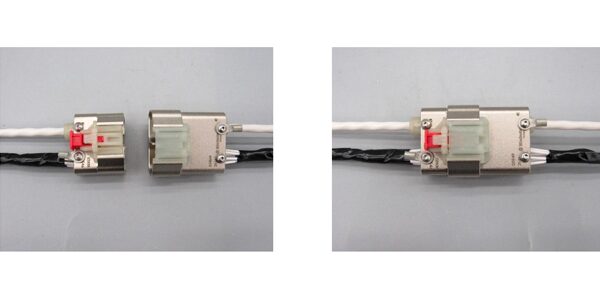
Winchester Interconnect Modulus inline and header
-
SWaP without compromise
Size, weight, and power have always been king in the satellite and drone industries, but legacy approaches to balancing these three variables typically required compromise on one (or more) of your system’s primary performance markers.
Thankfully, module-based platforms allow you to customize your connectivity to your application by:
- Consolidating connections. Fit more function in less space by combining high-speed data and power throughput in a single connector footprint.
- Balancing density with flexibility. Swap out modules to increase or decrease pin count rather than using a single connector with wasted real estate.
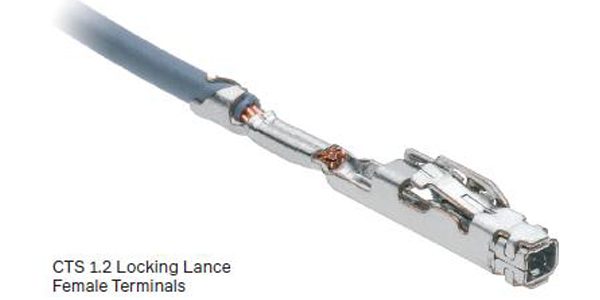
- Align connectors with payload resources. Today’s FPGA-based payloads have complex power and signal needs.
Build connectors that support these advanced payloads, not hinder them.
-
Field serviceability for mission assurance
When it comes to defense and commercial drones, there is no such thing as being out of service for “too long.” But if your drone suffers connectivity issues in the field, traditional connector solutions require you to ship back to the manufacturer for repairs.
Instead, you can design for field serviceability and:
- Swap out connector mModules. Replace individual pins or arrays without disassembling the entire unit.
- Repair within the hangar. Keep critical drones in-service by repairing them on-site or at your hangar.
- Reduce total cost of ownership. Miniaturization has increased reliability across the industry.
- Add shielding on critical links. By having both shielded and unshielded modules inside a lightweight housing, total system optimizations are now feasible without over customization.
Choosing component repairs over a full replacement ensures you avoid discarding perfectly viable hardware unnecessarily.
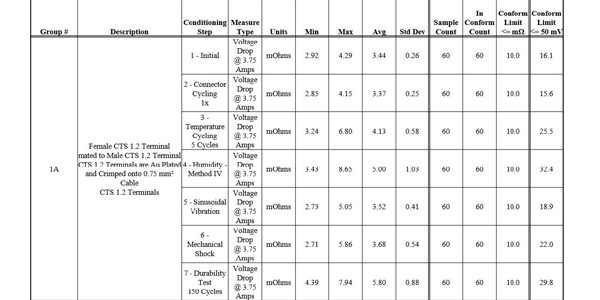
Modulus Test Data
-
Inventory management for sat constellations
While it’s rare that every satellite in your constellation is identical, UAS platforms frequently have multiple variants of the same airframe tailored to particular market needs. Saving three grams on one version of your drone isn’t going to matter if you’re maintaining hundreds of unique connectors for every customer configuration you offer.
Embrace connector modularity and:
- Streamline logistics with universal housings. Purchase standard connector housings and purchase modules which customize each payload’s connection requirements.
- Prepare for obsolescence. Whether your applications require legacy signals or upgrading to SPE or even fiber optic connections, having a modular connector makes it easy to upgrade to new tech without replacing your entire connection ecosystem.
-
Built tough… not bulked up
There’s a myth in the aerospace industry that if it’s not ruggedized, it’s not ready for deployment. Many traditional aerospace connectors come loaded with legacy capabilities that your commercial satellite or drone program doesn’t need. The end result? You’re stuck trying to shed weight and cost from the rest of your build.
Luckily, there’s no need to compromise quality for modularity. Benefit from:
- Built for purpose reliability. Get the ruggedization you need without legacy features that drive up cost.
- Automotive-inspired value. By leveraging high-volume manufacturing principles, modular platforms deliver aerospace-grade performance at a price point that supports the scalability of commercial programs.
Connectors aren’t just another component on your drone or satellite; they’re the critical linkage between form, function, and future scalability. By building your swarm with modularity in mind, you’ll give your program the tools it needs to stay competitive in an industry that keeps getting more crowded by the day.
The learn more about solutions for satellites and drones, visit Winchester Interconnect.
Like this article? Check out our other High-Speed and Miniaturization articles, our Military and Aerospace Market Page and our 2025 and 2026 Article Archives.
Subscribe to our weekly e-newsletters, follow us on LinkedIn, Twitter, and Facebook, and check out our eBook archives for more applicable, expert-informed connectivity content.

- A Five-Layer Clad Solution for High-Performance Battery Interconnects - October 6, 2026
- High Voltage Interlock for Commercial Vehicles: A Must-Have or a Nice to Have? - September 29, 2026
- Case Study: A Partnership to Improve Rail Health - September 29, 2026