AI and Automation Converge in Cognitive Robots
Robots offer transformative functionality to harsh environments. In situations such as the battlefield, radiation zones, and space, robots can accomplish tasks that would be dangerous or impossible for humans. Add in AI, and they become able to analyze, adapt, interact in intelligent ways.
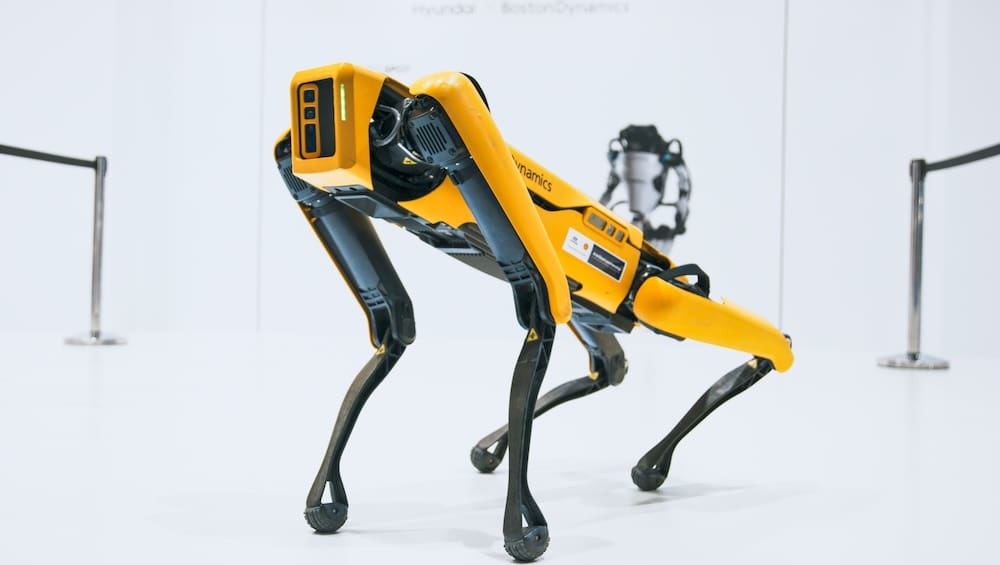
The latest development in the rapidly evolving field of automation is cognitive robots, a powerful combination that embeds the analytics functions of AI technologies into automated equipment. Robots, whether they take the form of a grabber arm, a drone, a vehicle, a tactical dog, or a humanoid assistant, can endure conditions a human cannot, making them ideal for repetitive or dangerous tasks in military, space, and industrial environments. They can handle temperature extremes, pressure, radiation, and noise. They can carry gear, ammo, and supplies. They can conduct surveillance and reconnaissance missions. They are ideal for dangerous tasks such as bomb disposal. In situations that could injure or kill a soldier, sending in a robot has become a better alternative. Now, with the addition of AI technology to make these robots “cognitive,” they can become more useful and powerful than ever.
Advanced interconnects enable robots to move with agility and precision, for extended operating times. Connectors used in robots must be rugged to endure repetition, shock, and motion. The miniaturization of high-reliability robots has enabled robots and automated technologies to advance.
Advanced interconnects enable robots to move with agility and precision, for extended operating times. Connectors used in robots must be rugged to endure repetition, shock, and motion. The miniaturization of high-reliability robots has enabled robots and automated technologies to advance. Cognitive robots that have a human form factor are already in production in countries like the U.S. and China.
Rosenberger is a longtime leader in creating connectors and cable assemblies for automated and autonomous technologies, with the goal of delivering functionality even in harsh environments. Its RoProxCon contactless interface is a mainstay for robotics engineers and its integrated into applications with high environmental requirements, such as autonomous mobile robots (AMRs) with high payload capacities.
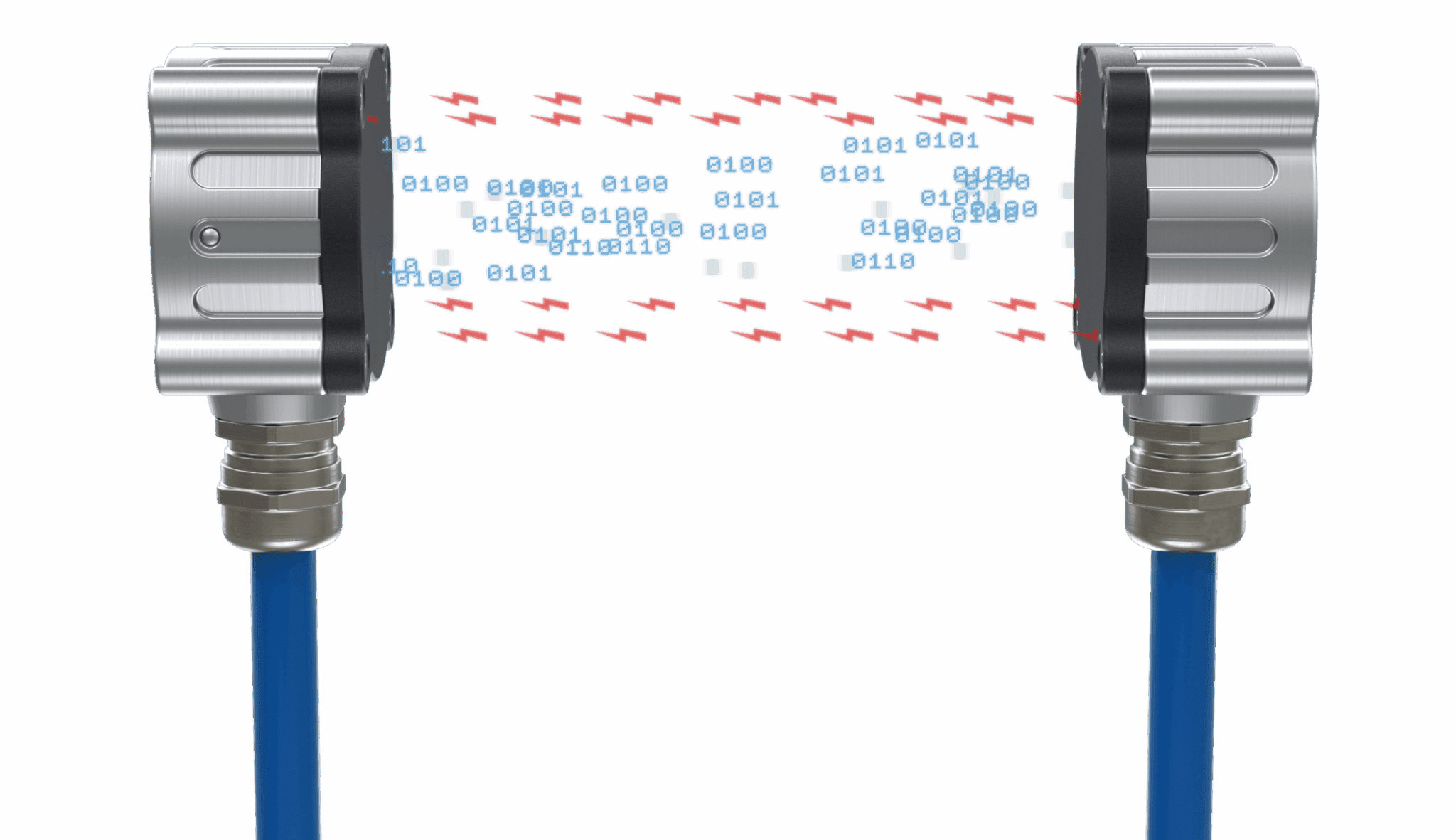
RoProxCon contactless connectors from Rosenberger offer the ability to transmit power and data over short distances without relying on physical connections. In environments where traditional connectivity is compromised by vibration and dust, the contactless solution proves to be extremely reliable.
Now Rosenberger has joined NEURA Robotics, a German manufacturer specializing in cognitive robots, in a partnership to develop advanced machines that use sensory input and AI to make decisions and take actions based on various inputs. This summer, at Rosenberger HQ in Fridolfing, the connector manufacturer held a RoProxCon workshop that introduced NEURA’s engineers to complex integration topics that can be solved through interconnects, from interface design to data transmission reliability to ways to leverage AI to enhance, rather than replace, human capabilities. In addition to exploring the RoProxCon connector family, Rosenberger offered insights into cable issues, particularly dual-channel setups for EtherCAT and Ethernet, and looked at ways to minimize cable dependencies. Cognitive robots that have a human form factor are already in production in countries like the U.S. and China.
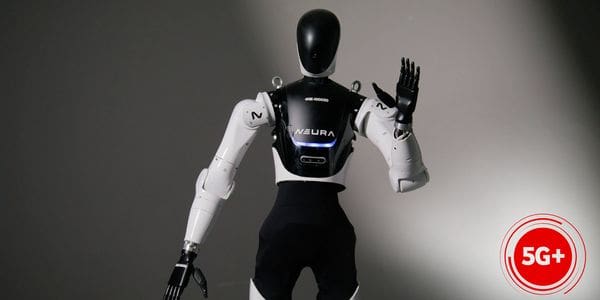
NEURA’s cognitive robot
AMRs are now widely deployed in military operations as well as industrial environments. These durable robots assist soldiers by handling heavy gear in difficult terrain, enabling the human soldiers and workers to take on the tactical aspects of the mission or job while the robots relieve them of the physical wear and tear. In addition to providing rugged performance, these connectors utilize RoProxCon Data to establish high-speed Ethernet links with auxiliary modules like load carriers or collaborative robotic arms.
Beyond the Battlefield
Cognitive robots have a place in non-hazardous, civilian environments as well. Vector 2.0 AI Robot companion is designed to interact with humans with “emotion” by using a combination of facial recognition, artificial intelligence, and data recognition to get to know the habits and mannerisms of its human colleagues. This enables it to become a better companion.
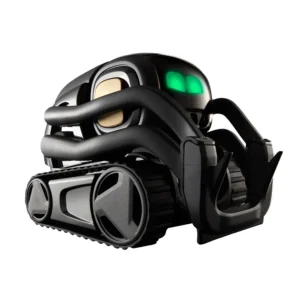
Vector
“Vector has what we call an ‘emotion engine,’ The emotion engine is basically how Vector decides how he should be feeling at all times. We have a few different moods that we are simulating at all times, and they are impacted by what’s happening in his surroundings,” said Brad Neuman, technical director of AI at Vector, in a collaboration with Mouser Electronics. “The idea is that the stimulation level kind of tracks the amount of activity in the room.”
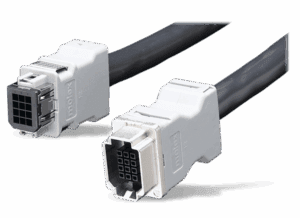
Molex’s Compact Robotic Connectors (CRC), available from Mouser, serve industrial equipment, military/aerospace vision systems, data/communications vision systems, and other automation applications in a compact design that takes up about 1/15th of the space of traditional industry standard connectors.
Molex, along with Analog Devices, Intel, and Microchip Technology, are collaborating to bring “personality” to cognitive robots to make them easier to integrate into consumer environments. “The highest order of innovation in robotics is true artificial intelligence where robots can think on their own,” said Glenn Smith, President and CEO of Mouser Electronics. “We are now watching this technology jump from the labs and into our homes.”
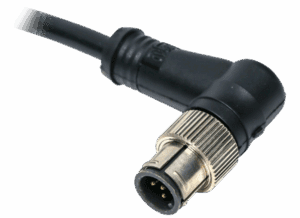
Brad MX-PTL M12 Cordsets from Molex surpass the performance and reliability of traditional threaded connectors and facilitate quick connections to I/O blocks. They serve robotics applications, vision systems, sensors, and more.
Vector is able to perceive the number of people in a room and act accordingly. As sensors and processors become cheaper and more powerful, these cognitive robots will become more capable and more powerful. Mouser’s Generation Robot, a five-part series that introduces the next era of robotics, explores some of the ways cognitive robots are changing work and life.
To learn more about the companies mentioned in this article, visit the Preferred Supplier pages for Molex, Mouser Electronics, and Rosenberger.
Like this article? Check out our other Automation and Artificial Intelligence articles, our Military and Aerospace Market Page and our 2025 Article Archives.
Subscribe to our weekly e-newsletters, follow us on LinkedIn, Twitter, and Facebook, and check out our eBook archives for more applicable, expert-informed connectivity content.

- Connectivity Is Reshaping Police and Security Vehicle Fleets - September 8, 2026
- Thermal Management Strategies with Liquid Cooling Connectors - August 11, 2026
- Rodent-Resistant Electronics - July 28, 2026