High-Performance Semi-Rigid Coaxial Cables Target Mil/Aero Applications
Capable of transmitting RF signals from DC to 40 GHz from antenna to receiver, semi-rigid coaxial cables and assemblies ensure optimal performance, reliability, and durability in a broad range of mission-critical military and aeronautical systems.

Article Contributed by CDM Inc.
Semi-rigid coaxial cables and assemblies ensure optimal performance, reliability, and durability in a broad range of mission-critical military and aeronautical systems. Capable of transmitting RF signals from DC to 40 GHz from antenna to receiver, these components are provided in a broad range of impedances and materials, as well as complying with all current environmental and industry standards.
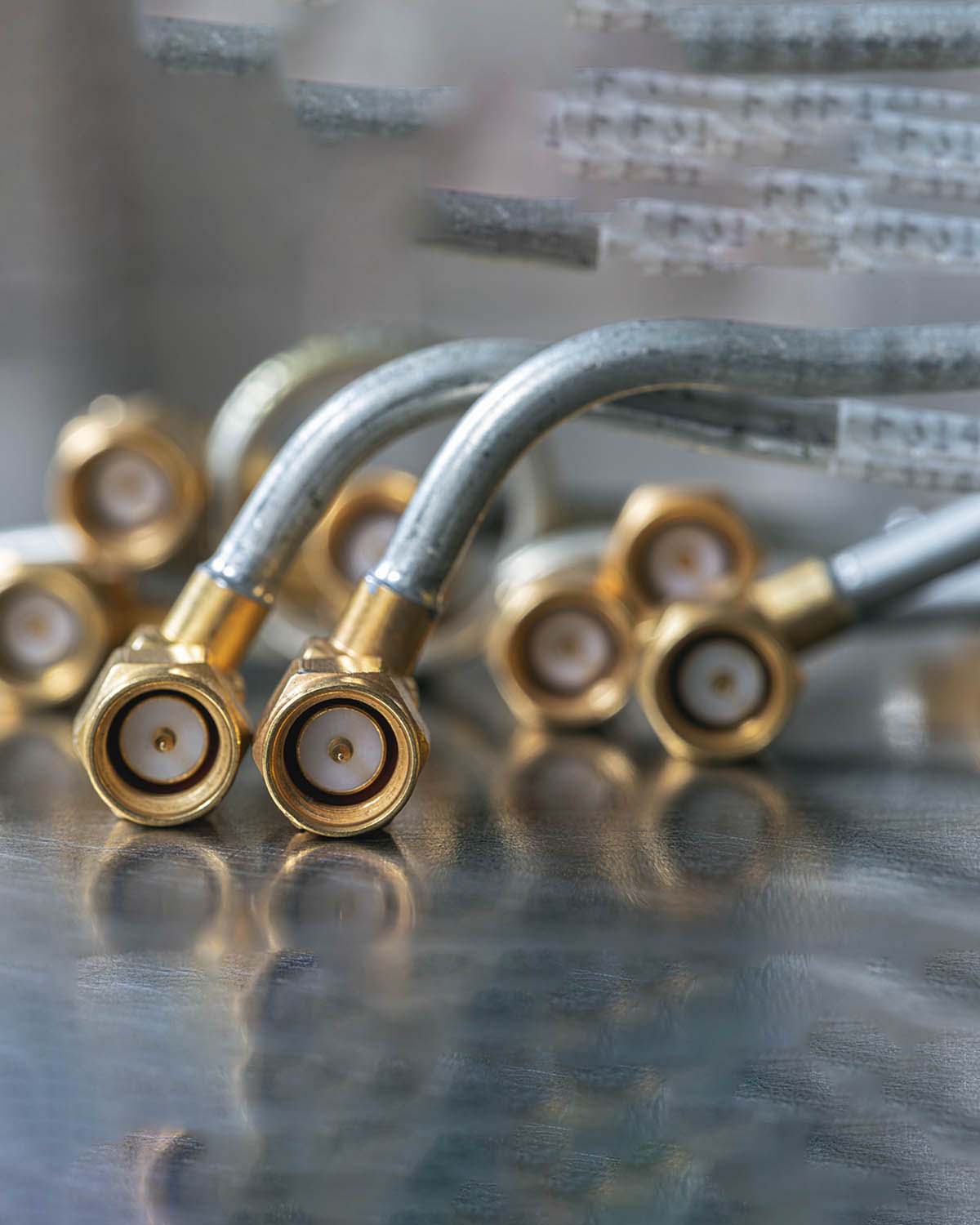
Semi-rigid coaxial cable assemblies need to comply with the IPC/WHMA-A-620 standard, which verifies functionality while ensuring consistent quality throughout the industry.
Coaxial cables are comprised of a solid inner conductor together with a rigid outer conductor, which provides excellent shielding and low signal loss. These cables are required in designs where performance and reliability, in conjunction with durability, are paramount. They are confidently employed in conventional plus atypical military and aeronautical applications wherein the integrity of signal transmission is paramount. Semi-rigid coaxial cables offer superior performance characteristics, including low signal loss along with excellent shielding, making them ideal for high-frequency applications. Specifying the optimal cable requires a thorough understanding of applications’ requirements, including environmental conditions.
Semi-Rigid vs Flexible Coaxial Cables
Superior signal integrity
Semi-rigid coaxial cables are designed with a solid inner conductor and rigid outer conductor to significantly optimize signal integrity. This construction minimizes dielectric losses, which makes them ideal for high-frequency applications in which signal attenuation is critical. Their semi-rigid structure ensures consistent impedance along the length of the cable to reduce reflections while optimizing overall system performance.
Enhanced mechanical stability
The robust design of semi-rigid coaxial cables provides superior mechanical stability when compared to flexible cables. Semi-rigid cables maintain their shape in addition to performance characteristics under mechanical stress, such as vibration and bending. They are less prone to damage from environmental factors, making them well suited for harsh environments often encountered in military and aeronautical applications.
Optimal shielding effectiveness
The solid outer conductor of semi-rigid coaxial cables offers enhanced shielding against electromagnetic interference (EMI). Robust shielding also minimizes the risk of signal degradation due to external interference, which is crucial in such sensitive applications as radar and communication systems. Moreover, of vital importance, shielding helps minimize crosstalk between adjacent cables, which ensures optimal transmission quality.
Precision manufacturing and assembly
Semi-rigid coaxial cables are manufactured to precise specifications allowing for high-quality assembly and installation. Semi-rigid cables are provided in custom lengths and configurations, engineered to application-specific design. Their robust design enables secure, reliable connections to further minimize connector failure over time.
Temperature and environmental resistance
Semi-rigid coaxial cables are inherently designed to withstand extreme environmental conditions. These cables can generally operate effectively in a broader temperature range, typically from -55 °C to +125 °C, making them suitable for military and aerospace applications. The materials and shield plating used in semi-rigid cables are often resistant to moisture, chemicals, and varied corrosive elements, ensuring long-term reliability.
Space and weight considerations
In applications where space and weight are critical, semi-rigid cables can offer significant advantages. The rigid structure allows for tighter bends plus more compact routing, which is beneficial in space-constrained environments such as aircraft and military vehicles. While certain flexible cables may be lighter, the overall weight savings in a system can be achieved by using semi-rigid cables that require fewer connectors and less support structure.

The aerospace industry relies on semi-rigid coaxial cables and assemblies to ensure the integrity of data transmission, communications, and navigation systems.
Key Considerations for Specifications
Frequency range
The frequency range of the application dictates the cable’s design and performance characteristics, and determines the operational frequency range of the system (e.g., radar, communication, or navigation). Ensure the cable can handle the required frequency without significant attenuation or distortion. For military applications, this may range from DC to 40 GHz or higher, while aeronautical applications typically range from 1 GHz to 18 GHz.
Impedance
Impedance matching is crucial to minimize signal reflections and ensure efficient power transfer. Identify the system’s impedance requirements, which are commonly 50 ohms for military and aeronautical applications. Select semi-rigid cables that match the required impedance to avoid performance degradation.
Material selection
The choice of materials affects the cable’s performance, weight, as well as durability. For conductor material, copper is commonly used for its excellent conductivity, while aluminum may be chosen for weight savings. PTFE (Teflon) is preferred in semi-rigid coaxial cable for its low loss and high-temperature resistance. Other materials may be considered based on specific environmental conditions. The outer conductor should provide adequate shielding and mechanical protection. Options include solid metal or braided designs.
Environmental factors
Military and aeronautical applications often expose cables to the most extreme conditions. Specify cables that can operate within the required temperature range, typically from -55 °C to +125 °C for military applications. Moisture and corrosion resistance are paramount, so ensure the cable is designed to withstand humidity, salt spray, and other corrosive environments. Also consider the cable’s ability to endure vibration and shock, particularly in aeronautical applications.

Extensive electrical and environmental testing, including verifying conductivity, voltage holdoff, VSWR, and attenuation is essential to ensure the performance of semi-rigid coaxial cables and assemblies.
Connector types
The choice of connectors impacts overall performance and reliability of the system. Identify the connector types used in the system (e.g., mil-spec, SMA, N-type, or custom connectors). Ensure compatibility with existing equipment and consider factors such as ease of installation and maintenance.
Compliance with standards
Adhering to military and industry standards ensures reliability as well as performance. These include MIL-PRF-39012, which governs the performance specifications for coaxial cable, along with MIL-STD-810 which pertains to environmental engineering considerations plus laboratory testing. Further considerations include compliance with FAA and ESA aviation safety regulations, and IPC/WHMA-A-629, which pertains to cable and wire harness assemblies.
Specifying semi-rigid coaxial cables for military and aeronautical applications requires careful consideration of a range of factors, including frequency range, impedance, materials, environmental conditions, connector types, and compliance with industry standards. By following requirements thoroughly, engineers together with procurement professionals can ensure the selection of high-quality cables that meet the demanding requirements of their applications.
Visit CDM to see more coaxial cable solutions.
Like this article? Check out our other Harsh Environment articles, our Military and Aerospace Market Page and our 2025 Article Archives.
Subscribe to our weekly e-newsletters, follow us on LinkedIn, Twitter, and Facebook, and check out our eBook archives for more applicable, expert-informed connectivity content.

- Printing at the Edge of Possibility: How TE Connectivity Leverages Micro-3D Printing - October 13, 2026
- A Five-Layer Clad Solution for High-Performance Battery Interconnects - October 6, 2026
- High Voltage Interlock for Commercial Vehicles: A Must-Have or a Nice to Have? - September 29, 2026