How High-Reliability Connectors Meet the Demands of Satellite Engineering
Satellites must be designed to endure conditions from launch to the complex space environment. High-reliability connectors help these systems operate in various extreme conditions.

Article Contributed By iConnexion
Spacecraft electronics are held to a standard that few terrestrial systems ever face: years of unattended operation, no possibility of repair, and an environment that actively works against the hardware. A connector that performs perfectly on the bench must also survive the violent vibration of launch, the thermal extremes of orbit, the near-total vacuum of space, and continuous exposure to ionizing radiation. Interconnect reliability is an essential factor in the success of these complex applications.
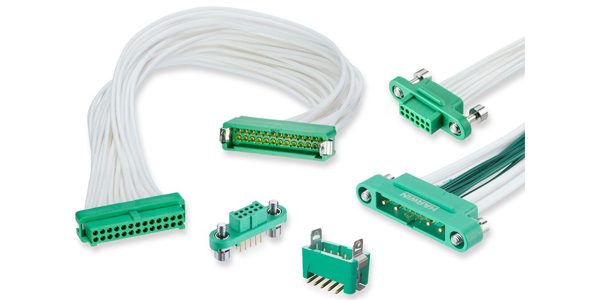
Harwin’s Gecko connector range from iConnexion was developed specifically to meet the rigorous requirements of satellite design from launch through end-of-life. A miniature 1.25 mm pitch helps keep payload to a minimum, yet this series offers flexibility and performance under shock, vibration, and temperature extremes.
Unlike many electronic assemblies, satellite hardware cannot be serviced once deployed. This puts pressure on engineers to anticipate points of potential hardware failure and specify components that can resist environmental and operational stress. Every connector, contact, and latching feature must continue to perform for the full operational lifetime of the spacecraft, which can extend well beyond a decade. This places stringent demands on materials, plating, and mechanical design.
Engineers should look for these features for satellite components:
- Stable performance in vacuum and radiation environments, where outgassing and material degradation can compromise the long-term performance of components
- Resistance to the wide thermal swings experienced from launch to orbit and as a spacecraft moves between sunlight and eclipse
- Enduring mechanical and electrical durability under sustained vibration and thermal cycling
A common platform for payload and propulsion
A satellite is a system of systems, and signal integrity must be maintained consistently across every subsystem, from sensitive payload electronics to the high-vibration environment around propulsion hardware. Specifying a single connector platform simplifies qualification and supply chain management for integrators.
Payload systems: Cameras, imaging arrays, and telemetry circuits, where low-noise, high-integrity signal transmission is essential
Thruster systems: Propulsion assemblies, where connectors must maintain secure, stable connections despite high mechanical loading
Designs must balance mechanical security with the electrical performance needed for imaging and telemetry data paths. Key design features for connector selection include:
- A secure, low-profile latching mechanism that maintains positive engagement without adding bulk to the assembly
- Signal clarity suited to the demands of imaging and telemetry circuits, minimizing noise in sensitive data paths
- High resistance to the vibration and temperature extremes encountered during launch and orbital operation
Typical applications within the satellite platform include payload cameras, imaging systems, and telemetry circuits. In all of these areas, both mechanical reliability and signal performance are essential. High-reliability connectors designed for rugged performance must be selected to protect the critical functions that today’s satellites enable, such as communications, weather forecasting, and security and surveillance operations.
Space hardware leaves no margin for connector failure. The challenges include extreme temperatures, high vibration, vacuum, and radiation conditions that define the space environment. For engineers designing payload or propulsion systems, reliability cannot be compromised, and the right connector can protect the integrity of these space applications for years to come.
Learn more about connectors for satellites and other harsh environment applications at iConnexion.
Like this article? Check out our other High Reliability and Harsh Environment articles, our Military and Aerospace Market Page and our 2026 Article Archives.
Subscribe to our weekly e-newsletters, follow us on LinkedIn, Twitter, and Facebook, and check out our eBook archives for more applicable, expert-informed connectivity content.

- The Challenges of Electric Flight: How Engineers Are Rethinking Power - October 20, 2026
- Printing at the Edge of Possibility: How TE Connectivity Leverages Micro-3D Printing - October 13, 2026
- A Five-Layer Clad Solution for High-Performance Battery Interconnects - October 6, 2026