Connector Suppliers Talk STEM
The future of the electronics industry depends on quality STEM education. Connector suppliers experience this firsthand. Learn how components companies support schools and programs in their communities.
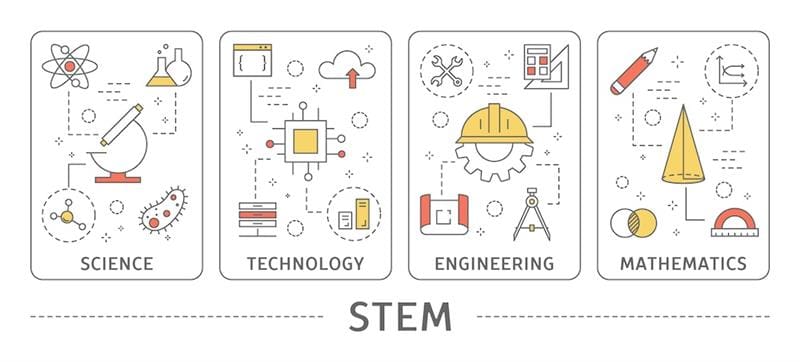
Engaging kids and college students in STEM (science, technology, engineering, and math) is important for ensuring a qualified and motivated workforce in the future. Programs that show students how to connect theory to the development of real-world solutions go a long way toward achieving this goal. Electronics components companies need a qualified workforce to extend their goals into the future, as do their customers in product design, research, and at OEMs. We asked connector suppliers to tell us about their support of STEM and to share their thoughts and experiences around STEM education. (Note: Responses have been edited for clarity and length.)
How does your company support STEM education?
CDM welcomes third- and fourth-year high-school and first- and second-year uni students as paid summer employees in different functional areas. – Robert Grzib, CDM Inc.
Since 2005, Axon’ Cable has opened our headquarters in France every March to about 60 local students for Classes 4.0. The 14-year old participants join with volunteer Axonians in workshops that evoke a key facet of Axon’ and the industry. Topics include automotive, drones, and artificial intelligence. – Sandrine Hermant, Axon’ Cable
Phoenix Contact takes a comprehensive approach to STEM education. Every year our engineers teach sixth-grade science classes during National Engineers Week. One day a month our employees teach fourth graders a unit on sustainable energy as part of the Think Big program. Our employees volunteer for Junior Achievement STEM programs. Our PLCnext Automation Contest challenges high school students to design and build a control system using our PLCnext Technology controller. Our high school co-ops, internships, and apprenticeships give students real-world learning opportunities. Phoenix Contact donates to college engineering clubs and automation labs, and offers job shadow opportunities. – Patty Marrero, Phoenix Contact USA
I-PEX works with the local Cupertino High School Robotics Team and we sponsor their projects. – Ali Zeeshan, I-PEX
ept supports STEM education by partnering with career and technical education programs in local school districts to show students the possibilities of employment in STEM and manufacturing. ept actively attends career days and events to introduce students to manufacturing. We have hosted students for group tours of our manufacturing facilities in S. Chesterfield, Virginia. We also offer apprenticeship programs, internship programs, job shadowing, and summer projects to high school and college students. – Alice Guillot, ept
In the past, Samtec Cares provided grant funding for school activities in the spirit of STEM exposure. Now our funding efforts support and promote workforce and skill development in the technology and manufacturing sectors, which are beneficial to Samtec and other potential employers. Samtec Cares provides annual grants to qualified 501(c)(3) nonprofit organizations in communities where Samtec employees live and work. The program supports three core areas of focus: technology, innovation, and strategic community development. – John Riley, Samtec
TE Connectivity’s Community Ambassador Program enables over 100 ambassadors and local councils to drive community giving decisions. This grassroots approach represents nearly half of all TE corporate donations annually. Through the TE Connectivity Foundation, we target increased access to technology and engineering education for women and underserved populations. In 2024, we granted $1.8 million to Girl Up, Technovation, SMASH, Clubes de Ciencia, Per Scholas, and the Desai Foundation. We also create real-world learning opportunities through initiatives like the TE AI Cup. This global competition brings together university teams to solve real manufacturing challenges using AI. In 2025, nearly 300 students from 24 universities worldwide partnered with TE engineers to develop solutions that are already running in our factories — like an automated labeling and inspection system that boosts accuracy to 98.8% and cuts energy use by 90%. It’s a great example of how we bridge classroom theory with industry innovation. – Leroy Stuart, TE Connectivity

What do you see as the main benefits of industry supporting these programs?
Excitement is contagious, especially amongst younger student-aged people. That means an interested wave of entry-level employees will always be available. – Robert Grzib, CDM Inc.
Our objective is clear: plant seeds in young students’ minds and change their vision of the industry. – Sandrine Hermant, Axon’ Cable
We hope that our STEM initiatives are inspiring the next generation of engineers and technicians. In addition, our employees enjoy giving back and sharing their knowledge with young people. In an industry with a high turnover rate, these opportunities help boost job satisfaction, retention, and recruitment. The programs have also strengthened our relationship with other organizations in our community. As a manufacturer, we are also encouraging educators to recommend jobs in manufacturing to students as an alternative to college. – Patty Marrero, Phoenix Contact USA
Awareness of I-PEX and the industry is developed early on in future STEM graduates. This generates visibility and brand recognition in the engineering community. – Ali Zeeshan, I-PEX
Today’s students will one day be the future of our companies. We are fortunate to be able to collaborate with our local programs in the Chesterfield area, which has excellent career education and technical education options for students. – Alice Guillot, ept
Industry support for STEM programs creates a qualified talent pipeline that meets the growing demand for technical professionals in areas such as engineering, technology, and innovation. These programs foster critical thinking and problem-solving skills that are essential for the modern workforce and directly contribute to companies’ competitiveness. Furthermore, investment in STEM education strengthens the innovation capacity of the entire economy in the long term and helps reduce the shortage of skilled workers in technical fields. The collaboration between industry and educational institutions also creates practical learning opportunities that better prepare students for real-world challenges. – Leroy Stuart, TE Connectivity
What, if any, responsibility do you believe technology companies have to support STEM in schools?
No “responsibility,” but it is in a company’s best interest to plant the seed early. – Robert Grzib, CDM Inc.
Technology and sciences are essential to better understand the world in general, and the industry in particular. Our responsibility is to develop students that can impact society through their future jobs in industrial companies. – Sandrine Hermant, Axon’ Cable
STEM is at the heart of Phoenix Contact’s business, and our success is built on the creativity of our engineering teams. It’s a natural fit that STEM programs should make up a significant part of our community outreach. As one example, students in the Advanced Manufacturing Program at Harrisburg University of Science and Technology are using Phoenix Contact products to automate an aquaponics system. The fish and produce raised in the greenhouse are then donated to a local kitchen and shelter for the homeless. While our part is small, it’s inspiring to see how technology can improve lives. – Patty Marrero, Phoenix Contact USA.
There are real benefits to developing homegrown STEM professionals who are aware of the advantages of getting into engineering fields and building simple systems early on. Inspiring young people to solve their problems with technology helps them later in life to solve more complex problems, not just in STEM fields but also in so many other professional and personal areas. – Ali Zeeshan, I-PEX
I absolutely agree that there’s a responsibility to support our local students’ interest in technical careers. Robotics, mechanical, medical, digital, AI, automation, and beyond – let students see that ‘you too could build a jet, a drone, a robot!’ Let students see what their future could be. – Alice Guillot, ept
Investing in young minds creates a mutually beneficial ecosystem where students gain real-world exposure and companies help shape the next generation of innovators. This genuine commitment leads to more meaningful, long-term programs that go beyond simple funding to include mentorship, hands-on learning experiences, and direct industry engagement. When driven by authentic interest rather than perceived duty, these partnerships create lasting impact and help bridge the gap between academic learning and practical application. – Leroy Stuart, TE Connectivity
It’s common for students to question the need to learn algebra, for example, because they “will never use it in real life.” How would you counter that general assumption about math or other STEM subjects?
Many students (and adults in all walks of life) put up a wall between themselves and something that initially appears difficult and demands their attention. My message has always been that math skills WILL be used continuously starting at some point in a naysayer’s career – if it’s not grasped early then they’ll be chasing the bus when it counts. – Robert Grzib, CDM Inc.
Our event “Classes 4.0” is based on practical workshops which show the application of mathematics or physics in real life. For example, how to calculate an operating voltage is quite important for us as a cable and connector manufacturer. – Sandrine Hermant, Axon’ Cable
Working with mathematics and other STEM-related subjects exposes students to critical thinking, together with the engineering methods to develop a solution. Ratios associated with algebra can very easily be seen again in civil, electric, or mechanical engineering applications, and it helps prepare minds for the thought process required. – Arnold Offner, Phoenix Contact
When we do outreach activities at a local middle school, we incorporate concepts such as trigonometry, in practical and simplistic ways, such as the calculation of a projectile from a catapult. Then, we have the students build a catapult, turning the math into a hands-on and fun activity. – Melissa Sommer, Phoenix Contact
It’s all about developing the ability to solve complex problems through a modular approach, i.e., how can you divide a complex problem into a set of smaller, easier problems, then solve them and bring the pieces together into sophisticated, modular, and reusable solutions. Algebra, a system of linear and differential equations, complex math, and even Laplace transforms are widely used in engineering simulators like MATLAB, High Frequency CST/ HFSS simulators, 3D printers, etc. They are everywhere! – Ali Zeeshan, I-PEX
Going into schools and offering tours of our manufacturing plant to schools is immensely beneficial. It’s incredibly motivating to watch student’s faces light up when they see how classroom-based skills are applied to real life career paths, and how working in the manufacturing industry leads to the end product. – Alice Guillot, ept
Algebra and STEM aren’t just about the specific equations; they’re about learning how to think. Algebra teaches you how to break down a problem, see patterns, and apply logic when the answer isn’t obvious. That type of thinking shows up everywhere: troubleshooting why the tractor won’t start, figuring out the best way to build something in shop class, or even weighing options in everyday decisions. STEM subjects give you both the theory and the tools to solve real problems. Even if a person never writes an equation again, algebra trains students in a way of thinking that will quietly support them for the rest of their lives, especially in a world powered by technology. – John Riley, Samtec
Math and other STEM subjects are the invisible foundation of nearly everything we interact with daily, from the algorithms that power social media feeds to the engineering behind smartphones, gaming systems, and even GPS. The logical thinking and problem-solving skills developed through algebra directly translate to critical life skills like financial planning, analyzing data trends, understanding proportional relationships in cooking or DIY projects, and making informed decisions based on quantitative information. Modern careers increasingly require STEM literacy even in traditionally non-technical fields. Rather than focusing on memorizing formulas, we should help students see math as a powerful toolkit for understanding patterns, making predictions, and solving real-world challenges in creative ways. – Leroy Stuart, TE Connectivity
What words of advice or encouragement do you have for students who wish to pursue careers in STEM?
My message to young people is to not go for the hero careers but pay attention to what will be required starting 10 years out. Lots of 12th graders want to invent a flashy new robot that sings, dances, and tells jokes without investigating what “real” robots do in industry. I managed to redirect a high school graduate away from the development path to robotic tech service and repair. He now works for one of the biggest robotics companies on the planet and has a huge start over his peers who are scrambling with their four-year programming degrees. – Robert Grzib, CDM Inc.
There are jobs for you in Axon’ after your studies! – Sandrine Hermant, Axon’ Cable
Stay curious and think about why and how the physical products you see, or touch were created. A STEM career will transform you from a user to a maker and others will benefit from the ideas you physically create, as well as software or games you create online. You go from consumer to producer and can impact the lives and outcomes of others. – Arnold Offner, Phoenix Contact
I always encourage students to look into all the opportunities in STEM. A two-year associate degree, a mechatronics apprenticeship, or a career such as tool-and-die maker may be more interesting to a hands-on learner. Or maybe a four-year degree is not financially achievable. STEM is so diverse, and the job market needs people who have creativity and different skills. Never, ever count yourself out of a career in STEM. – Melissa Sommer, Phoenix Contact
Have fun solving problems. Break things, burn some ICs while you play with them. When you build it yourself, you can change so many things. – Ali Zeeshan, I-PEX
Seek out supportive guidance counselors to help find schools or opportunities where technical career education is available. Experience as much as you can of all the potential STEM careers that are out there before making a long-term commitment. It’s very helpful overall for students to be in environments or in schools that promote this exploratory process. – Alice Guillot, ept
Don’t be afraid to explore; stay curious. STEM/STEAM is huge! Engineering, robotics, coding, biology, design, and fabrication. You don’t need to have it all figured out early; just follow what excites you. Learn to balance theory with hands-on experience. That balance is what shaped my path. I enjoyed math and physics, but it was shop class, band, technical theater, and building things on my family farm that taught me how ideas become real. Don’t underestimate the importance of community. Places like makerspaces, clubs, camps, and online groups can expose you to tools, mentors, and ideas that spark your next step. STEM careers are built one curiosity-driven moment at a time. – John Riley, Samtec
Embrace your natural curiosity and don’t be afraid to fail forward. Start by exploring what genuinely fascinates you and seek out hands-on experiences through internships, makerspaces, or science competitions. Remember that every expert was once a beginner – the most successful STEM professionals view challenges as learning opportunities. Develop strong communication skills alongside your technical abilities, as the future belongs to those who can solve complex problems and explain their solutions to others. The world needs diverse perspectives in STEM, so bring your unique background to help tackle humanity’s greatest challenges. And keep in mind that TE Connectivity offers some fantastic programs to start your career in STEM! – Leroy Stuart, TE Connectivity
Companies also support makerspaces and incubators to encourage innovation. How do hobbyists and solopreneurs contribute to the technology advancements we see today?
They can focus on highly specific developmental areas that may be overlooked or unbudgeted by industry. – Robert Grzib, CDM Inc.
Makerspaces are great places to see what is possible, to meet others interested in making and creating products, and to see what others create. Facilitators in makerspaces provide training and safe access to machinery and equipment, including 3D printers and various cutting, milling, and drilling tools to build things. Engineering and production are team sports that require collaboration, and some makerspace projects have gone on to become Kickstarter-funded products. – Arnold Offner, Phoenix Contact
It’s all about failing and learning from failures; that’s what every physicist and scientist does. – Ali Zeeshan, I-PEX
STEM-related hobbies provide great motivation for students to later seek out STEM subjects in educational or classroom settings. Hobbies give students an opportunity to find that first introduction and interest in STEM subjects. Students of all ages should be encouraged to participate in something new – for example, learning about the technology behind the video games they enjoy, taking an interest in design competitions, or anything opening the door for them to use creativity in ways related to technology. That interest is what later becomes a career. – Alice Guillot, ept
Hobbyists and solopreneurs are often the spark that gets innovation moving. They experiment without the pressure of large-company timelines, and that freedom allows them to try unusual ideas, fail quickly, and iterate even faster. As the founder of Maker13 (makerspace in Jeffersonville, IN), I’ve watched people walk in with nothing more than a sketch or a rough prototype and leave with something that could become a real product. Some of the tech inventions that came out of the Louisville metro area began exactly that way: one person, an idea, and a place to build. These makers bring creativity, agility, and a willingness to try things that bigger organizations might overlook. – John Riley, Samtec
Maker spaces democratize innovation by giving hobbyists access to advanced prototyping tools that were once exclusive to corporations. These grassroots innovators operate with incredible agility; they iterate rapidly, take creative risks, and pursue unconventional solutions without corporate constraints. Many breakthrough technologies started in garages and makerspaces, from personal computers to IoT devices. Solopreneurs identify niche problems larger companies overlook, creating specialized solutions that influence mainstream technology. – Leroy Stuart, TE Connectivity
Can you name a technology or product coming out of a makerspace that has impressed you?
From the viewpoint of the interconnect world, innovations that led to the development of low-cost, reasonably sized 3D printers were initiated in the makerspace sector. The basis for wearable technologies (e-textiles) were originally developed by independent makerspaces and will continue to grow in the immediate future and replace many externally worn communications technologies. – Robert Grzib, CDM Inc.
A few years ago, the New York Maker Fair had a software project to help the elderly interact with new technology. Many tinkerers learned about the possibilities of 3D printing. The event was a great way to see the development of the Raspberry Pi minicomputer as well as the Arduino platform, and for designers and creators to meet face-to-face. Robotics was another exciting and thrilling thing for attendees to see. It has probably inspired some to continue researching, developing, and making products. – Arnold Offner, Phoenix Contact
I’ve seen everything from assistive devices to robotics prototypes to small consumer products take shape inside a makerspace. One that always impresses me is when a member takes an everyday challenge—something they personally struggle with—and designs a custom solution using 3D printing, electronics, or CNC tools. There’s something inspiring about watching someone with no traditional engineering background create a tool or product that genuinely solves a problem. Those kinds of grassroots innovations remind me why makerspaces exist; they turn creativity into capability. – John Riley, Samtec
I have always been amazed by the robotics and drone kits in the STEM makerspace environment. AI and machine learning platforms in makerspaces are interesting, especially given the speed at which this technology is growing. I have heard about developments in the field of 4D printing. The concept of “programmable materials” is intriguing. – Leroy Stuart, TE Connectivity
Thank you to these respondents for contributing thoughtful answers to our questions:
Robert Grzib, Marketing Manager, CDM Inc.
Sandrine Hermant, Marketing Manager, Axon’ Cable
Patty Marrero, Head of Human Relations, Phoenix Contact USA
Arnold Offner, Strategic Marketing Manager, Phoenix Contact USA
Melissa Sommer, Senior Manager-Engineering Shared Services, Phoenix Contact USA
Ali Zeeshan, Account and Marketing Manager, I-PEX USA
Alice Guillot, HR Administration, ept
John Riley, Technical Marketing Engineer, Samtec Inc.
Leroy Stuart, Vice President Advanced Manufacturing & Technology, TE Connectivity
Read more about how connector suppliers contribute to STEM education and makerspace programs.
Connector Suppliers Support Students at FIRST Robotics Competitions
Würth Elektronik announced partners with Centech business incubator.
To learn more about the companies mentioned in this article, visit the Preferred Supplier pages for CDM Inc., Axon’ Cable, Phoenix Contact, I-PEX, ept, Samtec Inc., and TE Connectivity.
Like this article? Check out our Connector & Cable Special Topics Market Page and our 2025 Article Archives.
Subscribe to our weekly e-newsletters, follow us on LinkedIn, Twitter, and Facebook, and check out our eBook archives for more applicable, expert-informed connectivity content.

- Custom Cable Assemblies: A Value-Add Solution - October 13, 2026
- Fiber Optics Product Roundup - October 13, 2026
- October 2026 Connector Industry News - October 13, 2026