Sensors Do Some Heavy Lifting in Indoor Agriculture Operations
The loss of dedicated farmland, an increasing population, and the intensification and frequency of severe weather events prompt questions about how and where to grow healthy food efficiently and sustainably. Indoor (or controlled environment) agriculture is gaining traction as a solution.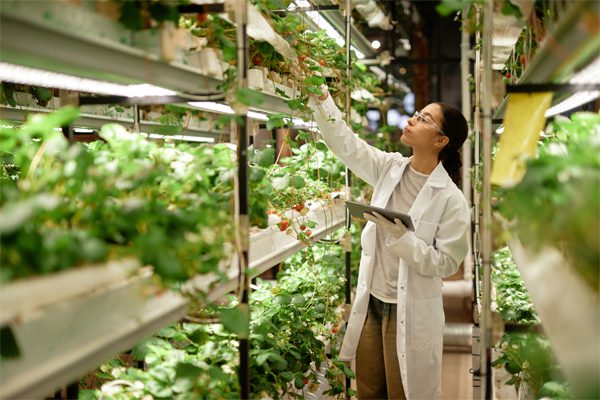
Indoor agriculture provides all the required elements of outdoor farming without the uncertainty of inconsistent or extreme weather and climate that impacts crop yield. It eliminates growing seasons, making it possible to obtain a variety of produce all year long. Commercial greenhouse, vertical farming, or hydroponics (growing plants in a nutrient solution rather than soil) operations can exist in a warehouse.
“Because you’re not at the whim of nature, you can shorten that growth cycle, which increases your yield ‘per acre,’ so to speak. Controlling the environmental conditions, the soil conditions, and infestation allows you to produce more in a very short period of time,” said Jeff Tucker, CEM, CMVP, Field Application Engineer at Amphenol Sensors. This is already becoming popular with restaurant chefs in congested urban corridors. “Because they aren’t close to farmland, trucking in fresh produce adds time and may require spraying it with chemicals. They build growth chambers in rented warehouses to control the quality and supply of organic produce they use in their restaurants.”
Creating a controlled growing environment, however, requires more than simply putting up walls. This is where technology comes in; and while technology can’t completely replicate nature, it can come close enough by controlling the environmental conditions that impact plant health and growth. Temperature, humidity, and CO2 are among the main concerns. “That’s why sensors are so critical in this application space,” Tucker said.
Temperature sensors
Indoor growing requires tightly controlled temperatures that avoid extremes but adjust over time as they do outdoors — heating up in the morning and throughout the day and cooling down in the evening and overnight. In addition, different plants have different needs. Hardier vegetables and fruits may thrive in a broader temperature range than more delicate species. Temperature sensors are used in various locations in an indoor farming operation:
- Near plant canopies to monitor the microclimate directly affecting the plants.
- In the growing medium to assess the root zone temperature, which influences nutrient uptake and root development.
- At air inlet and outlet points to regulate and adjust the indoor air temperature.
- Near lighting systems to prevent heat stress from artificial lighting sources.
- In water reservoirs to control the temperature of water used for irrigation, which affects plant hydration and nutrient absorption.
RTD (resistance temperature detector) temperature sensors and NTC (negative temperature coefficient) thermistors are two advanced agricultural sensor options that provide this function.
RTD temperature sensors offer stable and precise temperature readings across a wide range. They leverage the predictable change in electrical resistance of certain metals, such as platinum, as they are exposed to varying temperatures. This makes them well-suited to helping maintain the conditions required in indoor agriculture.
NTC thermistors are resistors made from semiconductor materials that respond to temperature changes. Their resistance decreases as temperature increases. Due to their high sensitivity to temperature changes, they are widely used in measuring and controlling temperature in applications that depend on precision and immediate reactivity. Their ability to accurately monitor slight changes in temperature makes them invaluable for maintaining the exact conditions needed for optimal plant growth in indoor agriculture.
NTC thermistors have some distinct advantages over RTD sensors. Their greater temperature sensitivity facilitates precise control over growing environments. This is beneficial for the variable conditions of indoor farming, and crucial for maximizing plant growth and health. Their small size and versatile packaging support more straightforward integration into a range of applications, such as monitoring air and soil temperatures. In addition, they are typically less expensive than RTD sensors.
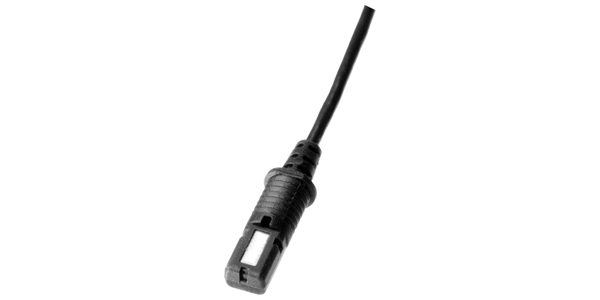
Telaire T9602 IP67 from Amphenol Sensors is a fully calibrated and temperature-compensated combined humidity and temperature sensor supplied in a water-resistant IP67 package. Telaire T9602 provides linearized output signals in Digital (I2C) Output or Pulse Density Modulated (PDM) Output convertible to an analog signal.
Humidity sensors
Maintaining optimal humidity levels is important for preventing plant dehydration, encouraging root growth, and fending off fungal diseases. When humidity levels are too high (above 80%) mold and other pathogens can flourish. When they are too low (below 30%) plants struggle to absorb water through their roots, causing them to become stressed. Humidity sensors perform various functions throughout indoor agriculture operations.
- Above the plant canopy to monitor the humidity level that directly affects transpiration and photosynthesis.
- Near ventilation systems to assess and control the humidity of incoming and outgoing air.
- Inside the growing medium to measure soil moisture levels, which influence water uptake and root health.
- In propagation areas to ensure high humidity levels needed for seed germination and cutting propagation.
- In storage and processing areas to maintain humidity levels that preserve the freshness and quality of harvested vegetables.
The two main types of humidity sensors used in indoor agriculture systems are capacitive sensors and resistive sensors. Resistive sensors measure humidity based on alterations in the electrical resistance of hygroscopic materials in response to moisture. Capacitive sensors monitor changes in electrical capacitance, which occur by the absorption of moisture, to detect humidity levels.
Although resistive sensors are simpler and may be lower in cost initially, capacitive sensors are more cost-effective over time because they are durable and require minimal maintenance. As a result, they tend to be the preferred option. Capacitive sensors provide more precise and repeatable humidity readings. They have a longer lifespan while maintaining their performance and accuracy, reducing the need for recalibration. Capacitive sensors are also less affected by contaminants like dust and chemicals, which helps ensure consistent measurement accuracy.
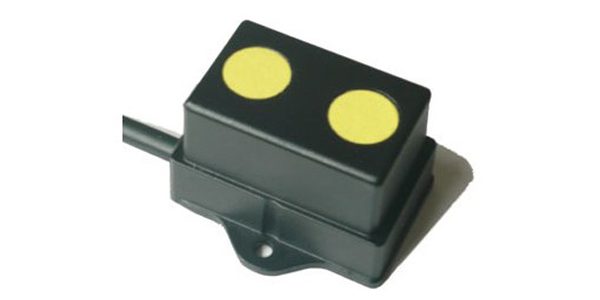
Amphenol Sensors’ Telaire T3000 Series of CO2 Sensors are designed for CO2 monitoring in harsh and demanding environments. Utilizing Telaire’s nondispersive infrared (NDIR) sensor and electronic signal conditioning technology, the T3000 Series provides robust packaging in numerous configurations of measurement range, supply voltage and output signals.
CO2 sensors
CO2, a key element in enabling photosynthesis, is essential for plant growth. Plants tend to grow well at ambient levels of CO2, ~400 ppm (parts per million). Photosynthesis increases proportionately with increased concentrations of ~1000 ppm and higher that result in more sugars and carbohydrates available for plant growth. Sub-ambient CO2 atmospheres, the result of poor ventilation and tightly sealed structures, stifle plant vitality and development.
CO2 enrichment systems that use the byproducts of hydrocarbon fuel combustion or liquified/compressed CO2 tanks are often deployed to augment sub-optimal CO2 concentrations. Accurate and reliable CO2 measurement is essential for cost-effective and efficient operation of these systems. With the proper quantity and placement of CO2 sensors, sophisticated wired or wireless indoor agriculture climate control systems can monitor and maintain optimal CO2 setpoints in relation to other environmental parameters such as temperature, humidity, and PAR (photosynthetically active radiation).
NDIR (non-dispersive infrared) CO2 sensors function by detecting the amount of infrared light that passes through a gas sample. As CO2 molecules absorb specific wavelengths of infrared light, the sensor can precisely measure the concentration of carbon dioxide in the air by observing changes in light absorption. NDIR CO2 sensors are either single- or dual-channel. Dual channel is designed for environments like greenhouses where the conditions (and CO2 levels) remain fairly consistent.
Pressure sensors
Another area for monitoring is pressure. “It is necessary to maintain a pressure that’s slightly more positive than the surrounding atmospheric or ambient pressure so that you have exfiltration from your building and not infiltration. These greenhouses or warehouses are not completely sealed; there will always be some small cracks. If you have a negative pressure to the surrounding area, everything’s going to try to come in through those cracks, including insects, dirt, moisture — things that aren’t controlled. You want to have a slightly positive pressure in your space so there’s exfiltration, meaning that instead of air coming in through those small openings in your building, it’s being pushed out,” said Tucker.
IoT agriculture sensors
IoT (Internet of Things) sensors monitor the crops and environment 24/7 with minimal human intervention. They track and collect data about temperature, humidity, light intensity, soil moisture, and CO2 levels. This data enables them to make automated adjustments to optimize growing conditions, improving crop yield and quality. Smart greenhouse sensors allow farmers to fine-tune climate control and growing systems with pinpoint accuracy. IoT technology eliminates human error and provides accurate information for better decision-making.
Choosing the right sensors
Sensors play a vital role in the success of indoor agriculture operations. Consider these factors when selecting them:
- High accuracy and precise readings are critical for optimal growing conditions.
- Quick response to changes in the growing environment is crucial in the dynamic indoor farming environment.
- Durable materials and proven reliability are necessary to withstand exposure to moisture, heat, and chemicals over the long haul.
- Packaging and integration options vary; consider which options best meet your needs.
- Connectivity is essential for modern indoor farming; IoT agriculture sensors integrate with the control systems’ remote monitoring and control, ensuring timely adjustments and data-driven decisions.
- Cost-effectiveness is important for all sizes of indoor agriculture operations.
Visit Amphenol Sensors to learn more about the company and its products.
Like this article? Check out our other Artificial Intelligence, High-Speed articles, our Connector & Cable Special Topics Market Page and our 2025 and 2026 Article Archives.
Subscribe to our weekly e-newsletters, follow us on LinkedIn, Twitter, and Facebook, and check out our eBook archives for more applicable, expert-informed connectivity content.

- 2026 Push-Pull Connectors Product Roundup - October 6, 2026
- October 2026 New Connectivity Products - October 6, 2026
- Taking the Complexity out of Power Distribution - September 29, 2026