What is the IPC-620-Space Addendum?
Meet the Connector: IPC-620-Space Addendum
IPC/WHMA-A-620 is the global industry-consensus standard for cable and wire harness assemblies; the space addendum pertains to technologies used in space and other extreme harsh environments. It defines workmanship, materials, process, inspection, and acceptability criteria.
The IPC-620 Space Addendum is a specialized supplement to IPC/WHMA-A-620, the industry’s primary standard for the acceptability of cable and wire harness assemblies. The Space Addendum provides additional, more stringent requirements specifically for aerospace, spaceflight, and high-reliability (Hi-Rel) applications, such as satellites, launch vehicles, deep-space probes, and military space systems.
It does not replace the base A-620 standard; instead, it overrides certain criteria with tighter tolerances and additional inspections needed to meet the extreme demands of high vibration and G-loading, radiation exposure, thermal cycling and vacuum, and zero-fault-tolerance system requirements. The addendum adds stricter requirements in areas such as crimping and solder terminations; more stringent criteria for insulation gaps, conductor exposure, and voids; staking, strain relief, and support to ensure durability during launch and space operations.
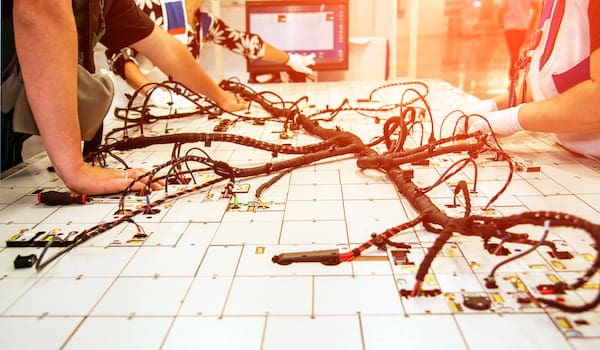
Winchester Interconnect manufactures and tests its space grade harnesses to adhere to IPC/WHMA-A-620, ensuring they meet the high-reliability demands of the aerospace industry.
Design Notes
Standards: The IPC-620 Space Addendum is a specialized supplement to IPC/WHMA-A-620. For building cable or wire harnesses for aerospace, spaceflight, defense, or other Hi-Rel/harsh environment systems, use A-620E + the E-S Space Addendum.
Connector considerations: The addendum addresses crimp contacts and connector assembly, specifying higher pull-force requirements and tighter dimensional allowances. Critical for EMI/EMC performance in spacecraft, shield termination and grounding practices are also considered in the addendum.
Cable considerations: Cable and cable assemblies are under special requirements to prevent micro-motion, abrasion, or floating debris in microgravity. The addendum also addresses cable harness routing, securing, and lacing.
Material specifications: Materials must be space-hardened and harnesses must survive vibration, thermal cycling, vacuum/outgassing, and other extreme harsh environment conditions.
Use in Europe: The European Space Agency (ESA) recognizes and often builds upon the IPC standard plus Space Addendum as part of its own electrical harness/wiring-harness requirements.
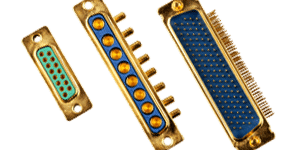
Positronic’s space-grade interconnects have been included in many NASA and ESA missions.
Markets and Applications
Military and Aerospace
NASA has adopted the IPC/WHMA-A-620-Space standard as an equivalent standard to NASA-STD-8739.4 — Workmanship Standard for Crimping, Interconnecting Cables, Harnesses and Wiring, meaning that for NASA flight-hardware procurement, 620E-S (or the 620 Space Addendum) is preferred and often required. Private and commercial space entities may also require components that adhere to the standard.
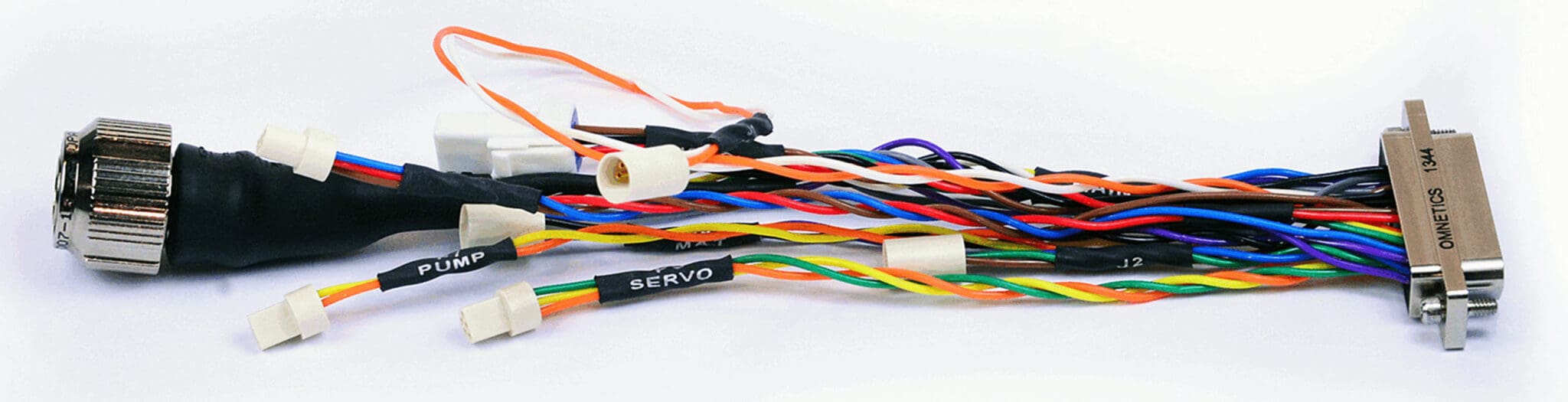
Omnetics Connector Corporation serves the space and high-reliability markets with wire and cable assemblies that are tested to meet the IPC-620-Space Addendum.
Suppliers
Compliant connector and cable products are available from many suppliers, including AirBorn, Amphenol Aerospace, Molex, Omnetics Connector Corporation, Positronic, Radiall, Smiths Interconnect, TE Connectivity, and Winchester Interconnect.
Like this article? Check out our other Meet the Connector and Connector Basics articles, our Connector and Cable Special Topic Market Page, and our 2025 Article Archives.
Subscribe to our weekly e-newsletters, follow us on LinkedIn, Twitter, and Facebook, and check out our eBook archives for more applicable, expert-informed connectivity content.

- Connectivity Is Reshaping Police and Security Vehicle Fleets - September 8, 2026
- Thermal Management Strategies with Liquid Cooling Connectors - August 11, 2026
- Rodent-Resistant Electronics - July 28, 2026