Smart Home and Connected Appliances Drive New Connectivity Demands
Connector suppliers provide insight into this evolving connectivity market.
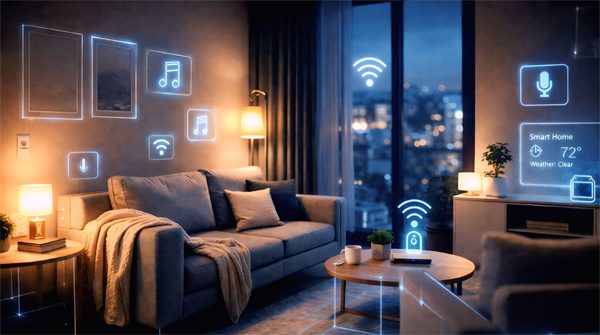
As the smart home market evolves, devices are shifting from standalone operation to highly integrated system architectures and a wide range of connected appliances that incorporate smart energy systems and security monitoring. These applications rely on stable data transmission and long-term operational reliability. In this environment, the role of connectivity is also changing. Connectors are no longer just interfaces for power and signal transmission — they have become critical elements that influence overall system stability and design.
Connector Supplier engaged with experts from Lumberg, ATTEND, and I-PEX to learn more.
What are the current trends for smart homes and connected appliances?
Weston Six, Lumberg: An important factor for smart homes and smart building adoption is the integration of all devices into a single platform. Creating that all-in-one platform for consumers is a big focus of OEMs. To support this infrastructure, we’re seeing a lot more complexity in building design, especially around smart controls. This means that the OEMs need more efficient designs when it comes to those connections on the PCB, so they can make the best use of the space and the components. Our customers ask for solutions that help standardize the connection types on the boards. This allows for more efficient PCB design, faster assembly in the manufacturing process, and easier field installation. Because of this, we have seen more OEMs, especially in the North American market, adopt the RAST style connectors, which have been a standard in Europe for a long time.
How is the shift to smart homes impacting connectivity and the design of interconnects?
Leon Hung, ATTEND: System integration is increasing interconnect complexity. Traditional home appliances were designed as single-function devices, with relatively simple connectivity requirements. In contrast, modern smart home systems require continuous data exchange between sensors, control modules, communication modules, and edge computing units, making interconnect design significantly more critical. This shift has transformed connectivity from a component-level selection into a system-level design consideration. Engineers must balance multiple factors, including bandwidth, power consumption, modular integration, and long-term reliability. Within limited PCB space, high-speed signals, RF modules, and power paths must coexist, placing stricter requirements on signal integrity and impedance control. For example, high-density board-to-board connectors enable module integration, high-speed connectors handle data transmission, and power interconnect solutions ensure stable system operation.
What connectivity challenges does this create and how is connectivity affected by real-world environments?
Leon Hung, ATTEND: Smart home devices often operate under varying environmental conditions. Appliances such as washing machines and kitchen equipment may be exposed to high humidity and temperature, while outdoor devices must withstand vibration and thermal fluctuations. Under these conditions, connectors must maintain stable contact and resist corrosion, mechanical stress, and loosening that could lead to signal interruption. At the same time, environments with multiple active devices increase electromagnetic interference (EMI), further impacting signal quality. As a result, connectivity design is no longer just about signal transmission—it is directly tied to overall system reliability over extended operating periods.
Weston Six, Lumberg: As appliance customers have become more cost conscious due to supply chain disruptions, economic conditions, and material cost increases, they are now focused on product longevity. This includes being able to fix the appliances they already have as well as performing regular maintenance to make them last longer. I really see this as a driving factor for the smart appliance and smart home technology market. Predictive analysis is a big part of ensuring longevity of any device, as well as for avoiding costly repairs or replacement. This could be your dishwasher pinging you with a message saying, “It’s time for regular maintenance,” or identifying an impending mechanical issue so that you can fix it quickly. That’s where those smart features come into play. The main killers of electronic devices are dust, heat, and vibration. The first step, of course, is to make a mechanically solid product that’s able to handle those environments. But you can’t always avoid environments that are too hot or prevent dust from getting in. Over the life of a typical appliance, doing regular maintenance takes less effort and is typically less costly than replacing it when it breaks. Smart features for predictive maintenance can prevent long-term issues and help ensure that the product lasts longer.
What is the role of Wi-Fi and cellular connectivity?
Leon Hung, ATTEND: Wi-Fi remains the primary communication method in smart home environments, particularly for indoor devices and high-bandwidth applications. However, in remote locations, infrastructure systems, or outdoor deployments, Wi-Fi coverage and stability may be insufficient. In these scenarios, cellular connectivity provides a complementary solution. Through SIM-based architectures, devices can maintain communication independently of local networks, ensuring continuous system operation. From a hardware perspective, SIM connectors must balance contact stability, compact design, and environmental durability to support long-term use.
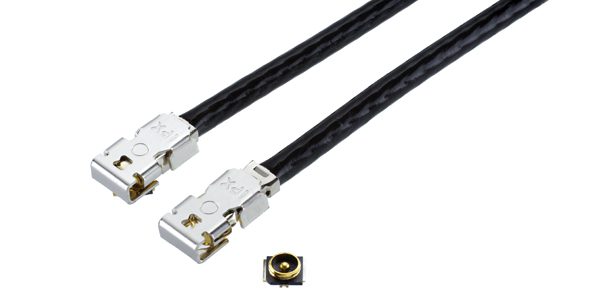
MHF 4L LK from I-PEX is high-frequency RF connector with a reliable locking design that works with MHF 4/4L receptacles. Ideal for continuous shock and vibration applications, MHF 4L LK features a maximum mated height of 2.0 mm and excellent electrical performance up to 12 GHz.
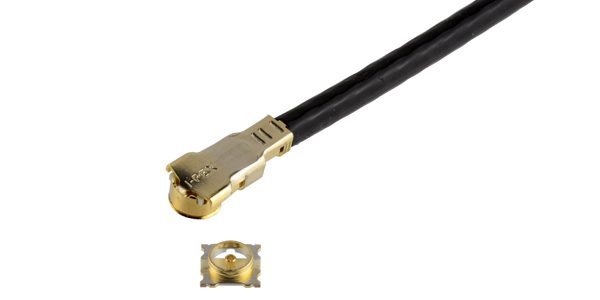
MHF 7S from I-PEX offers excellent EMC performance with a fully shielded RF connector. It reduces unwanted EMI found in 5G mmWave applications, has a small form factor with max VSWR 1.50, and an industry-first stripline terminated signal pin inside the receptacle ground contact.
Dai Yamada, I-PEX: Every home appliance adapts multiple antennas like Wi-Fi, Bluetooth, or cellular networks which connect the device via RF signals to the router or modem, and to a smartphone, laptop, or smart speaker. Seamless RF signal adaptation is very important for controlling the smart appliance. Many components are placed on the main PCB, creating a high chance that the signals will interfere with each other. The key to operating the device properly is the placement of the antenna within a device or providing shielding to isolate each signal. The RF signal connector — for example, the MHF series from I-PEX — minimizes EMI noise and enhances performance. I-PEX also supplies the metal clip which helps route the cable to the small, tight spaces of the PCB and enhances the EMI performance. The clip provides additional grounding to isolate it from the noise from external sources on the board. Optional integrated mechanical locks in MHF connectors offer higher retention in high vibration environments.
Where do standardization and hardware realities fit in?
Leon Hung, ATTEND: Standards such as the Matter protocol are improving interoperability across smart home devices, enabling easier integration between different brands and ecosystems. However, these standards primarily address communication protocols at the software level. At the hardware level, signal integrity, power stability, and connection reliability still require careful optimization. As the number of connected devices increases, these challenges become even more complex at the system level.

Size comparison of Lumberg’s RAST 1.5 and RAST 2.5 connectors.
Weston Six, Lumberg: While the number of connections is increasing, end customers are looking for more compact devices at a good price point and good value. The challenge that OEMs are facing is figuring out how to fit more components into a smaller space. The RAST 2.5 connector is a very common standard that’s used in appliance PCBs. The 2.5 in the name refers to 2.5 mm between the poles on the connector. Lumberg released RAST 1.5 connectors (1.5 mm between the poles). Regarding electrical load and specifications, there are overlaps in capacity between these two families of connectors. A RAST 1.5 saves about 43% of space on the board compared to a RAST 2.5 of like specifications, and since the RAST 1.5 uses a smaller wire gauge, it also reduces the cost of the wire harness. As a result, for signal connections, OEMs get the same number of connections (or more) in a smaller space for a lower overall cost. The same is the case for power connections. An example is Lumberg’s 4580 01, a single pole board-to-board connector that has a really small footprint (about 4.9 by 4.95 millimeters on the board) and handles rated currents up to 56 amps.
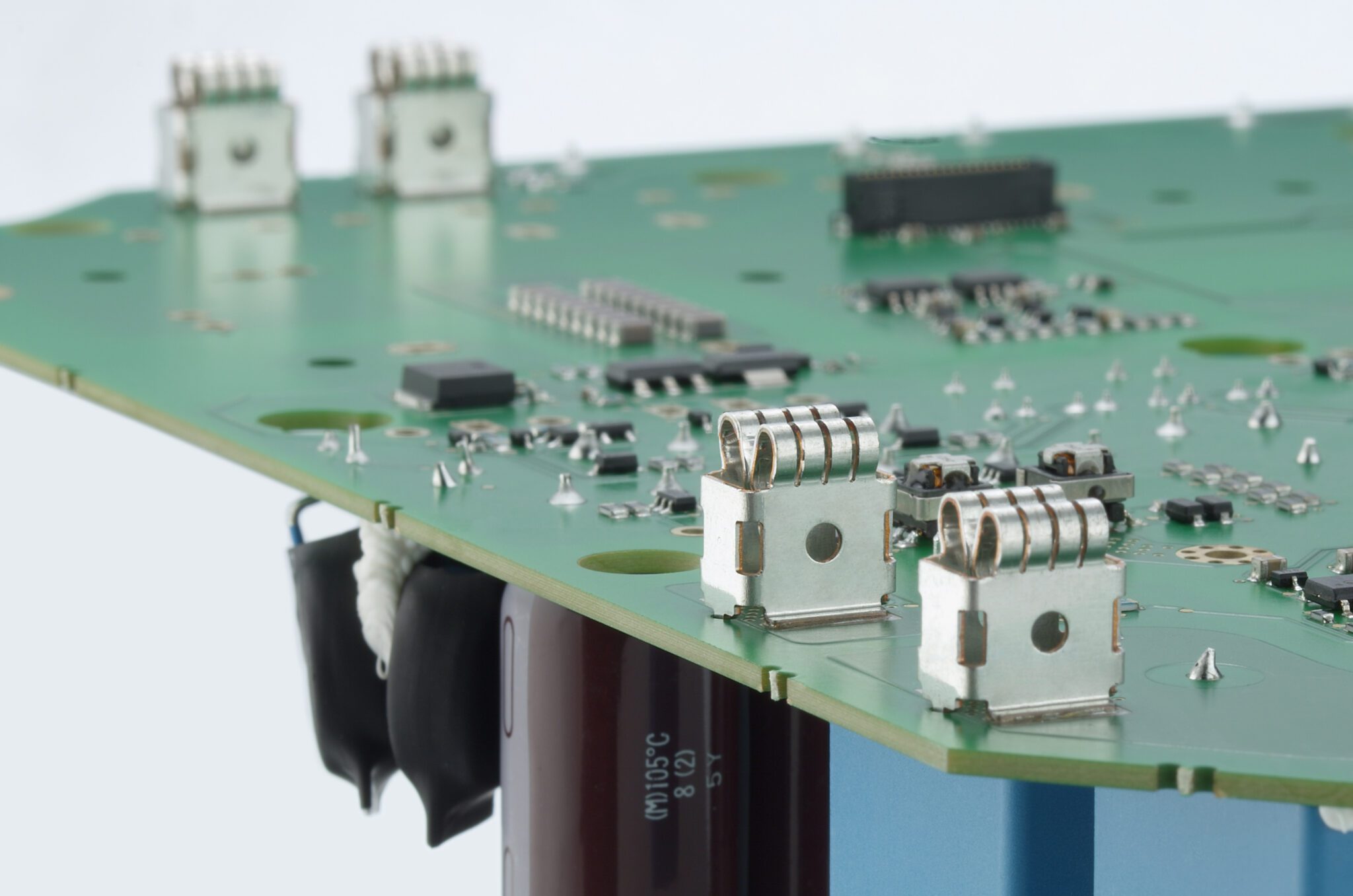
Lumberg’s 4580 01 is pluggable from the top, bottom, and side. Depending on the application design, it provides quite a bit of versatility to make that connection.
How does connector design influence system integration?
Leon Hung, ATTEND: In highly integrated devices, connectors influence more than just signal transmission — they also affect module integration, mechanical design, and assembly processes. For instance, board-to-board connectors define module placement and structural layout, while flexible interconnect solutions provide greater design flexibility. In some applications, floating connector designs can absorb assembly tolerances and thermal expansion, improving long-term stability. These design decisions have a direct impact on product development efficiency and overall system reliability.
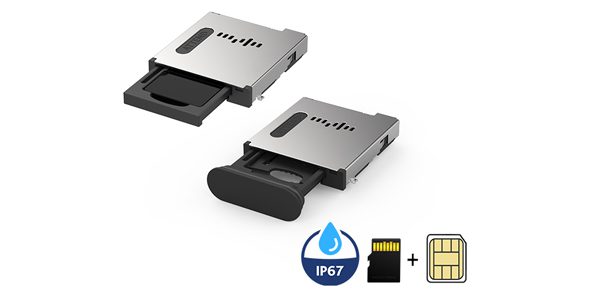
ATTEND 115U-B210 is a 2-in-1 dual stack socket integrates Nano SIM and Micro SD in a single stacked footprint, enabling both independent LTE/5G cellular connectivity and local data storage without increasing board size. A push-pull mechanism with an optimized tray design ensures secure card retention under vibration and mechanical stress. With operating temperatures from –40°C to +105°C, EN 60721-3-5 Class 5M3 compliance, and optional IP67 protection (with dedicated trays), it is suitable for indoor, semi-outdoor, and infrastructure deployments. The Nano SIM slot enables cellular connectivity independent of Wi-Fi infrastructure, while the Micro SD interface supports local data logging, firmware storage, and offline buffering, helping designers build always-connected, storage-capable systems more efficiently.
What new requirements are driving edge AI and energy systems?
Leon Hung, ATTEND: With the introduction of edge AI, smart devices are shifting from simple data collection nodes to real-time processing systems. This significantly increases internal data throughput and demands high-speed, low-latency connectivity between sensors and processors. At the same time, smart home systems are increasingly integrated with energy management solutions, including solar power and energy storage systems. This extends connectivity requirements from low-power signaling to higher-power applications. These trends are driving the need for interconnect solutions that support both high-speed data transmission and stable power delivery.
Smart homes and connected appliances are elevating the role of connectivity in system design. As device interdependence increases, connection quality directly impacts overall system stability and user experience. Connectors are essential to enabling reliable smart home systems. Moving forward, achieving stable and efficient connectivity across diverse environments will be a key design challenge. [Raine/Kristin: This paragraph is not a continuation of Leon’s answer, so I added some extra space to separate it from the previous text. Do whatever you think makes sense.]
Weston Six is Key Account Manager at Lumberg, North America.
Leon Hung is Product Manager at ATTEND.
Dai Yamada is General Manager, Connector Marketing at I-PEX
To learn more about the companies featured in this article, visit the Preferred Supplier pages for ATTEND, I-PEX, and Lumberg.
Like this article? Check out our other Smart Homes articles, our Connector & Cable Special Topics Market Page and our 2026 Article Archives.
Subscribe to our weekly e-newsletters, follow us on LinkedIn, Twitter, and Facebook, and check out our eBook archives for more applicable, expert-informed connectivity content.

- Ceramics in Space: BME X7R MLCC - October 20, 2026
- Test & Measurement Product Roundup - October 20, 2026
- Advanced Connectivity-Automation, Robotics, AI, and Machine Learning - October 20, 2026