What are Conductive Ink Circuits?
Conductive ink circuits (CIC) are electrical circuits formed by depositing conductive silver, carbon, or graphene inks onto flexible or rigid substrates such as polymer films, paper, or textiles. These circuits are a lightweight, low-profile, and cost-effective alternative to traditional etched copper printed circuit boards (PCBs) and they make a new generation of flexible electronics possible.
The origins of printed circuitry date to 1925, when Charles Ducas patented a circuit board that used a stencil to print wires onto an insulated board with conductive ink. He called this electronic path “printed wiring,” and it eliminated the need for complex hand-wiring and allowed for consistent reproduction. This concept led to the rise of the PCB, which replaces ink with etched copper foil, but ink-based circuitry has continued to evolve. The miniaturization of electronics has brought Ducas’ original concept of using conductive inks back into the conversation, and new conductive inks that include nanomaterials are being explored for use on flexible and stretchable substrates.
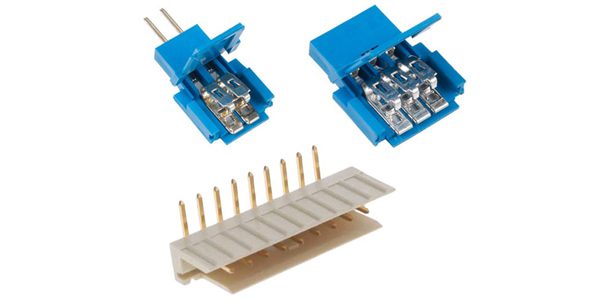
Amphenol FCI Clincher 2.54mm pitch Flex Connectors include single-row pin and receptacle connectors designed for termination to flat flexible circuitry. Clinch cable termination produces gas-tight, contamination-free connections to each conductor. Products include Flat Flexible Cable (FFC), Flexible Printed Circuit (FPC), and Conductive Ink Circuitry (CIC).
Materials
Several different types of conductive ink are in current use:
Silver-based conductive ink is highly conductive and is specified for applications requiring superior electrical performance and thermal performance such as RFID antennas, membrane switches, and photovoltaic cells.
Carbon-based conductive ink often contains graphite or carbon nanotubes, and can be produced at a lower cost, making it suitable for wearable electronics, flexible substrates, and biosensors for medical applications.
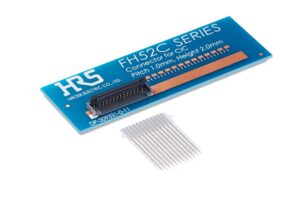
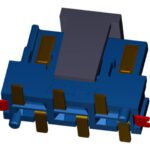
Hirose’s FH52C Series 1.0mm Pitch, 2.0mm Height, Bottom Contact, Front Flip, CIC Connector
Copper ink offers a balance between conductivity and cost, making it a popular choice for printed electronics applications as well as traditional PCBs. Oxidation has been a limiting concern, though anti-corrosion coatings are making it increasingly viable.
Stretchable inks maintain their path even when they are stretched and are coming into use for e-textiles and in-mold electronics.
Dielectric inks protect and enhance other conductive materials. These non-conductive inks are created through blending existing conductive inks with a dielectric coating to create an insulation layer.
Connectivity challenges
Establishing reliable electrical connections to printed ink circuits presents unique challenges. Unlike conventional PCBs, conductive ink circuits often exhibit higher electrical resistance), lower thickness, and reduced mechanical robustness. The traces can be sensitive to heat, abrasion, and mechanical stress. As a result, standard soldered connectors are often unsuitable. Conductive ink connector solutions must therefore accommodate flexibility, minimize mechanical stress, and maintain stable electrical contact without degrading the conductive paths.
Because conductive ink circuits are most often produced on flexible substrates, they require connectors designed to interface with delicate printed traces without damaging them.
The most widely used is the Zero Insertion Force (ZIF) connector. ZIF connectors allow the circuit to be inserted and removed multiple times with very little mechanical wear on the copper traces. The connector’s latching mechanism clamps down onto exposed traces to ensure a long-lasting, robust connection, and also eliminates the need for a mating connector on the circuit side — reducing profile, cost, and weight.
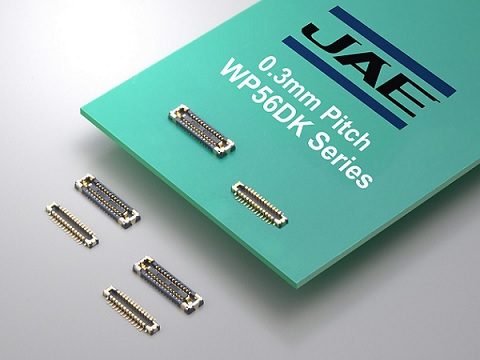
JAE’s WP56DK Series of compact board-to-board connectors is used in smartwatches and small wearable medical devices. It has the industry’s smallest in class standard 2 row connector terminal pitch and a power supply terminal that can greatly reduce overall length
ZIF connectors are used for interconnecting conductive ink circuits, flexible printed circuits, and flat flexible cables to PCBs. Their latching mechanism opens to receive the circuit tail and closes to clamp it securely, requiring no tools or pressure.
Several other connector types are also used depending on the application. Common connector categories include FFC (flat flexible cable) clincher connectors, which grip exposed pads; crimp connectors, offering strong, low-resistance mechanical connections; and IDC (insulation displacement) connectors, which make direct contact with conductors.
Low Insertion Force (LIF) connectors offer a middle ground — they offer a balance between usability and a highly secure connection and are used when some retention force is desired to prevent accidental disconnection.
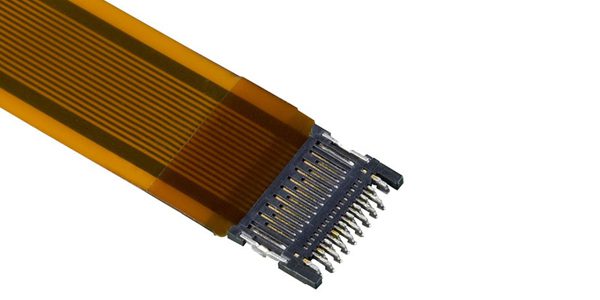
Amphenol Communications Solutions’ F01C series is a 0.21mm pitch right angle Non-ZIF FPC connector with an autolock mechanism and surface mount termination. It has a high density design and low height 0.5mm. It features a cable thickness of 0.18mm and provide high retention force with locking arm. It provides a good solution for wearables.
Markets & Applications
Conductive ink circuits serve a broad range of industries. Their ability to be printed onto flexible, lightweight, and non-standard surfaces such as paper and fabric makes them a good choice for applications in which rigid PCBs are impractical.
Uses include windshield defrosters, in which printed ink circuits are applied to glass; affordable, biocompatible, and disposable medical sensors; smart tags for logistics tracking devices; and smart clothing, patches, and athletic sensors. The largest market for conductive ink circuits is photovoltaic operations, which accounted for over 41% of the conductive inks market in 2024.
Suppliers
Amphenol Communications Solutions, Hirose Electric, JAE, Molex, TE Connectivity, and Würth Electronik offer extensive FPC, IDC, and ZIF connector product lines, suitable for connecting flexible and conductive ink circuits.
Related Products
- LIF
- ZIF Connectors
Like this article? Check out our other Meet the Connector and Connector Basics articles, our Connector & Cable Special Topics Market Page, and our 2025 and 2026 Article Archives.
Subscribe to our weekly e-newsletters, follow us on LinkedIn, Twitter, and Facebook, and check out our eBook archives for more applicable, expert-informed connectivity content.

- Connectivity Is Reshaping Police and Security Vehicle Fleets - September 8, 2026
- Thermal Management Strategies with Liquid Cooling Connectors - August 11, 2026
- Rodent-Resistant Electronics - July 28, 2026