DesignCon 2026
DesignCon 2026 opened the 26th edition of this premier technical conference reflecting the incredible advances in technology and products being driven by artificial intelligence. 2025 was an outstanding year for revenue growth in nearly every segment of the computing equipment and component market including electronic connectors which grew 14.7%, according to Bishop & Associates. Expectations are high for continued growth in 2026 and beyond.

Diverting from its traditional late January time slot, the February 24-26 conference experienced increased participation among engineers, project managers, and marketing executives. Attendees were able to gather the latest information presented at 183 technical papers, three keynote addresses, tutorials, boot camps, and poster reviews organized in seven general product categories. Technical papers and panel discussions were presented in 15 in-depth technology tracks, many of which attracted standing room only crowds.
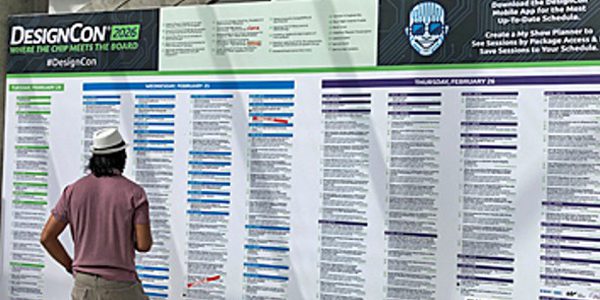
The number of companies participating in the expo floor increased from 173 in 2025 to 202 this year including more than 40 that supply copper, fiber optic connectors, and cable assemblies. The excitement on the expo floor was palpable as attendees continued to surge onto the exhibition floor throughout the day. Even with multiple technical sessions in progress, the expo floor experienced little reduction in traffic. Exhibitors featured a broad range of products and technologies including:
- Co-packaged copper connectivity
- Advanced chips
- Test & Measurement equipment
- Advanced materials
- High voltage and current power distribution
- Automated inspection equipment
- High-speed cable assemblies
- Pluggable transceivers
- System cooling technology
- High density / low profile cable to PCB, and board-to-board connectors
- High-performance coaxial cable and connectors
Many booths featured live demonstrations of products and technologies that will be required to achieve reliable 224 Gb/s and upcoming 448 Gb/s channels.
Artificial intelligence is clearly the driving force behind continuing advances in high-performance computing equipment. With Nvidia fueling the industry by announcing Q4 2025 revenue reaching $68.13 billion, few anticipate an AI bubble deflating anytime soon. Leading hyperscalers including AWS, Google, and Microsoft are in a fevered race to build next generation AI clusters now, and in some cases seem willing to adopt new, non-standardized hardware and architecture for fear of falling behind. For example, next generation PCIe was the topic of multiple tech sessions as well as channel demonstrations on the expo floor. One year ago, there seemed to be little interest in signal modulation other than PAM4. Discussions this year indicated that PCIe 7.0 specification which may not be finalized until the end of 2026 may require adoption of PAM6 at least initially, with future iterations that may allow the use of PAM4. Working displays of PCIe 7.0 based on anticipated specifications were all over the exhibition floor. Work has already begun in defining what will be required by PCIe 8.0.
Constant demand for increasing speed was evident as seminars and demonstrations of designing for 448 Gb/s per differential pair were a major topic throughout the conference. Equipment to enable modeling, designing, and verifying 448 Gb channels was featured, along with potential applications. Agentic computing advanced from early discussion at the conference last year to multiple tech sessions, a keynote address, and examples of implementation this year. Announcements by several companies that have begun using agentic computing in real-world applications now appear in television commercials.
Additional related topics included solutions to managing the voracious appetite for electrical energy by AI. New data centers will house AI clusters that utilize thousands of GPUs and TPUs that require escalating levels of energy. A single state-of-the-art Rubin Ultra/Kyber rack is expected to consume 600 kW. Some experts expect one-megawatt racks before 2030. Safely managing that much power and resulting heat will be a major challenge. The traditional 48 VDC distribution system will likely require upgrading to 800 VDC using an adjacent voltage conversion rack to improve efficiency as well as reduce conductor size and cost.
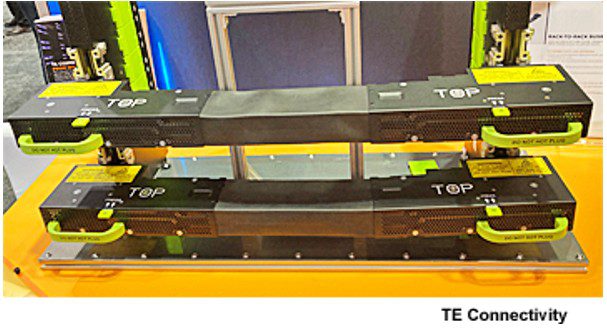
TE Connectivity showed a pluggable single conductor high-current connector rated up to 800 A that bridges the gap between adjacent “sidecar” racks.
The architecture of some AI computers has been scaled up making the individual rack a stand-alone AI system requiring a massive increase in intra-rack connectivity. With this level of compute density, efficient power delivery and cooling are essential.
Many expo displays showed system cooling components including leak detection, liquid cooled bus bars, and plumbing hardware required to implement cold plate cooling strategies which appear to be the current preferred solution. Immersion cooling will require more extensive data center infrastructure and computer system upgrades.
A concept connector shown in the Foxconn Interconnect Technology (FIT) booth illustrated the challenges that these absurd levels of power will create.
Clearly, the continuing escalation of power consumption will demand a new approach to achieving sustainable energy efficiency in the data center. Unlike last year, discussions about the purported efficiencies of DeepSeek were absent.
Recognizing that DesignCon is traditionally focused on copper conductors, the emphasis on co-packaged copper (CPC) interconnects in near-chip applications was not surprising. Multiple suppliers showcased high-density low-profile PCB to twinaxial cable connectors that were terminated in pluggable transceivers on the front panel or to blind-mate backplane connectors that can plug into a traditional ridged or cable backplane.
Emphasis was also placed on the economic advantages of direct attach and active copper cables in inter and intra rack interconnects. Copper cables that can satisfy the insertion loss and reach requirements of a specific application will likely cost less than an optical cable alternative. Optical cables offer greater signal density, bandwidth, and reach as well as long-term performance headroom for future generations of equipment.
Examples of the products and technologies featured by leading connector manufacturers included:

Amphenol Communications Solutions’ extensive lines of interconnect products ranged from 200 Gb/lane OSFP optical transceivers yielding 1.6 Tb transmission to the new XtremePass Co-Packaged Copper (CPC) Interconnect. Designed for 224/448 Gb chip-to-cable applications, this connector is based on 8 differential pair compression mount wafers with contacts on a 1.8mm X 2mm pitch and is scalable from 32 to 128 differential pairs. A demonstration of a full channel live SerDes 224 Gb co-package and backplane implementation verified superior signal integrity.
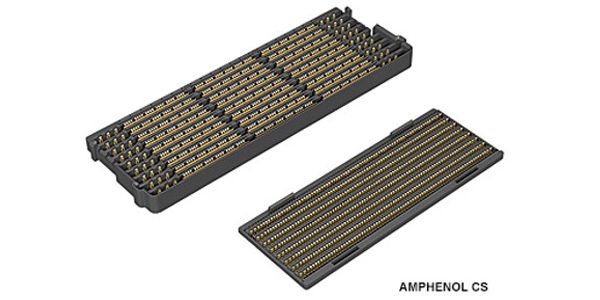
Amphenol also introduced the hermaphroditic Celerity, and Celerity LP BGA low-profile mezzanine connectors offering stack heights of 4-5 mm, and 6-11 mm. These high-density stacking connectors are designed for applications requiring up to 224 Gb/s PAM4 and feature integrated power contacts.
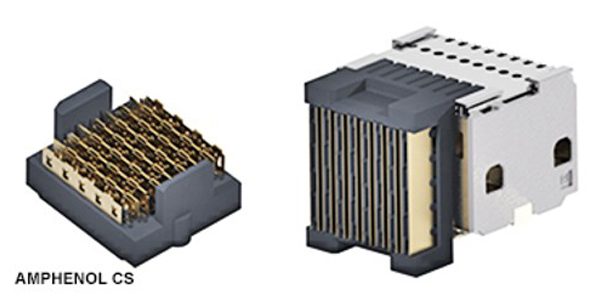
Amphenol continues to expand its lines of upgraded backplane connectors. ZettaMAX is the latest addition to its extensive lineup of high-speed backplane connectors. Designed for 300 Gb/s and PCIe Gen 7 and 8, applications, this 92 / 85W press-fit connector offers low crosstalk and insertion loss in a mechanically robust design.
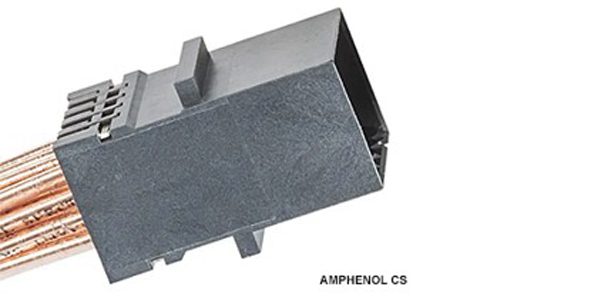
Paladin HD2, 224 Gb/s cable backplane connectors are considered the highest density and most flexible backplane interface offering 144 differential pairs in a 1RU rack. A live demonstration featuring a full channel 224Gb/s PAM4 Paladin HD 224 backplane and XtremePass co-package connectors verified exceptional performance.
A new Molex booth highlighted many current and new interconnect products.
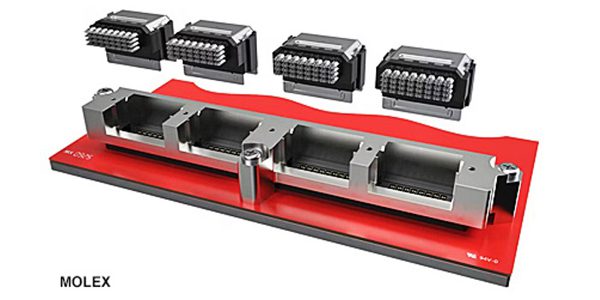
The Impress Co-Packaged Copper connection system is designed to support near-package hyperscale server and storage applications to 224 Gb/s PAM4. Designed in banks of 32 differential pairs on a 2 mm x 1.6 mm pitch, it can be configured up to 1024 differential pairs and has a mated height of only 15 mm.
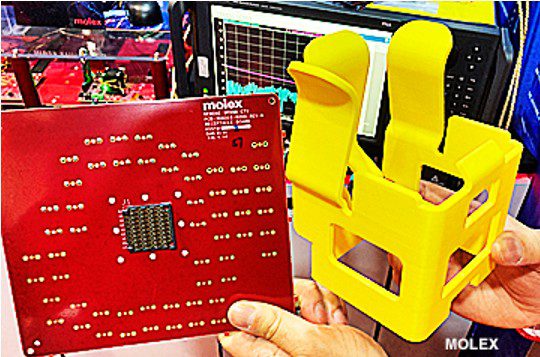
The new Gemini mezzanine connector utilizes a unique four-sided Faraday cage contact design for improved signal isolation and features a 3mmX3mm pitch for ease of PCB routing.
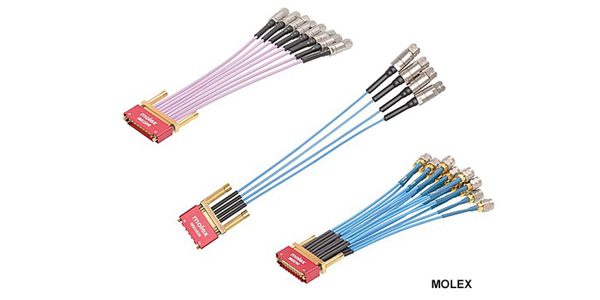
New Cardinal Multi-Port coaxial cable assemblies are designed for Test & Measurement applications to 145 GHz and are available in 1X4, 2X4, and 1X8 configurations. They feature phase matching and are capable of testing up to 448 Gb/s channels.
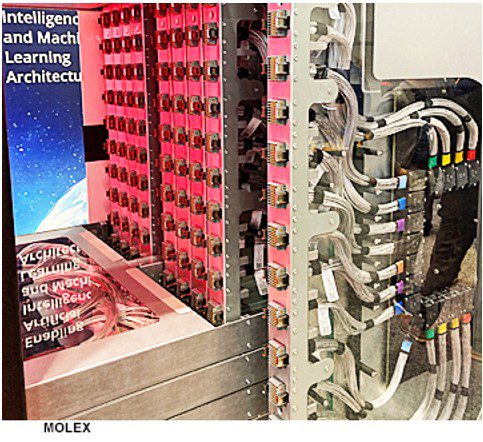
The Molex booth also featured a large orthogonal midplane switch fabric rack using co-packaged copper cables in a series of cassettes to a pluggable midplane interface.
Molex showed a variety of power distribution connectors including a 300-amp power bus bar clip rated at 48VDC. Another live demonstration showed a cable to right angle PCB header operating 448 Gb PAM6 backplane interconnect over one meter of #30 twinaxial cable.
The Samtec booth celebrated the company’s 50th anniversary, highlighting multiple products that are focused on supporting 224G and PCIe 7.0 applications.
The Si-Fly HD CPX® product family was prominently displayed and is designed for both co-packaged and near-chip copper and optical applications.

These connectors feature a high-density 224 Gb/s PAM4 pluggable surface mounted interface providing passive direct attach connectivity capable of supporting PCIe 7.0 and a path to 448 Gb/s. The low-profile housings are ideal for scale-up short run internal rack interconnects. High-density copper assemblies utilize 32 AWG Eye Speed® Hyper Low Skew Twinaxial cables and are plug compatible with co-packaged optical modules offering exceptional design flexibility.
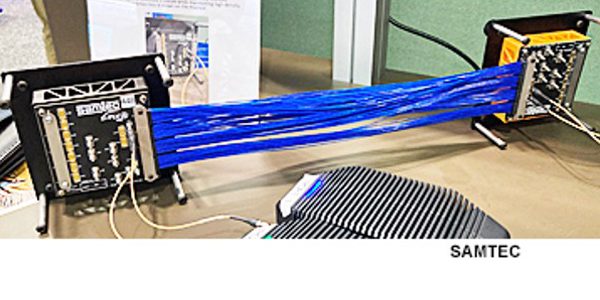
A live demonstration transmitting 448 Gb/s signals using Si-Fly HD® connectors and 400 mm of Samtec EyeSpeed® low skew cable exhibited exceptionally consistent and low insertion loss. Molex has been named as a second source of the Si-Fly HD product family.
Samtec also demonstrated the Halo® Next Gen Mid-Board Optical Transceivers operating at 100 Gb/s+ per lane
The critical importance of performing accurate and consistent test and measurement of 448 GB channels and upcoming PCIe 7.0 make the Samtec Bulls Eye test assemblies a critical tool in the test and verification lab.
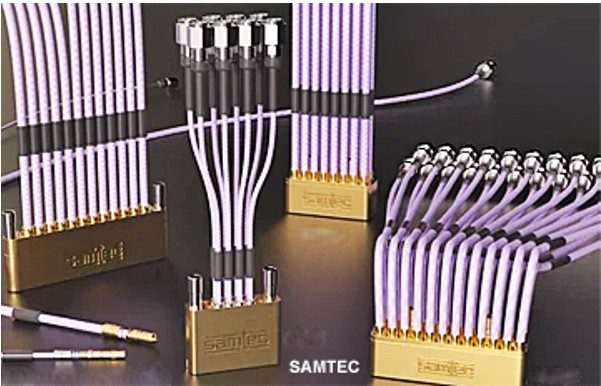
Bulls Eye high performance test assemblies are compression-mounted and rated from DC to 130 GHz mode-free using Samtec Nitrowave coaxial cable. Connectors are available in single and double row configurations of 2 to 16 contacts. End connectors include 1.0 mm, 1.35 mm, 1.85 mm, 2.4 mm, and 2.92 mm.
The TE CONNECTIVITY booth featured multiple live demonstrations of advanced products and capabilities that address 448 Gb, PCIe 7.0, extreme power management, as well as several innovative new product developments.
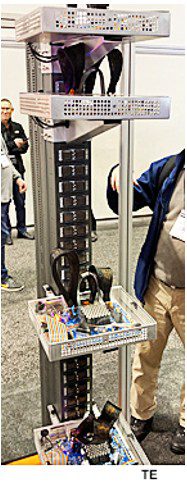
TE has become a strong advocate of passive and active copper cables to extend reach and minimize cost.
Some cable backplanes are becoming exceptionally large, resulting in unacceptable signal loss.
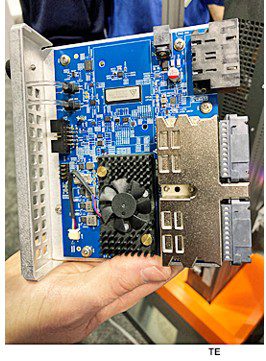
To address this problem, TE has developed a pluggable module that integrates retimers or drivers into selected backplane cables to provide active signal boosting to the backplane cable.
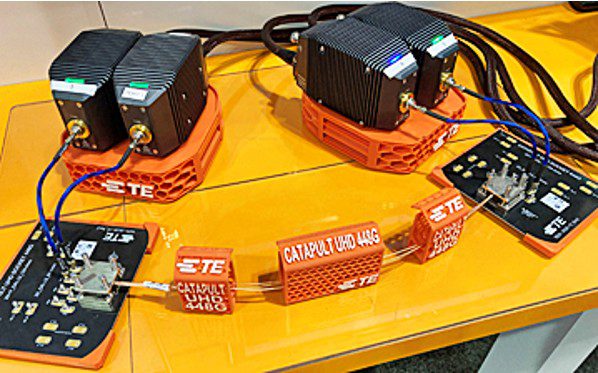
The AdrenaLINE Catapult UHD connector is a high-density copper interface designed for 224 G/448 G per lane applications. A live demonstration of a 448 G board-to-board application used PAM6 modulation.
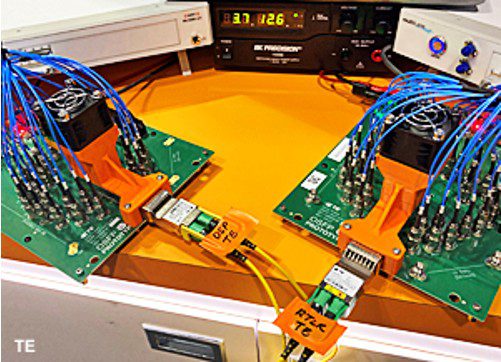
A 1.6Tb optical link via OSFP linear optical transceivers consumed only 25 watts.
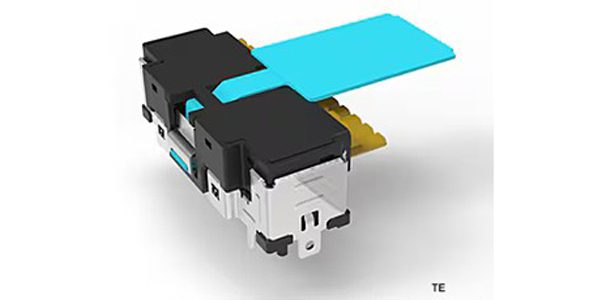
Another demonstration utilized a new Ultra Low-Profile PCIe 7.0 connector and cable assembly.
Additional connector and cable manufacturers exhibiting at DesignCon included Rosenberger with an extensive array of RF connectors designed to serve multiple markets including automotive where high-speed ESD sensitive links are quickly growing. When level 5 fully autonomous vehicles become reality, the use of coaxial interconnects will rise dramatically. A part of the Rosenberger product line is specifically designed to support applications in quantum computers at temperatures near absolute zero. Amphenol Ardent Concepts also offers cryogenic cable assemblies.
The SENCO booth in association with Marvell displayed a co-packaged optical server using eight external lasers feeding chiplets surrounding a large ASIC cooled by a cold plate.
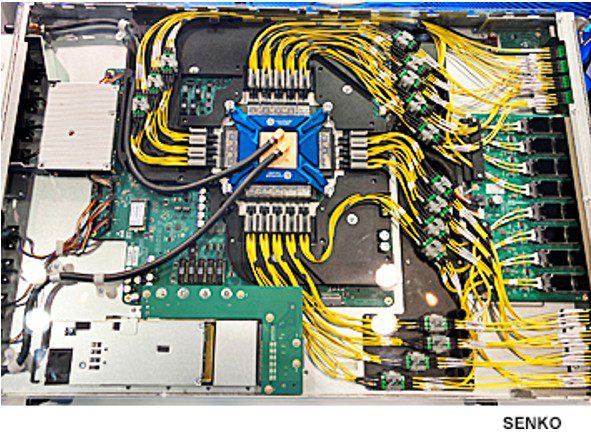
Pluggable 4X4 MPC PIC connectors link 16 single mode fibers per cable delivering a total of 1024 fibers to the front I/O panel.
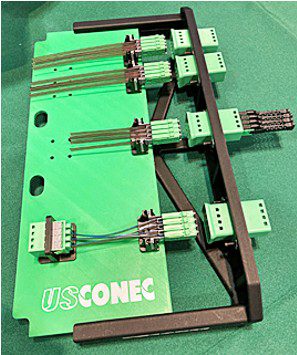
US Conec showed a high-signal density blind-mate optical backplane interconnect system using their MMC optical connector family.
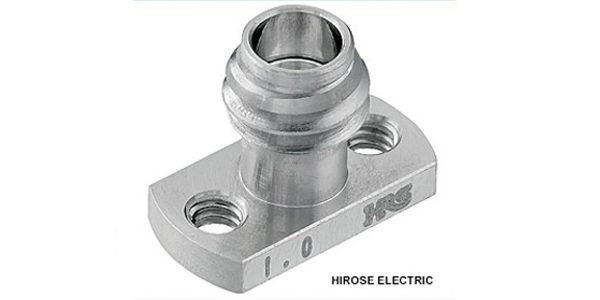
Hirose Electric launched a new 1.0 mm coaxial connector that complies with the IEEE Std 287 and supports frequencies of up to 110 GHz.
Exhibitors including ept and JAE featured copper interconnects that offer high density board-to-board and board-to-cable, packaging solutions with bandwidth to 224 Gb/s PAM4.
Multiple tours of the exhibition floor and discussions with booth representatives revealed that many exhibitors were proposing solutions to the same set of challenges including:
- Achieving reliable 400 G/lane channels, preparing for 800 G, with 1.6 Tb and 3.2 Tb in the pipeline.
- Pushing the boundaries of what can be accomplished with copper circuits in terms of reach and bandwidth.
- Supporting PCIe 7.0 and future 8.0,
- Potential transition from PAM 4 to PAM 6 modulation
- The lag between when next generation equipment demands new technology and when a supporting industry standard is published
- Inadequate modeling, simulation, and verification tools and experienced technicians
- Spiraling energy consumption / resulting heat management
- OEM demand for tooled second sources of leading-edge connectors
The ability to address these issues will ensure the electronic component industry will be able to keep pace with the rapidly evolving requirements of the AI revolution. One pundit facetiously suggested that in order to achieve the performance, cost, and efficiency goals of next generation equipment, it may be necessary to amend several basic laws of physics.
The consensus among many DesignCon 2026 participants is that the pace of innovation and technological advances is accelerating at historic levels, AI will not suffer a burst bubble anytime soon, and that it is an exciting time to be in the industry.
To learn more about the companies mentioned in this article, visit the Preferred Supplier pages for Amphenol Communications Solutions, ept connectors, Hirose Electric, JAE, Molex, Rosenberger, Samtec Inc., and TE Connectivity.
Like this article? Check out our other DesignCon, Fiber Optics and Innovation articles, our Industrial Market Page, and our 2025 and 2026 Article Archives.
Subscribe to our weekly e-newsletters, follow us on LinkedIn, Twitter, and Facebook, and check out our eBook archives for more applicable, expert-informed connectivity content.

- The Power of Having Options - September 15, 2026
- XPO, Addressing the I/O Panel Bottleneck - June 30, 2026
- Agentic and Neuromorphic Computers Enable the Future of Digital Computing - May 26, 2026