Key Elements of Reliable Connectivity Solutions for Harsh Environments
Only the most durable and rugged components can protect outdoor electronics. To ensure reliable connectivity, look for these key characteristics.
Article Contributed by: Paul Pulkowski, Marketing Manager, binder USA
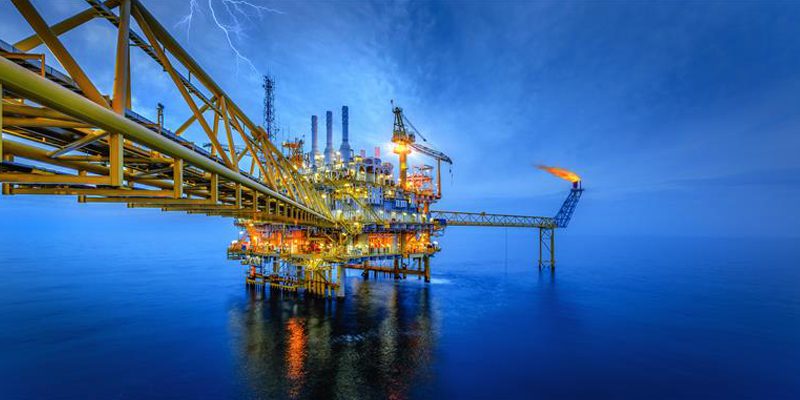
Harsh environment connectors play an important role in modern engineering, acting as critical links for power and signal transmission across diverse applications. In outdoor and challenging conditions, where materials and designs are rigorously tested, the dependability of these connectors becomes paramount. Harsh environment connectors must exhibit specialized characteristics and adhere to strict standards to guarantee application reliability in demanding sectors.
Circular harsh environment connectors are favored for their ease of use, secure connection, and suitability for use in industrial environments. Rectangular connectors, on the other hand, are ideal for use in crowded spaces that require high density connection. Fiber optic connectors enable high-speed transmission in telecommunications and other advanced applications. Additionally, coaxial connectors are integral to communication systems.
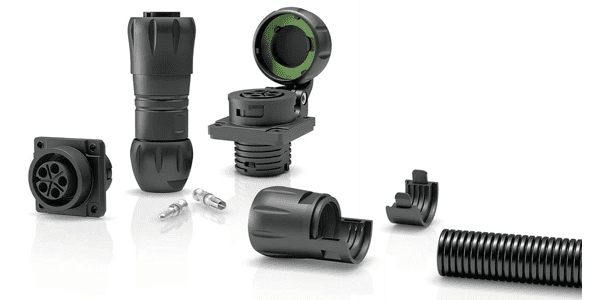
binder’s HEC Series 696 (Harsh Environment Connector) stands out as a robust solution for outdoor connectivity. Available in square flange and cable versions with an integrated protective conduit, this power connector ensures protection up to IP67, and up to IP69K when mated. It is UV-resistant and carries both VDE and UL certifications. The connector’s high mechanical durability is evident, with over 500 mating cycles for the 12-pole version and more than 1,000 mating cycles for the 5- and 8-pole versions.
Key characteristics and requirements
Harsh environment and outdoor electrical connectors must exhibit several critical characteristics to ensure consistent performance and reliability. Durability is a top priority, necessitating the use of robust materials and construction techniques to endure physical and environmental stresses.
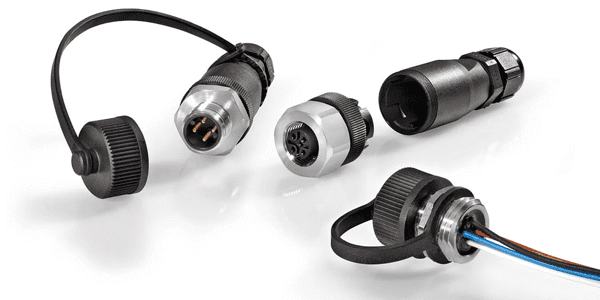
binder’s renowned M12 series also includes connectors specifically designed for outdoor and harsh environment applications. These connectors feature stainless steel locking mechanisms and are available with either stainless steel or UV-resistant plastic housings, offering protection up to IP69K. A key feature is the protective cap, which ensures dust and water resistance even when the connector is unmated. Additionally, these connectors exhibit excellent resistance to extreme temperatures and chemicals, making them ideal for demanding environments.
Material selection is particularly important. Metals, such as stainless steel, aluminum, and brass are valued for their strength and corrosion resistance, while advanced polymers like PEEK (polyether ether ketone) and PTFE (polytetrafluoroethylene) offer exceptional chemical resistance and mechanical properties. Flexible materials like rubber and silicone enhance sealing and provide long-lasting ingress protection.
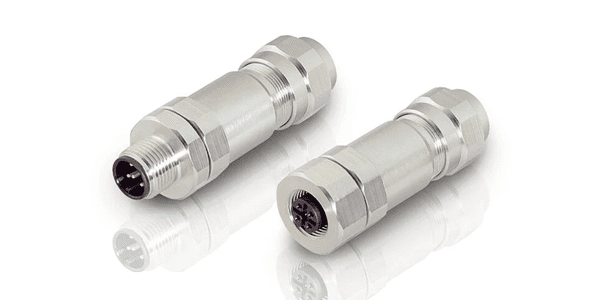
The field-wireable M12 stainless steel connectors from binder’s Series 713 are tailored for harsh and outdoor applications. Constructed with durable stainless steel, these connectors provide exceptional resistance to corrosion and mechanical stress. Their IP68/IP69K rating ensures comprehensive protection against dust, water, and high-pressure cleaning. With UL certification, these connectors meet rigorous safety and compliance standards, offering a reliable solution for critical connectivity requirements.
Effective sealing is vital, with harsh environment connectors requiring high IP67, IP68, or IP69K ratings to guard against water, dust, and other contaminants. These connectors must also withstand exposure to chemicals, damp heat, and extreme temperatures ranging from -40 °C to 100 °C, as well as mechanical impacts. Above all, they must be designed to ensure consistent performance under prolonged use in extreme conditions, critical for long-term functionality in applications that may not be easily accessed to repair or maintenance.
Compliance with standards and certifications ensures connectors meet rigorous performance criteria. For instance, industrial standards like ingress protection ratings indicate protection levels against specific environmental factors and operating or maintenance conditions.
In explosive environments, designated as “Class 1, Division 2” (C1D2) according to international standards, the safety, durability, and performance of harsh environment connectors are of high importance. These connectors are designed for use in areas where flammable gases, vapors, or liquids may be present under abnormal conditions. Furthermore, specific standards address material resistance to salinity, ensuring connectors can perform reliably in saline environments such as saltwater.
Prioritizing durability and performance ensures that products excel in meeting the challenges of harsh environments. Here are the key characteristics:
- Durability: Robust materials
- Sealing: High IP ratings (IP67, IP68, IP69K)
- Resistance: High resistance to chemicals, extreme temperatures, mechanical impacts, shock and vibration
- Reliability: Consistent performance and long-term functionality
- Materials: Metals, plastic, sealing compounds
- Standards and certifications: Regarding industrial standards protection degree ratings is essential
Visit binder to learn more.
Like this article? Check out our other Harsh Environment and Ruggedized articles, our Industrial Market Page, and our 2025 and 2026 Article Archives.
Subscribe to our weekly e-newsletters, follow us on LinkedIn, Twitter, and Facebook, and check out our eBook archives for more applicable, expert-informed connectivity content.

- Printing at the Edge of Possibility: How TE Connectivity Leverages Micro-3D Printing - October 13, 2026
- A Five-Layer Clad Solution for High-Performance Battery Interconnects - October 6, 2026
- High Voltage Interlock for Commercial Vehicles: A Must-Have or a Nice to Have? - September 29, 2026