Medical Connectors Are Not Gentle Connections
Medical fiber and hybrid connectors are often chosen for bandwidth and EMI immunity, but real service life is shaped just as much by cleaning, handling, strain, and repeated mating cycles. Strategic connector design features help ensure their reliability in real clinical environments.
Article contributed by David Kuklinkski,Fiber Optics Solutions Engineer, and Jessica Tropea, Customer Solutions Engineer, Neutrik Group America
A connector functioning in a calm, clean environment doesn’t typically encounter hazards. A medical connector, however, endures wipes, chemicals, cable movement, repeated handling, gloved hands, tight routing, and the occasional rushed disconnect. That is where good specifications start earning their keep.
Medical equipment designers are moving more data through interconnects than ever before. Endoscopy systems, surgical visualization platforms, imaging subsystems, mobile carts, and diagnostic instruments all push for higher bandwidth, better signal integrity, and cleaner cable management. Fiber optics are part of the solution because fiber supports high data rates and is immune to electromagnetic interference. The catch is that a strong optical data sheet does not guarantee reliable day-to-day performance.
In many systems, the weak point is not the fiber cable, it is the connection point. A connector can meet the lab requirement and still become a maintenance nuisance if it collects contamination, wears under repeated mating, or transfers cable strain into the termination. That is why medical connector selection has to reflect both optical performance and clinical use conditions.
Fluids and cleaning agents
Medical spaces are not underwater, but they are not dry office environments either. Connectors may encounter splash, condensation, humidity, cleaning residue, and repeated wipe-downs with approved disinfectants. Even when fluid never reaches the electronics, contamination at the interface can raise insertion loss, increase maintenance, and create intermittent faults.
This is where ingress protection and sealing strategy matter. Engineers should verify whether an IP rating applies in the mated condition, the unmated condition, or both. A connector that is well protected only after connection may still be vulnerable during service or transport. Glands, O-rings, conical seals, over-molded transitions, shuttered interfaces, and properly designed caps can all help, but only when they match the workflow.
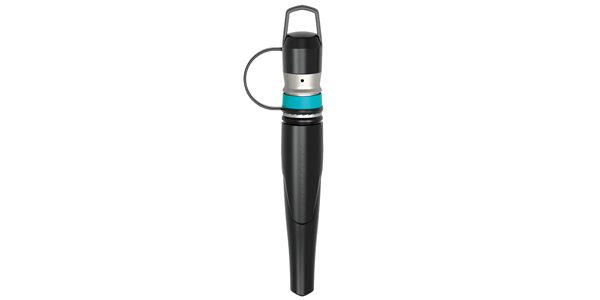
Pre-assembled male-to-male cable with 16 multimode fiber channels and 2 power pins. Neutrik’s opticalCON HYBRID MED is more robust, reliable, and easier to maintain than any other common hybrid systems. With new technology based on fiber lenses, opticalCON HYBRID MED achieves an extremely robust signal with minimal loss. The optical connection is exceptionally well protected against dirt and dust by its lenses and an additional sealing cover.
Cleaning chemistry matters too. Repeated exposure to disinfectants can cause some polymers and elastomers to harden, swell, crack, or discolor over time. Housings, latch parts, bushings, and seals rarely want the same material recipe, so material compatibility should be checked as carefully as electrical or optical performance.
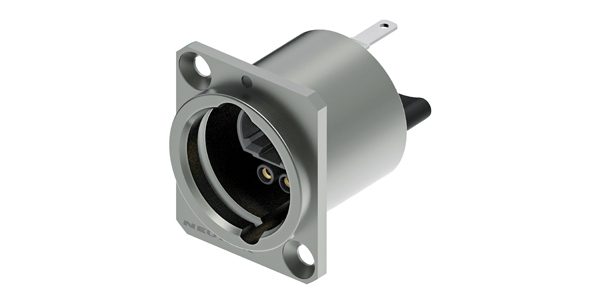
NEUTRIK opticalCON HYBRID MED chassis features ruggedized anticorrosive plating, two crimp contacts, one MPO feedthrough socket, and one shell ground contact for cable shield. The chassis connector acts as a feedthrough allowing simplified installations by connecting a MPO patch cable on the rear.
Frequent mating cycles
One of the most useful questions in connector selection is also one of the most ignored: how often will this connection really be connected and disconnected? In medical equipment, the count can climb quickly through manufacturing, service access, field replacement, transport, accessory changes, and routine setup.
That makes mating durability a real specification, not a footnote. It belongs next to insertion loss, return loss, current rating, and retention force. Engineers should also ask end users how wear occurs. In physical-contact optical interfaces, repeated mating can increase sensitivity to dirt and end face damage. In electrical contacts, plating choice and contact geometry shape how performance changes over time.
Locking style plays a role as well. Push-pull systems suit fast, tool-free handling. Threaded systems may offer stronger retention in more fixed installations. Either can work, but only if the unlatching force and user access match the actual application.
Cable movement and strain
Cables almost never stay still in clinical settings. They are routed around carts, screens, booms, towers, and equipment bays. They are bent during installation, pulled during repositioning, and occasionally stepped on or snagged. If that load is transferred into the contact interface or fiber termination, service life drops quickly.
A ruggedized connector should isolate those loads from the sensitive connection point. That typically means proper strain relief, cable retention, housing strength, and support for the cable’s own construction. On optical links, bend radius and retention force matter. On electrical links, conductor support, contact stability, and shell continuity matter just as much.
This is also where hybrid connectors deserve attention. Combining optical channels with electrical power in one assembly can reduce cable clutter and simplify routing. That does not make every hybrid design the right choice, but it does mean the connector should be evaluated as part of the whole cable architecture, not as a standalone part.

EMI, signal integrity, and why fiber helps
Medical environments can be electrically noisy. Electrosurgical equipment, power supplies, motors, displays, and nearby devices all add to the electromagnetic picture. Copper interfaces still matter in many parts of medical equipment, but for high-speed links, fiber optics offer a clear advantage because the transmission path itself is immune to electromagnetic interference.
That benefit does not excuse a weak connector design. A fiber link can solve the EMI problem and still create a reliability problem if the interface is hard to keep clean or mechanically fragile. In hybrid designs, shielding and grounding strategy still matter because the power side of the connection must behave properly even if the optical channels are immune to noise.
Physical contact or expanded beam?
A common design question is whether a medical system should use a physical-contact optical interface or an expanded-beam architecture. Physical-contact designs align polished end faces directly. They are familiar, widely available, and often attractive options for designs in which low insertion loss and compatibility with standard fiber components are priorities.
Expanded-beam systems use optical elements such as lenses to enlarge and collimate the beam at the interface. Because the beam area is larger, a small contaminant blocks a smaller percentage of the signal path. That can improve tolerance to dust and handling contamination in equipment that is frequently moved, cleaned, or serviced. The trade-off is that expanded-beam systems may entail different optical budgets, packaging requirements, and cost structures.
The right answer comes back to workflow. If the connection lives in a protected space and service discipline is strong, a protected physical-contact system may be entirely appropriate. If the equipment is handled often or exposed to contamination, the tolerance of an expanded-beam approach may justify the choice.
Application matching
The range of medical applications varies enough that a one-size-fits-all solution is not possible. An integrated operating room, an endoscopy tower, a portable imaging cart, or an analyzer in a controlled lab space may need high-quality connections, but they do not require the same thing from the connector. The smartest approach is to define the deployment model first and then select the connector family that fits it.
Keeping the connection
There are plenty of ways to build a reliable medical interconnect. The goal is not to choose the toughest-looking connector in the catalog. The goal is to choose an interface whose sealing, materials, locking method, strain relief, and optical or electrical design match the real environment it will face.
For engineers, that means asking practical questions early. How often will this be mated? Who will handle it? What will it be cleaned with? Will the cable move daily or sit in place for years? Does the application benefit from fiber, copper, or a hybrid architecture? For purchasers, it means looking beyond unit price and asking how much downtime, replacement effort, and field-failure risk come with the part.
Reliable connectivity in medical applications is rarely the result of one heroic specification. It is the result of several sensible decisions made together: correct sealing, appropriate materials, realistic mating-cycle expectations, proper strain isolation, and a connector design that respects how the equipment is actually used.
That is what turns a connection from something that works in the lab into something that keeps working in the field.
Explore interconnect solutions for medical environments at Neutrik.
Like this article? Check out our other Harsh Environment, Circular Connectors and Fiber Optics articles, our Medical Market Page, and our 2026 Article Archive.
Subscribe to our weekly e-newsletters, follow us on LinkedIn, Twitter, and Facebook, and check out our eBook archives for more applicable, expert-informed connectivity content.

- Printing at the Edge of Possibility: How TE Connectivity Leverages Micro-3D Printing - October 13, 2026
- A Five-Layer Clad Solution for High-Performance Battery Interconnects - October 6, 2026
- High Voltage Interlock for Commercial Vehicles: A Must-Have or a Nice to Have? - September 29, 2026