Advanced Photovoltaic Connectors Improve Efficiency of Solar Systems
Connectors play an outsized role in the performance and longevity of photovoltaic systems. Now, a new generation of photovoltaic systems have been developed to address the unique requirements of the solar industry.
By Amphenol Industrial Operations
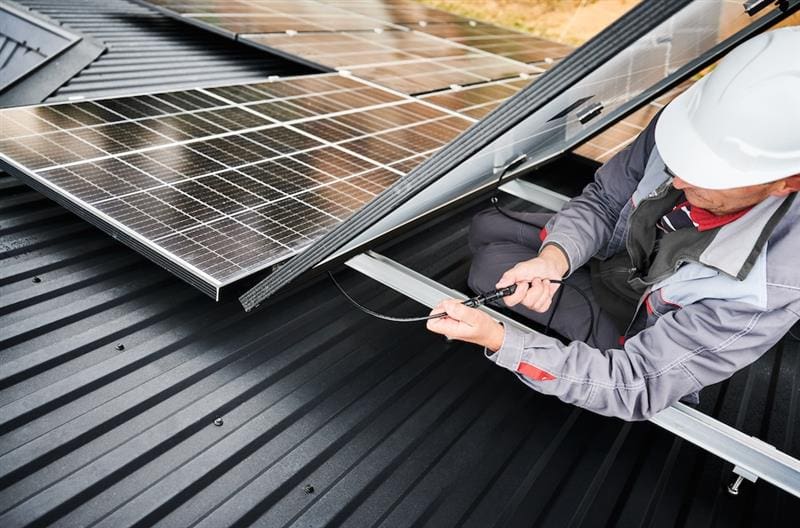
Solar connectors provide the critical electrical and mechanical link between solar panels, inverters, and other components. Their reliability directly influences system efficiency, safety, and maintenance costs. While traditional PV connectors have served the photovoltaic industry for years, the demands of today’s larger, higher-current arrays have highlighted shortcomings in conventional designs, chief among them is the risk of loose crimps and high-resistance connections that can lead to overheating or failure.
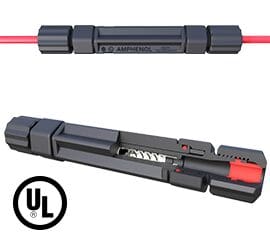
RadCrimp for 8~6 American Wire Gage (AWG) is the latest installment in its series of solar splice connectors.
Modern solar installations often feature higher voltages, greater currents, and increasingly harsh environmental conditions. Installations are also scaling up, meaning thousands of connections must perform flawlessly for decades to support solar field energy production and tie-ins to the larger energy grid. Connectors are a small but essential choice in the design of photovoltaics.
Traditional crimping techniques can be vulnerable to operator error: uneven or incomplete crimps may increase electrical resistance, creating “hot spots” that degrade performance and, in worst-case scenarios, cause fires. Installers also face time pressures, making consistency and speed critical.
As photovoltaics advance, this has become an area of focus for a number of connector suppliers. As a result, a new generation of specialty connectors have been developed to address the unique requirements of the solar industry. One example is Amphenol AIO’s RadCrimp solar connector series that tackles these issues head-on with an innovative radial crimping design. Unlike standard “four-indent” or “hex” crimps that rely on a limited number of contact points, RadCrimp technology applies uniform pressure around the entire circumference of the conductor. This 360° compression creates a gas-tight connection with exceptionally low contact resistance and high mechanical strength.
The series is engineered for rapid, foolproof assembly in the field. Its proprietary crimp tool and mating mechanism guide the installer through a repeatable process, minimizing the chance of error. As a result, connections maintain optimal conductivity over the lifetime of the array, even under thermal cycling, UV exposure, and moisture ingress conditions typical of rooftop and utility-scale installations. The full-contact radial crimp reduces micro-gaps that can lead to oxidation and voltage drop. High-quality, UV-resistant materials and IP67/IP68 sealing protect against weather and dust. Simplified assembly steps cut installation time while ensuring each connection meets stringent industry standards such as IEC 62852 and UL 6703. The design supports higher amperage requirements found in modern high-wattage panels and large-scale farms.
By solving the persistent problem of inconsistent crimps and high-resistance connections, the RadCrimp series reduces maintenance costs and enhances the overall safety of PV installations. Fewer connection failures mean higher uptime and more predictable energy yields, which directly translate into better return on investment for solar developers and system owners.
As renewable energy adoption accelerates, every component from panels to connectors must meet rising expectations for efficiency, safety, and longevity. The RadCrimp solar connector series demonstrates how incremental innovation in a small but critical component can have a significant impact on system reliability. For installers, developers, and owners seeking to maximize performance and minimize risk, RadCrimp offers a compelling, future-ready solution.
See more solutions for photovoltaics at Amphenol Industrial Operations.
Like this article? Check out our Industrial Market Page, and and 2025 Article Archives.
Subscribe to our weekly e-newsletters, follow us on LinkedIn, Twitter, and Facebook, and check out our eBook archives for more applicable, expert-informed connectivity content.

- Printing at the Edge of Possibility: How TE Connectivity Leverages Micro-3D Printing - October 13, 2026
- A Five-Layer Clad Solution for High-Performance Battery Interconnects - October 6, 2026
- High Voltage Interlock for Commercial Vehicles: A Must-Have or a Nice to Have? - September 29, 2026