Breaking Through the AI Power Wall
The inability to supply the demand for energy needed for the exploding growth of AI is known as the Power Wall. This factor could become a significant obstacle to continuing AI advances.
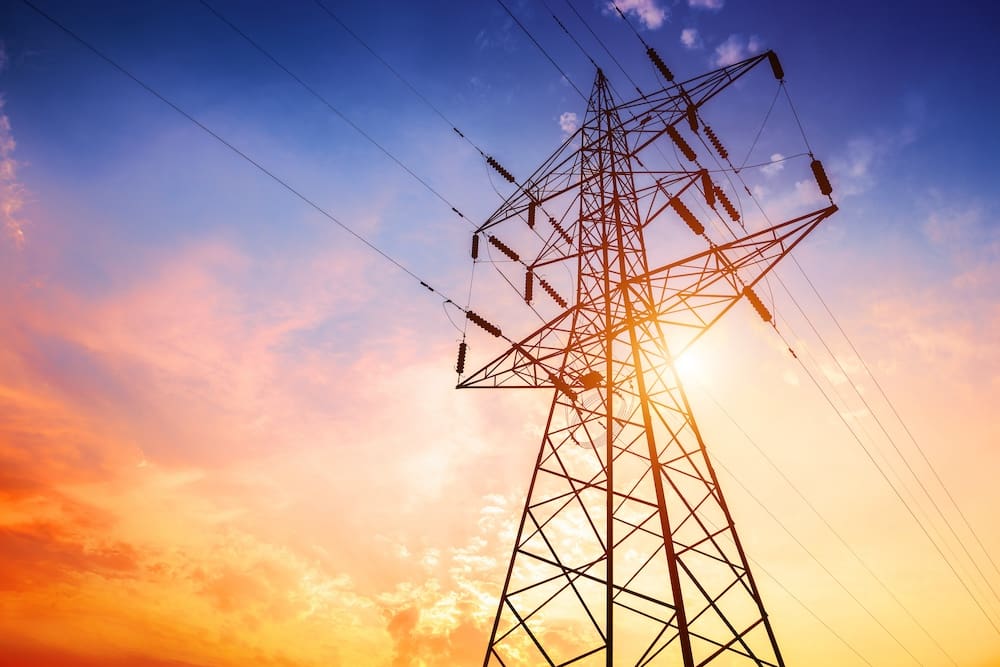
The relentless growth of Artificial Intelligence has been the technology topic of 2025. The inability to supply the subsequent demand for energy is known as the power wall and could become a significant obstacle to continuing AI advances.
Endless reports of unprecedented investments in AI infrastructure have reignited apprehension of “irrational exuberance” that ended badly in 2002. Global competition to achieve AI superiority is driving construction of enormous data centers that continue to expand in size and complexity consuming inordinate amounts of electrical energy. The AI revolution is becoming the poster child of promising transformative advances comparable to the invention of the transistor. At the same time, it is raising fears of a world where automation replaces human labor. Time will reveal the ultimate impact of AI, but in the meantime, the race to build colossal AI “factories” has begun to factor in concerns about how to solve the challenge of the power wall.
High-performance computers have always been considered power hogs. From its beginning in the 1940’s early computers such as the ENIAC built in 1945 used thousands of vacuum tubes that consumed 150 kW of power. Fast forward to 2025, where the computing capacity of an AI data center is now expressed in hundreds of megawatts. A single graphics processor unit (GPU) can consume 700 watts, causing total rack power to reach several hundred kW. The 2024 global demand for all data center power consumption was estimated at between 1.5% to 2% of global electricity, roughly 415 terawatt-hours per year and could reach 945 TWh/year by 2030. System designers realized that this rate of increase is unsustainable and have been frantically searching for ways to reduce power consumption at every level of the system.
Exponential growth of both the number and size of new AI data centers has raised alarms about their impact on water quality, greenhouse gas emissions as well as availability of power. Historically, advances in computer performance have depended on scaling up the prior generation of equipment. This process has typically resulted in a proportional increase in power consumption. As AI models grow and training data increases, the problem only gets worse. The AI power wall raises concerns that the industry may be nearing the point that continued scaling will outpace the physical and economic capacity of the existing power grid creating an impediment to achieving next generations of AI.
The problem involves all portions of the electrical supply chain including generation, grid distribution and storage. The cost of upgrades and technological advances in each sector may become economically unacceptable. If required levels of electrical energy are not available, further advances in AI technology could be throttled in its infancy. The importance of ensuring adequate electricity availability was demonstrated by a recently filed complaint by Amazon (AWS) against PacificCorp for failing to provide contracted power to their new data centers. Residents in several cities have already experienced brownouts due to power demand by a local data center spurring organized opposition to construction of new data centers. Lordstown Ohio, has officially banned new data centers. Electrical grids that are actively managed by AI are seen as one part of the solution.
Avoiding the consequences of hitting the power wall has become a top priority among the system design community and the search is taking multiple directions. The mantra has become “use less power per computation.”
One of the most obvious solutions is to develop components that use energy more efficiently. GPUs and TPUs not only require vast amounts of energy but demand advanced liquid cooling systems that add to the energy consumption budget. Circulating pumps and chilling systems are essential to ensure chip temperatures do not exceed rated limits in thermally dense racks. By one estimate energy usage for system cooling is approaching energy consumed for computation. Picojoules per bit (pJ/bit) has become a key metric for measuring energy efficiency in computing equipment by quantifying the amount of energy required to process, store, or transfer a single bit of data. Doing more computation using less power is the ultimate objective. Nvidia, the leading supplier of AI chips recently announced the more powerful Vera Rubin chip that is reported to be capable of replacing four Blackwell chips resulting in significantly lower power consumption at one-tenth the cost.
Part of the solution is to reduce power consumed by the interconnect system both copper and fiber. Connectivity in these highly complex AI computer clusters is a defining characteristic, and this intense connectivity contributes to total system power consumption.
Manufacturers of connectors have been reducing resistive loss by improving contact alloys and contact design. Some connectors have been designed to minimize obstruction of cooling airflow as well as through the connector body itself. Recently, connectors designed for use in immersion cooled systems feature modified contact geometry that compensates for impedance shifts between air and liquid surrounded contacts. The voltage rating of several newer power distribution connectors has been increased to support up to 800 VDC which is more efficient than typical 480VAC.
Optical fiber is replacing copper conductors in high-speed circuits due to greatly improved reach and density advantages. A single optical fiber can transmit multiple gigabit channels with greater fidelity and distance while weighing less and consuming less space. Optical network switches use less power and are resistant to interference. The market for Optical network switches is growing and is forecast to reach at least $2.5 billion by 2029. Standard pluggable optical transceivers are being supplemented by linear optical transceivers that reduce or eliminate power hungry digital signal processor (DSP) chips. The development of emerging energy efficient technologies such as silicon photonics and co-packaged optics is being driven by AI.
System power efficiency is also being achieved by addressing how and when information is processed in massive AI datacenters. Efficiency can be boosted by developing smaller models that demand less computational power. AI can be utilized to proactively manage workflow to optimize system efficiency. Software and algorithms that minimize internal transfer of data, particularly in and out of memory reduce power consumption and latency. DeepSeek, a Chinese company offers products that rival top U.S. models from OpenAI and Google while using a fraction of the energy, providing a more efficient way to process large amounts of data during inference. The industry is evaluating DeepSeek to determine the accuracy of results as well as the extent of security issues.
Ensuring availability of efficient electrical power addresses the need for supply reliability as well as reducing the environmental impact. Today, a key criterion for locating an AI data center is availability of sufficient electrical power. Some locations have adequate energy generation and transmission capable of supporting current as well as anticipated growth in energy consumption. Some sites are blessed with location or environmental advantages. Data center sites located near hydroelectric or geothermal power generating stations typically feature economical energy rates. Interest is growing in data centers located in cold climates such as Alaska which can take advantage of natural cooling.
An alternative is for a data center to become self-sufficient by providing dedicated energy generation resources on site. Large solar arrays and wind turbines generate environmentally friendly energy but are not reliable 24/7 sources. Utility level battery storage on-site may be a viable solution for buffering renewable sources in the future. Battery technology will require significant development before it can become capable of supporting the immense energy demands of AI. Many data centers are turning to natural gas fired generators either as grid backup or a primary energy source. Fermi America secured preliminary approval to build 6GW of gas-based generation for its proposed 11GW mega-campus in Amarillo, Texas. Generation of greenhouse gases and well as noise pollution have been cited as drawbacks to this solution.
Nuclear power generation appears to be the leading contender for reliable low-cost on-site electrical power generation. The advent of small modular reactors (SMRs) has stirred interest for dedicated on-site power generation. This new class of mini generators are small enough to fit on a flatbed truck, generate minimal nuclear waste, and cost a fraction of a standard nuclear power plant. They are built in a factory and cannot melt down by design. Public concern and regulatory caution are significant factors that could limit early adoption of this long-term solution. Fusion power could be the ultimate source of energy, but the technology may be 20-30 years away from practical application.
The power wall is not insurmountable but will likely continue to be a significant challenge to the advancement of AI technology. A “power first” philosophy applied to data center site selection; continuing optimization of components that improve pJ/bit efficiency and adoption of dedicated local nuclear power generation are the tools necessary to breach the power wall. In the long term, evolving agentic and neuromorphic computing systems will empower greatly improved system efficiency extending the AI revolution.
Like this article? Check out our other Artificial Intelligence and Innovation articles, our Industrial Market Page, and our 2025 and 2026 Article Archives.
Subscribe to our weekly e-newsletters, follow us on LinkedIn, Twitter, and Facebook, and check out our eBook archives for more applicable, expert-informed connectivity content.

- The Power of Having Options - September 15, 2026
- XPO, Addressing the I/O Panel Bottleneck - June 30, 2026
- Agentic and Neuromorphic Computers Enable the Future of Digital Computing - May 26, 2026