What is a Ballast Connector?
A ballast connector is used to link a fluorescent or igh-intensity discharge (HID) lamp to its ballast — the device that regulates current and voltage to the bulb. In carrying the controlled electrical current from the ballast to the lamp, the ballast connector ensures stable power delivery.
The increase in LED use is driving down the need for ballasts and ballast connectors. In many LED retrofits, the ballast is bypassed entirely and the new LED driver has its own wiring, making the original ballast connector obsolete. In some direct-wire retrofit kits, however, non-standardized adapter connectors are used to bridge existing fixture wiring to the new LED driver.
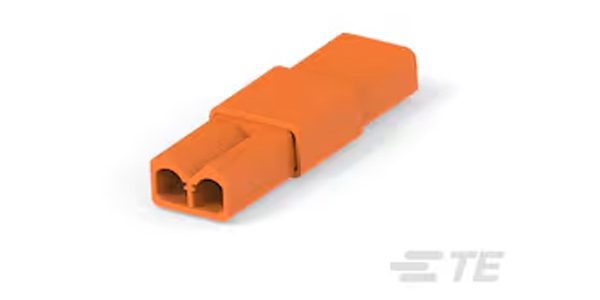
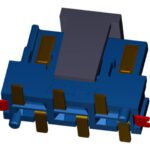
TE Connectivity has three ballast connector types: Light-N-Lok modular, latched connectors for “no tool” termination of separable wiring and installation connections (shown above); BUCHANAN WireMate vertical poke-in connectors suitable for LED drivers; and IP67 sealed SlimSeal Miniature connections for two- and three-position wire-to-wire and wire-to-board applications.
Design Highlights
There are several important considerations for choosing a ballast connector.
Electrical requirements
- Are the voltage and current ratings sufficient to prevent arcing or overheating?
- Can the connector handle high frequency? (e.g., 20–50 kHz for electronic ballasts)
Physical/mechanical fit
- Compatibility with the specific ballast brand and model
- Pin count and spacing to match the fixture’s wiring harness
- Available space within the fixture housing
- Mating/unmating force — important for ease of installation and maintenance
Environmental conditions
- Temperature range — fixtures can run hot, so connectors must be rated accordingly
- Moisture and dust resistance (IP rating) for outdoor or industrial applications
- Vibration resistance for applications like industrial facilities or signage
Safety and compliance
- UL, CSA, or IEC certification requirements
- Compliance with local electrical codes
- Creepage and clearance distances between contacts
Installation and maintenance
- Tool-free vs. tool-required termination (push-in vs. screw terminal)
- Whether the connector needs to be serviceable in the field
- Color coding or keying to prevent mis-wiring
Cost and availability
- Unit cost, especially for high-volume fixture manufacturing
- Supply chain reliability and availability of replacement parts
Transition to LED
- Whether the design needs to accommodate future LED retrofit compatibility, which may bypass the ballast entirely
Markets & Applications
Ballast connectors are used in fluorescent fixtures in office lighting, retail, and industrial settings and in HID lighting in streetlights, stadiums, and warehouses.
Technical Specifications (Note: These are typical specifications. For a specific design project, consult the supplier data sheets.)
| IDENTIFICATION | |
| Product / Series Name | No universal series name; commonly referred to as “ballast wiring harness connectors” or “ballast quick-connect connectors.” |
| Manufacturer(s) | Molex, TE Connectivity, JST, and ballast OEMs |
| Industry Category | Rectangular/wire-to-wire or wire-to-board |
| Relevant Standards | UL 486 (wire connectors) or UL 1977 (component connectors); IP ratings vary by application |
| MECHANICAL SPECIFICATIONS | |
| Shell / Housing Shape | Rectangular, typically low-profile |
| Shell Material & Finish | Nylon (PA66) or thermoplastic; unfilled or glass-filled |
| Overall Dimensions | Vary widely; typical harness connectors range from ~15–50 mm in length depending on pin count |
| Mounting Type(s) | Inline (wire-to-wire) most common; some PCB-mounted receptacles |
| Plug Types | Straight; some overmolded versions for harsh environments |
| Receptacle Mounting Styles | N/A |
| Mating Cycles (rated) | Typically 30–100 cycles (low — these are not frequently mated/unmated) |
| Locking Mechanism | Snap/latch most common; some friction fit |
| CONTACT SPECIFICATIONS | |
| Contact Count (range) | Typically 2–6 contacts; most common are 2, 3, or 4-pin configurations |
| Contact Size(s) / AWG | Typical ballast wiring uses AWG 18–14; heavier gauges for HID applications |
| Contact Material & Plating | Material: Copper alloy (brass or phosphor bronze); Plating: Tin most common |
| Termination Method(s) | Crimp (most common); some push-in/poke-in designs |
| Current Rating (per contact) | Typically 5–15A per contact depending on wire gauge and ballast wattage |
| Voltage Rating | Typically rated to 600V AC; dielectric withstand ~1,500–2,000V AC |
| SEALING & ENVIRONMENTAL | |
| IP Rating | IP54–IP67 for outdoor/industrial versions; most indoor commercial connectors are unrated |
| Sealing Type & Material | Peripheral gasket or potting for outdoor applications |
| Operating Temperature Range | Typically –20 °C to +105 °C; some high-temp versions to +125 °C |
| EMI / RFI Shielding | Generally unshielded |
| MATERIALS & COMPLIANCE | |
| Insulator Material | PA66 (Nylon 6/6) most common; some high-temp applications use PBT or LCP |
| RoHS / REACH / Halogen Free | Most current production is RoHS compliant |
| ELECTRICAL PERFORMANCE | |
| Impedance (if controlled) | NA |
| Data Rate / Bandwidth | NA |
SUPPLIERS
Some ballast manufacturers specify the connector by designing their products around a particular connector supplier’s harness, e.g., Molex or TE Connectivity. WAGO is the most prominent dedicated supplier, while JST and Würth Elektronik supply general-purpose connector families adapted to lighting use.
RELATED PRODUCTS
Same application
- Lamp holders / lamp sockets — the connectors at the lamp end (e.g., G13 bi-pin sockets for T8 tubes); work in conjunction with ballast connectors in the same fixture
- Ballast wiring harnesses — pre-assembled cable assemblies that incorporate ballast connectors; often sold as complete replacement kits
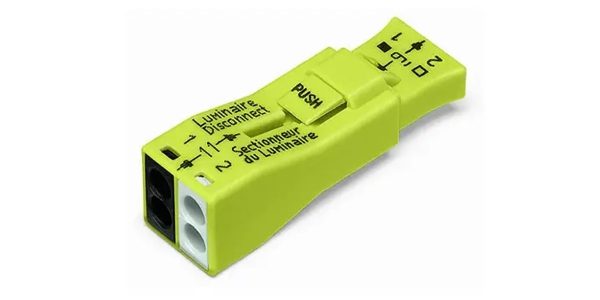
- Luminaire disconnect connectors — specifically designed to allow safe ballast servicing per NEC/CEC code requirements
Adjacent connector types
- Terminal blocks — used in fixture wiring where ballast connectors are not used
- Wire nuts / push-in wire connectors — lower-cost alternative termination methods in the same fixtures
- Strain relief fittings — used where wiring enters the ballast housing
Tools and accessories
- Crimp tools — required for installing crimp-style ballast connector contacts
- Contact extraction tools — for servicing connectors in the field
- Wire strippers and termination tools specific to push-in connector types
Like this article? Check out our other Meet the Connector and Connector Basics articles, our Military and Aerospace Market Page, and our 2025 and 2026 Article Archives.
Subscribe to our weekly e-newsletters, follow us on LinkedIn, Twitter, and Facebook, and check out our eBook archives for more applicable, expert-informed connectivity content.

- Custom Cable Assemblies: A Value-Add Solution - October 13, 2026
- Fiber Optics Product Roundup - October 13, 2026
- October 2026 Connector Industry News - October 13, 2026