What is a PBOF Interconnect?
Pressure-balanced oil-filled (PBOF) interconnects are specialized electrical and fiber optic connectors and cable assemblies designed to survive and operate reliably in extreme, high-pressure deep-sea or subsea environments. Flexible elastomeric tubing (the conduit for electric wires and fiber optic lines) filled with a compensating fluid, such as a non-conductive silicone oil (a dielectric and pressure compensator), allows the internal pressure to equalize with the surrounding seawater. This prevents the components from being crushed and the cable seals from failing due to the extreme water pressure thousands of meters below the ocean surface. Equalizing the pressure and temperature in the assembly accounts for the variable effects of ambient pressure and temperature.
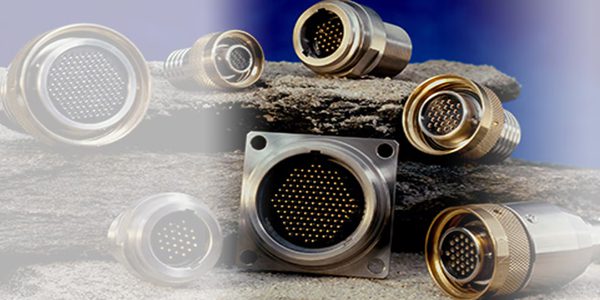
PBOF interconnects are critical components in many subsea systems. They allow wet-mateable connectors (WMCs) to operate at depths up to about 11,000 m without undue mate and demate force on connectors. This technology has also contributed to the development of underwater pressure compensators (UPCs) that can reduce the mass of pressure housings in autonomous underwater vehicles (AUVs) and prevent the effects of ambient pressure on the hydraulic systems of underwater robots.
Origin & Development
The rise of submarine warfare and sonar networks during and after WWII created demand for underwater electrical connectors. Those early networks needed power via cables from mainland bases and a method for connecting those cables. By the 1960s, the precursors to PBOF technology — grease- or fluid-filled designs with diaphragms, oil-filled piston wiping systems, and early fiber optic connectors — were in use. The offshore oil and gas industry embraced PBOF and the technology progressed due to the demanding requirements for systems that operate reliably at depth and without intervention for long periods. SEACON is one of several companies credited with the development of PBOF. In response to military concerns about silicone contamination from the compensation oil, SEACON and others developed synthetic oil alternatives. This change improved lubrication and increased dielectric withstand voltage.
In the 2000s and 2010s, the focus was on resolving design issues, mainly kinked hoses, leaky fittings, and corroded hose clamps. Manufacturers introduced swivel-attachment fittings, threaded compression couplings, and angled backshells to eliminate routing issues. Pressure ratings rose. Hybrid designs with electrical and fiber optic conductors in one assembly emerged. Dual-bladder PBOF architectures for wet-mateable connectors allowed mating and demating at depth with manageable force even at extreme pressures.
Design Highlights
PBOF interconnects share a common operating principle and are subject to industry qualification standards, but vary greatly by manufacturer and application in terms of depth ratings, connector interfaces, hose construction, conductor type, and termination methods. Full interoperability between products from different vendors is not guaranteed and often requires careful engineering validation.
Engineers must consider many factors when specifying PBOF interconnects:
- depth/pressure rating
- service life
- signal/power type and conductor compatibility
- connector mating mode
- materials and corrosion resistance
- temperature range
- mating cycles and maintenance access
- hose attachment and routing
- qualification testing (hydrostatic pressure cycling, salt spray, thermal cycling, electrical performance under pressure; and relevant standards including ISO 13628-6, API 17TR7, MIL-STD-202).
Customer-specific qualification profiles may be required for high-stakes applications.
Markets & Applications
Military, Marine, Oil & Gas
Applications
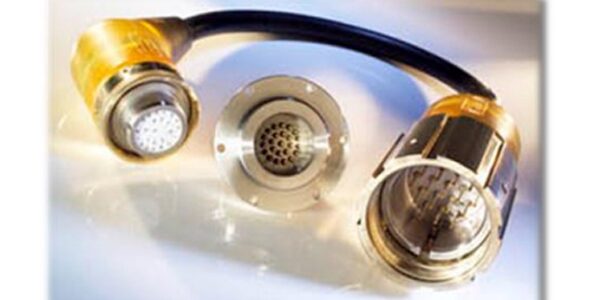
PBOF technology has been widely used in ocean science observatories, towed arrays, drilling systems, production control systems, primary power junctions, ROV (remotely operated vehicle) systems, and flying lead cables that can be connected or disconnected by subsea robots.
Technical Specifications
Important caveat: PBOF is a cable and connector assembly architecture, not a single connector series. The specifications below are drawn from representative commercial PBOF products and should be verified against specific manufacturer datasheets for any engineering application.
| IDENTIFICATION | |
| Industry Category | Circular; in-line / bulkhead assembly configurations |
| Relevant Standards | ISO 13628-6 (subsea production control systems); API 17F; API 17TR7 (connector qualification); NAVSEA S9320-AM-PRO-020/MLDG Rev 3 (US Navy submarine outboard cable molding); MIL-C-24231 (Navy submarine connectors); AS9100D / ISO 9001 (QMS) |
| MECHANICAL SPECIFICATIONS | |
| Shell / Housing Shape | Circular |
| Shell Material & Finish | 316L Stainless Steel (passivated) standard; Titanium (optional, reduced weight/magnetic signature); Marine Bronze (coupling/engaging nuts); 30% Glass-Filled PEEK composite (cathodic delamination-free alternative); Super Duplex Stainless Steel (high-voltage power variants) |
| Overall Dimensions | Dimensions are series- and shell-size-specific; refer to manufacturer datasheets. |
| Mounting Types | Bulkhead Connector Receptacle (BCR) — threaded bulkhead mount; Flange Connector Receptacle (FCR) — indexable flange; In-line (hose assembly, jumper-to-jumper); Panel/equipment housing mount |
| Plug Types | Straight (CCP — Cable Connector Plug); PBOF backshell versions: straight, 45°, and 90° hose routing |
| Receptacle Mounting Styles | Weld-mount; end flange; locknut / jam nut; bulkhead; indexable flange (360° rotation) |
| Mating Cycles (rated) | 500-1,000 cycles |
| Locking Mechanism | Threaded (stub-ACME, UNEF, triple-start); collet/compression fitting for hose (PBOF-specific); set-screw locking ring on engaging nut; key and keyway polarization |
| CONTACT SPECIFICATIONS | |
| Contact Count (range) | 2 to 39 contacts |
| Contact Sizes | #8, #10, #12, #16, #20, #18, #22D |
| Contact Material & Plating | Copper alloy; gold-plated (standard); high-conductivity copper alloy; stainless steel |
| Termination Methods | Solder cup (standard for most series); crimp; standard industry crimp tooling |
| Current Rating (per contact) | #8: 46 A; #10: 33 A; #12: 23 A; #16: 13 A; #20: 7.5 A; #22D: 5 A; 30–35 A at depth, 15–18 A in air. |
| Voltage Rating | Standard PBOF connectors typically rated to 600 V per IEEE reference, with high-voltage variants |
| SEALING & ENVIRONMENTAL | |
| IP Rating | Subsea connectors are rated by hydrostatic depth/pressure rather than IP class. |
| Sealing Type & Material | Dual O-ring seals (primary leak-path protection); interfacial / peripheral seals; nitrile (NBR) 90 Shore standard; Viton (FKM) 90 Shore for wider temperature and chemical resistance; fluorosilicone for oil compatibility. PBOF architecture reduces differential pressure across connector seals — the oil-filled conduit equalizes interior and exterior pressure, significantly reducing seal loading. |
| Operating Temperature Range | Seawater operating: −5°C to +60°C; storage: −40°C to +70°C; general subsea: −40°C to +85°C minimum: −65°C to +175°C; high-temperature downhole variants to +260°C |
| EMI / RFI Shielding | Unshielded (standard PBOF electrical and optical assemblies); shielded multiconductor cable available with individual or overall foil/braid shields; RF coax contacts available |
| MATERIALS & COMPLIANCE | |
| Insulator Materials | PEEK (glass-filled composite thermoplastic); neoprene insert; glass-reinforced epoxy (GRE); fused vitreous glass — hermetic/glass-to-metal sealed variants for HPHT downhole; GRE or glass-to-metal seal inserts |
| Compensation Fluid | Non-conductive silicone oil (traditional standard); synthetic dielectric oil alternatives |
| Hose / Conduit Material | Reinforced elastomeric (Tygothane or equivalent); double-walled with inner and outer elastomeric barriers with fiber reinforcement; clear polyurethane tubing in some configurations for inspection capability |
| O-rings | Nitrile 90 Shore (standard); Viton 90 Shore (chemical/temperature-resistant option). Note: Shore hardness of 90 minimum is critical — softer O-rings can extrude through metal clearance gaps at high pressure |
| Overmold Materials | Polyurethane (standard); neoprene; Viton jacketing; Duralectric; translucent polyurethane |
| RoHS / REACH | RoHS compliance varies |
| ELECTRICAL PERFORMANCE | |
| Insulation Resistance | 500 GΩ to 5,000 MΩ at 500 VDC |
| Contact Resistance | 10 mΩ per contact |
| Impedance (if controlled) | 100 Ω (differential pair) for 10GbE Ethernet variants; 50 Ω for RF/coax contacts; standard signal contacts are uncontrolled-impedance. Note: standard terrestrial Ethernet cable (100 Ω nominal in air) experiences impedance reduction when submerged in oil — oil-compatible, impedance-controlled cable must be specified for high-speed data |
| Data Rate / Bandwidth | 10 Gigabit Ethernet (10GbE) for SuperG55 Ethernet option and SpeedMaster assemblies (up to 75 m in subsea PBOF environment); Fiber optic PBOF assemblies: 10 Gb+ with insertion loss <1.0 dB per mated connection at 1,310 nm; multimode OM4, singlemode OS2; RF coax: 3 GHz (Micro-PSI pipeline connector) |
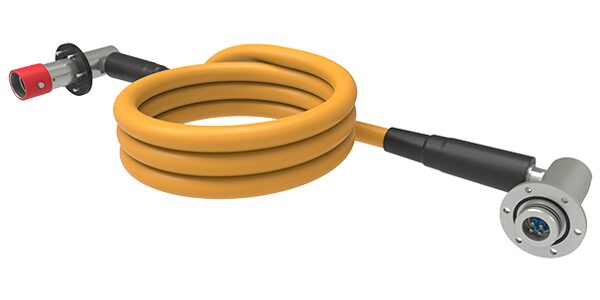
Teledyne ODI’s Nautilus is a wet-mateable, multi-channel electrical connector. The penetrator forms a pressure barrier where differential pressure exists between the PBOF assembly and a 1 ATM vessel.
SUPPLIERS
TE Connectivity (SEACON), AMETEK SCP, BIRNS, Cooper Interconnect, Glenair, MacArtney (manufacturer and distributor), Mako Industries, SMI Group, Teledyne ODI
RELATED PRODUCTS
Wet-Mateable Connectors (WMCs)
Electrical Flying Leads (EFLs)
Optical Flying Leads (OFLs)
Subsea Umbilicals
Subsea Umbilical Termination Assemblies (SUTAs / UTAs)
Pressure Compensators
Overmolded Subsea Cable Assemblies
Subsea High-Voltage Power Connectors (PBOF and other architectures)
Like this article? Check out our other Meet the Connector and Connector Basics articles, our Military and Aerospace Market Page, and our 2026 Article Archives.
Subscribe to our weekly e-newsletters, follow us on LinkedIn, Twitter, and Facebook, and check out our eBook archives for more applicable, expert-informed connectivity content.

- Ceramics in Space: BME X7R MLCC - October 20, 2026
- Test & Measurement Product Roundup - October 20, 2026
- Advanced Connectivity-Automation, Robotics, AI, and Machine Learning - October 20, 2026