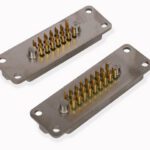
VITA 93.0 QMC is Revolutionizing Embedded Computing
The versatile new small form factor mezzanine standard greatly expands performance and innovation in next generation carriers.

ANSI and VITA ratified the ANSI/VITA 93.0-2025 QMC standard defining a small form factor mezzanine offering increased density compared to existing XMC and FMC form factors. This has opened the door to some exciting developments in the world of embedded computing. QMC was developed specifically to support current and next-gen carriers used in a wide range of rugged environments, supporting both air- and conduction-cooled designs in commercial, industrial, space, and military grade environments.
Designed for performance and flexibility, QMC offers higher bandwidth, more power, and unmatched modularity, scalability, and adaptability in a form factor that is more compact than previous standards. Evolving from VITA 90.0 and other military standards, VITA 93.0 QMC cards go beyond Mil/Aero to include industrial automation, transportation, Test & Measurement, medical, and more.
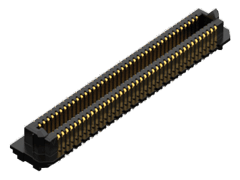
VITA 93.0 QMC utilizes the high-speed capabilities and the slim, dense design of Samtec’s AcceleRate® HD Ultra-Dense, Slim Body Arrays. The 80-pin (4 x 20) QMC connectors are available in 5 mm, 7 mm, 9 mm, 10 mm, 11 mm, 12 mm, 14 mm, and 16 mm stack heights. QMC supports single-width, dual-width, and triple-width modules.
The need for a smaller form factor mezzanine with increased density for rugged computing had been building for some time. Performance was another key factor. “When you look at existing VITA mezzanine form factors, there’s a performance roadblock due to older interconnect technology. QMC pushes past those bottlenecks,” said Matthew Burns, global director, technical marketing at Samtec, one of the companies in the VITA 93.0 QMC working group.
“Decreasing the form factor and optimizing SWaP-C (size, weight, power, and cost) leveraging updated interconnects enables a path to PCIe 5.0, a path to PCIe 6.0, faster Ethernet speeds, and faster USB speeds,” said Burns. “This will be the mezzanine for the next-gen VITA-enabled ecosystem.”
Another unique characteristic is that the standard supports a multitude of stack heights, ranging from 5 mm up to 16 mm, without signal integrity degradation. This flexibility on stack height is a noteworthy change from FMC and XMC.
“The variable stack heights allow for a tremendous amount of new use cases that aren’t available right now. QMC really is revolutionary in what it can enable, either from an I/O standpoint or from additional compute options,” said Burns. “It’s small, fast, and rugged. It supports a number of carrier card form factors including 3U/6U Eurocards (VPX, cPCI, cPCIe, VME, etc.), VNX+, PCIe expansion cards, and more.”
The VITA 93 working group continues to work on ancillary standards for QMC, VITA 93.1, and VITA 93.2, that define the mechanical details of two mezzanine cards with front-panel I/O. “QMC’s fast speeds, ruggedization, and variable stack heights open up new applications with existing and future system architectures. We’re just scratching the surface,” said Burns.
Visit the Preferred Supplier page for Samtec Inc. to learn more about the company and its products.
Like this article? Check out our Standards articles, our Military and Aerospace Market Page and our 2025 Article Archives.
Subscribe to our weekly e-newsletters, follow us on LinkedIn, Twitter, and Facebook, and check out our eBook archives for more applicable, expert-informed connectivity content.

- 2026 Push-Pull Connectors Product Roundup - October 6, 2026
- October 2026 New Connectivity Products - October 6, 2026
- Taking the Complexity out of Power Distribution - September 29, 2026