Prototyping Services Bring Custom Solutions Within Reach
New prototyping tools and processes make custom solutions more accessible and affordable. When an off-the-shelf solution won’t do, a custom connector can be created.
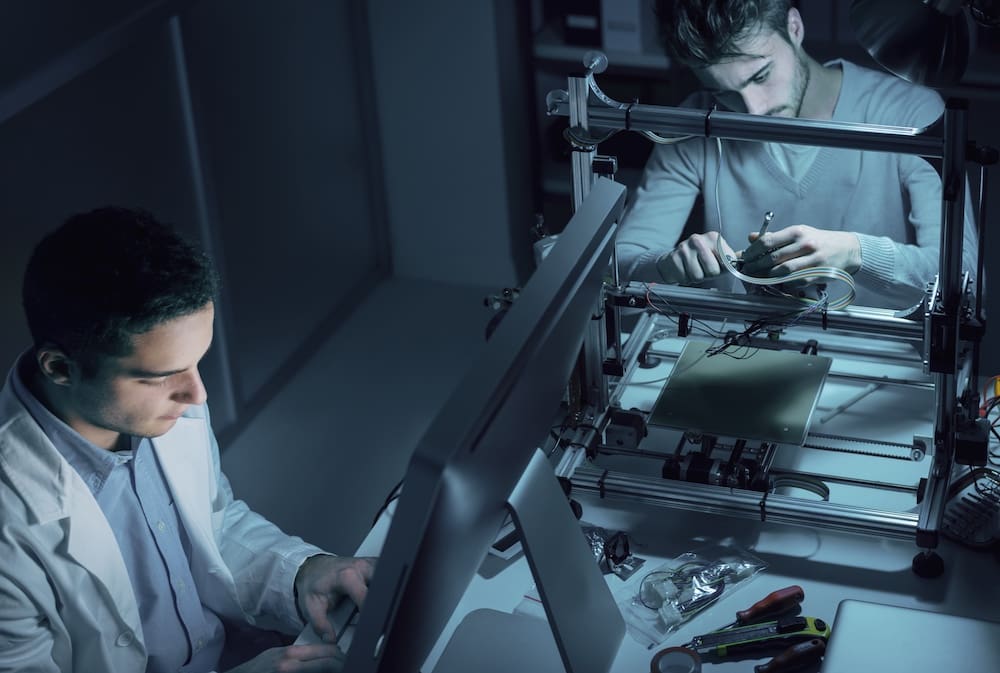
Advanced design software and manufacturing tools such as CNC and 3D printing enable suppliers to very quickly create sophisticated prototypes of custom connectors. A few years ago, this would have been an impossible dream; the reality was an intensive and costly process that could take months. Today, accessible prototypes, small quantity runs of custom parts, and modular systems that enable customers to build their own connectors have vastly expanded the design process.
In 2007, iCONN Systems was founded with the central goal of providing fast, affordable prototypes to engineers designing new products. In particular, unique connectors were needed for specialized equipment in high-reliability and harsh environment applications such as military or medical equipment. One such customer asked for a connector for firefighter breathing equipment. Performance and reliability were paramount.
“In many cases, we’re taking a standardized product and fine-tuning it to better fit an application, such as modifying the keying system, pins, or adding overmolding to a cable assembly,” said Patrick McLoone, sales account manager at iCONN. “These products could be for a niche field that can’t use standard products or equipment with limited qualities. We are a smaller company so we are able to be more nimble and flexible than bigger suppliers, and prototypes and custom products are what we do.”
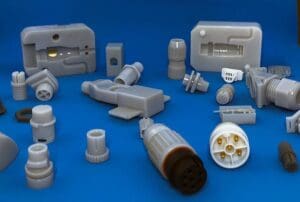
iCONN creates custom molds and inserts to quickly produce prototypes.
To the end, it’s a full team effort. Even the company founders often get involved, and sales and engineering teams work closely to envision and produce the ideal part. The company does offer its own line of standard connectors, so the team is well-versed in the most commonly specified designs, making it easy to retrofit something familiar. When an entirely new design is needed, a sketch might be the starting point. Next, the design is set in CAD software, where the customer can see split views or detailed breakdowns of every angle. iCONN uses 3D printers, creates new molds, and produces a working prototype, and even designs hand-assembly tools when a new connector requires a new mating process. The company aims to make it affordable to order a small run, whether it’s a single prototype or 10 or 20 pieces. McLoone says customers also ask to reengineer obsolete parts or new versions of products that have supply chain issues.
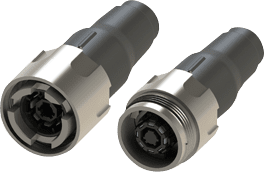
iCONN become the sole supplier of the niobiCONN waterproof connector after its patent holder, Northrop Grumman, realized the company’s harsh environment and customization capabilities would enable it to easily produce this product.
At least 25% of the company’s business is customs and prototypes. The rest is standard parts including M-type, field wirable, and panel mount connectors, as well as overmolding and specialized cable assemblies. This dual expertise in customization and standardardized made the company a good fit for Northrop Grumman when the mil/aero manufacturer was looking for a connector supplier to produce its newly patented underwater connector. Now known as iCONN’s Niobi-CONN wet-mate cable connectors and cable assemblies, these highly rugged components are now being specified for deep sea applications. Of course, if they aren’t quite what is needed, it’s also possible to get a custom version.
For Advanced Interconnections (AIC), custom connectors now encompass a quarter of the company’s orders, although full prototypes are a smaller part of that business. “At the start of the conversation, we steer customers towards the catalog, because we’re so diversified in what we do. We can often adapt catalog parts and use off-the-shelf components whenever possible,” said Jim Murphy, sales manager, AIC. “But if they need something unique, shifting gears to go into a custom isn’t really a big deal for us, unless there’s like a mold or something involved.”
AIC specializes in components for military, telecom, medical, and aerospace applications, and customers looking for a custom product are typically looking for variations on a high reliability connector they have used in the past. “Maybe a different shape, different size, different pitch. You know, everything we do is based off of something we’ve already done, for the most part,” said Murphy. “We have a couple of products that are different than anything else we usually do, but typical customs are building off of what we know and what we’ve done already.”
When a customer needs a prototype that is more unique, AIC’s designers collaborate with the customer’s engineering team. “They may give us sketches, there’s always an exchange of information. We ask a lot of questions up front to make sure we’re getting them what they need and make sure that we’re not going down a rabbit hole. Our goal is to provide them with something that meets their needs as quickly as possible.”
A 3D model in lithographic materials or stereo fibers gives the customer something tangible to work with, said senior product engineer Curt Wilmot. AIC can do some quality spot performance testing and calculate many of the general performance characteristics in advance. “We already know how many amps that contact can handle, so they know how many amps they can use per position and things like that,” said Murphy.
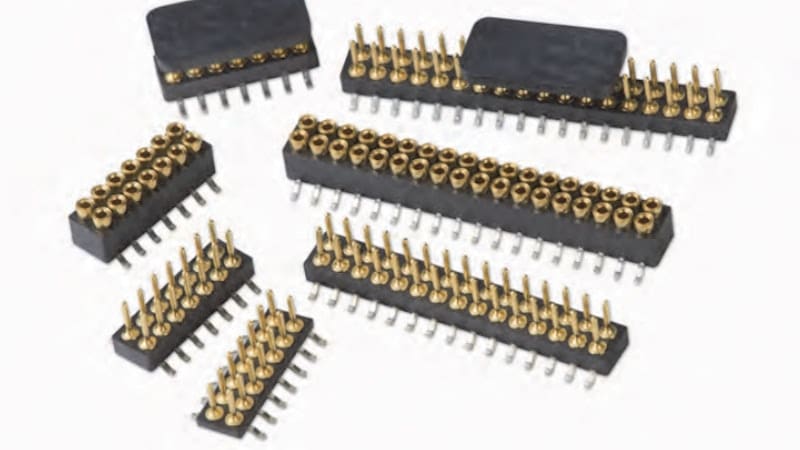
Mezza-pede 1.0mm pitch SMT Connectors from Advanced Interconnections began as a customer prototype. Today, they serve low profile board-to-board or flex cable-to-board applications where long-term reliability and a compact size are required.
Working with customers on prototypes has been a rewarding learning process for the company. A few special projects have even ended up becoming part of AIC’s own product offering. The Mezza-pede SMT connector is one example. It originated as a custom dual row board-to-board connector made for Northern Telecom to support the power supply in a tunable laser. With some refinements, it’s now available in AIC’s catalog.
Build-your-own prototype
Weidmuller noticed that many of its customers, particularly those designing bespoke devices for use in factory automation, process automation, and building automation industries, were seeking novel interconnect solutions for site-specific or unique equipment. The company addressed this need with a combination of traditional collaborative prototyping services and an interactive tool that customers can use to build modular, configurable connectors. With this tool, engineers can select the parameters of the connector they need based on product requirements and see recommendations from Weidmuller’s catalog that meet their requirements, including modular options.
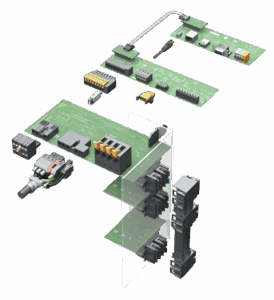

Weidmuller’s innovative support tools and detailed technical data guide users through the entire process – from initial information research and targeted product selection to design-in and optimum utilization. With their ConnectorGuide, you can efficiently narrow down the product search step by step and receive a product recommendation based on expert knowledge.
“We recognize the importance of product samples during the design and development phases of a device. To support and simplify the process for engineers, we created our 72-hour sample service,” said John Froustet, director device & field connectivity division Americas, Weidmuller. “This service is available for the most common configurations of our standard catalog parts and puts parts in an engineer’s hands anywhere in the world within 72 hours. There is a limit on how many pieces of each part can be ordered through the service. However, it allows for a handful of pieces that can be used for their development, qualification, and initial testing.”
Weidmuller also has fully accredited laboratories to conduct product qualification and customer-specific requested testing. “We typically are not conducting testing on a customer’s full device,” he said. Some examples of the typical testing are plug and pull force, conductor pull-out testing, clampable wire size, aging, shock and vibration, and temperature rise. Students and young talents can also benefit from the site’s extensive equipment for research and final theses.
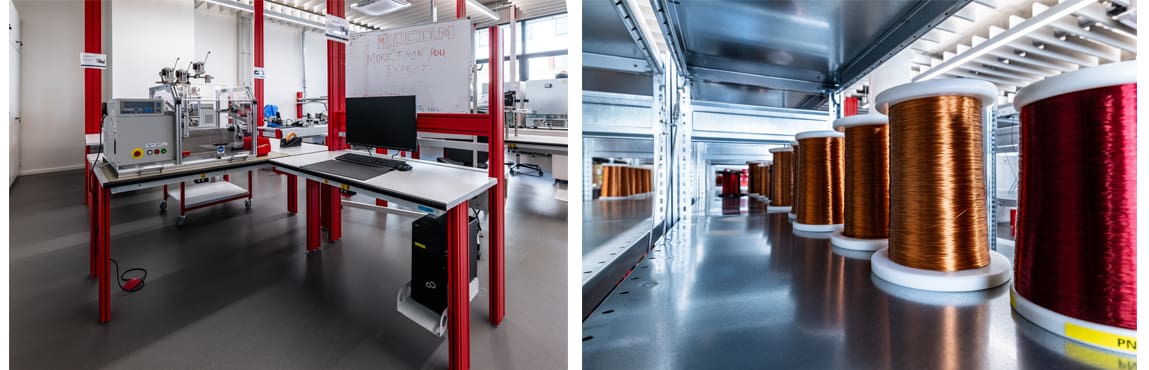
Wurth’s lab includes specialized equipment for tooling and testing new concepts. The company’s material warehouse is stocked with winding wire for prototypes
Protyping has become such an important part of Würth Elektronik’s service offering that in 2024, the company opened a prototype lab at the Hightech Innovation Center in Munich-Freiham to facilitate in-house prototype development and production. Here, all products are tested individually using specialized test equipment and EMC chambers. Customers in need of bespoke components can tap into the companies access to expertise and materials to develop the ideal product for their build, and use the prototype with assurance that its been tested to comply with the application requirements.
To learn more about the companies mentioned in this article, visit the Preferred Supplier pages for Advanced Interconnections, iConn Systems, Weidmüller, and Würth Electronik.
Like this article? Check out our other High-Reliability and Custom articles, our Connector & Cable Special Topics Market Page and 2025 Article Archives.
Subscribe to our weekly e-newsletters, follow us on LinkedIn, Twitter, and Facebook, and check out our eBook archives for more applicable, expert-informed connectivity content.

- Connectivity Is Reshaping Police and Security Vehicle Fleets - September 8, 2026
- Thermal Management Strategies with Liquid Cooling Connectors - August 11, 2026
- Rodent-Resistant Electronics - July 28, 2026