Nurses Help Influence Interconnect Design
It’s one thing to put a product through the rigors of lab testing. It’s another matter entirely to see how it performs in the real world. Connector companies work with nurses and other end users to develop products that support healthcare providers in challenging medical environments.
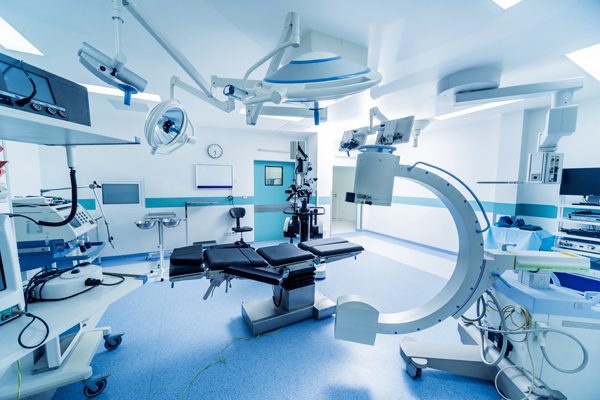
It’s always important to consider user input and experience in interconnect design, but perhaps nowhere is this as essential as it is in healthcare, where technology plays a lifesaving role. Many connector and cable designs have been meaningfully shaped by input from nurses and healthcare providers, who have insights into what it’s like to actually use interconnects under pressure.
One significant interconnect design change that has become a standard is the evolution of the Luer lock connector, a mechanical interconnect device that has long been used to link two sections of tubing together. The older version, the universal Luer connector, allowed any tube to connect to any other. But this convenience was a dangerous flaw that nurses and clinicians repeatedly flagged. The simple, universal design of the Luer connector allowed unintended connections between unrelated delivery systems, including vascular, enteral, respiratory, epidural, and intrathecal applications. This led to misconnections that resulted in serious harm and, in some cases, fatal outcomes.
To more effectively address this issue, in an international group of clinicians, manufacturers, and regulators collaborated to develop a standard interconnect design that would reduce or eliminate misconnections. The resulting ENFit (for enteral feeding) and NRFit (for neuraxial/epidural) connectors are physically incompatible with Luer connectors. NRFit connectors are about 20% smaller than a Luer connector and feature a collar. The changes illustrate the “forced-function” design concept — because of the way the product is designed, it’s almost impossible to make a connection mistake. The ISO 80369 series of small-bore connector standards was originally published in 2010 and was most recently updated in 2025.
The lesson of the Luer lock has been repeated across product lines as medical technology has become more complex and proliferated in small spaces. User input has become essential.
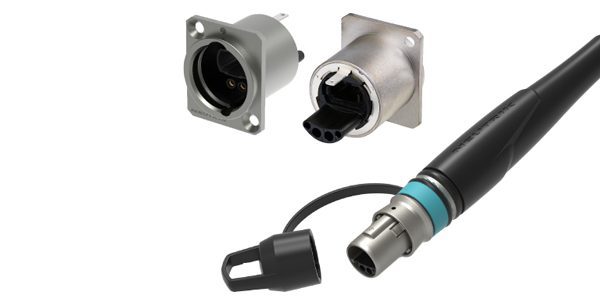
opticalCON HYBRID MED Connector from Neutrik offers a nurse-advised design that offers ease of handling and cleaning, and supports bandwidth requirements, EMI immunity, strain relief, and repeated mating cycles.
Brant Mathiason, Custom Solutions Engineer at Neutrik, says that the company’s AV connectors were being used to connect imaging systems and other medical applications, even though they weren’t originally designed for that market. Their ruggedness and performance made them a good choice for push-pull connections, but they weren’t a perfect solution from a user perspective. But this was an expected group of users. Once word of their adoption for medical use spread, Neutrik’s design team got involved.
“We started talking to a lot of people in the nursing field and getting feedback. It turned out that people were using our opticalCON product in medical environments. And sure, it worked, but we thought there might be ways to improve it. So we worked with nurses to determine easier ways to connect and disconnect the connectors,” he said.
To disengage the original connector design, the user pulls a ring back. Some keying features, such as small ridges or ribs on this ring, provided a user with a bare hand good dexterity. The ribs were small and designed to give bare fingers traction. Nurses, however, typically have gloved hands.
“We learned that the design wasn’t great for nurses using it with gloves on; the gloves would get pinched in the mechanism, or their finger would slip and the connector would tear the glove. You don’t want nurses to have to stop what they’re doing because of a connection, because whatever they are doing, it’s something important.”
The opticalCON HYBRID MED connector was designed with these insights. It features one larger, smoother rib that a gloved user can easily grip and a loop that users can put their finger inside to help pull the connector. “We also had to make sure there weren’t any small cavities where fluids could get stuck. They need to clean these devices properly so they can be used again, because they are quite expensive,” he says. The hybrid capabilities also help streamline medical equipment cabling. “So if you have a monitor, you only need one cable going to it, and you can just run power down that cable as well as your signal.”
Tactile issues are an important consideration for connector suppliers redesigning products to cross markets, and plug-type connectors should be specified based on their glove-friendliness as well as physical or audible latching confirmation. In rooms filled with equipment, differentiating lines and keeping cables separate is important. Based on user input, ECG snap leads now feature classic teardrop designs to reduce tangling and increase patient comfort, along with molded strain reliefs to extend lead life and improve flexibility.
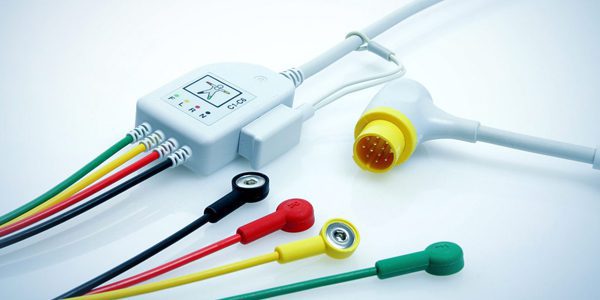
Bernd Richter offers yoked, color-coded EKG monitors and Holter solutions that help keep cables in proper order, eliminating mismatching and tangling.
Color coding is another valuable feature to consider in medical interconnect selection. Nurses reported that it was easy to misconnect multi-lead EKG systems under pressure. The industry responded with standardized color coding. Matching plug to port by colors allows users to quickly identify the correct port to plug into, an advantage in high-pressure situations.
The foundation of every successful device interface is a user-centered research process conducted in the clinical environment and including input from the technicians, nurses, and physicians who will use the equipment under real-time pressure.
Like this article? Check out our other Circular Connectors and Harsh Environment articles, our Medical Market Page, and our 2025 and 2026 Article Archive.
Subscribe to our weekly e-newsletters, follow us on LinkedIn, Twitter, and Facebook, and check out our eBook archives for more applicable, expert-informed connectivity content.

- Connectivity Is Reshaping Police and Security Vehicle Fleets - September 8, 2026
- Thermal Management Strategies with Liquid Cooling Connectors - August 11, 2026
- Rodent-Resistant Electronics - July 28, 2026