Medical Alley Draws Electronics Companies to Midwestern MD&M Show
Minnesota med-tech innovators with the Mayo Clinic, Medtronic, Boston Scientific, 3M, and others congregated at the annual MD&M regional trade event to explore miniaturization, automation, and bio-compatible technologies.
The pacemaker, the mechanical heart valve, and the heart-lung machine for open heart surgeries are among the lifesaving technologies that originated in Minnesota. The state’s reputation as a center for medical innovation and manufacturing has led to the region becoming known as Medical Alley — an official designation that celebrates 40 years in 2024. It may not be as big as Silicon Valley, but Medical Alley’s concentration of device manufacturers, technology companies, care centers, insurance companies, and research institutions has a global impact, as evidenced by MD&M’s Midwest edition, which drew exhibitors and attendees from around the world in mid-October.

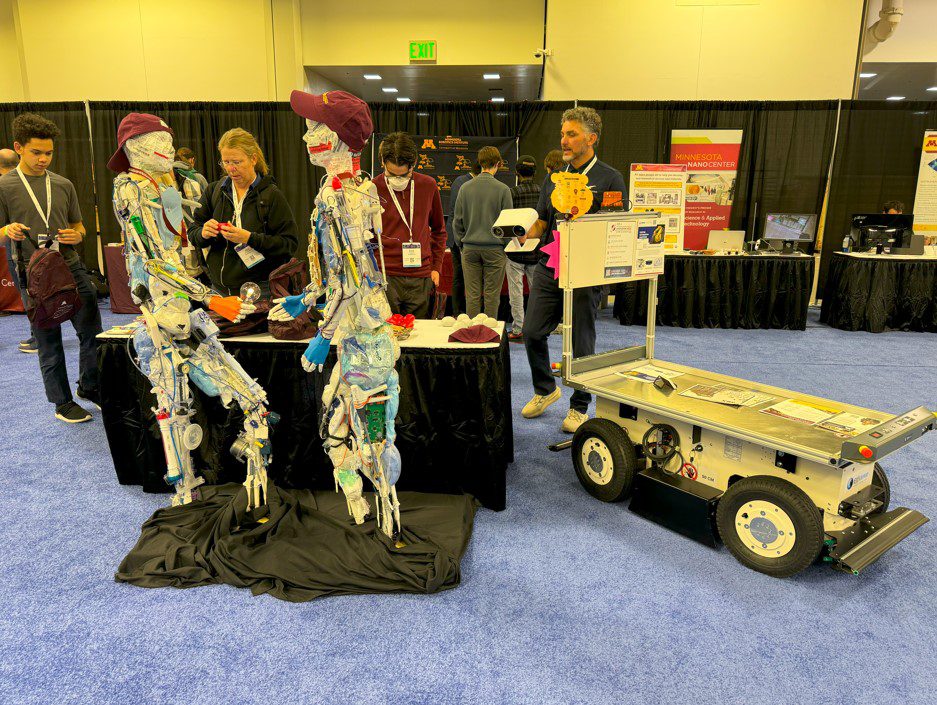
The event included an exhibition hall, technical conference, speakers, and the Innovation Zone, an interactive hub for technical demonstrations hosted by the University of Minnesota (UMN) Medical School, College of Science and Engineering, Institute for Engineering in Medicine, Bakken Medical Devices Center, Visible Heart Laboratories, and others.
This year’s exhibits
If medical trends can be inferred by the products on display, future technologies will integrate more sensor technology, AI, and be smaller than ever. Products on display included electronic components, wire and cable, tubing and valves, bio-compatible materials — and this year more than ever, a proliferation of advanced sensors used for the collection of data in body-worn applications. Biocompatible, shielded, high reliability, and easy to use products made from durable plastics dominated the connectors on display. New England Wire and Minnesota Wire showcased ultra-fine wire and cable products for miniaturized devices.

Molex showcased miniaturized interconnects and sensors for medical wearables.
Molex showed a selection of small, lightweight FFC cables with printed circuits that are rugged enough to perform in robotic arms and other high use and repetitive applications. Ken Stiles, Molex’s product marketing engineer, shared a story about a customer that needed a flexible circuit for a robotic arm that could endure a million cycles; in use, Molex’s solution actually stood up to 14 million cycles. Pretty impressive.
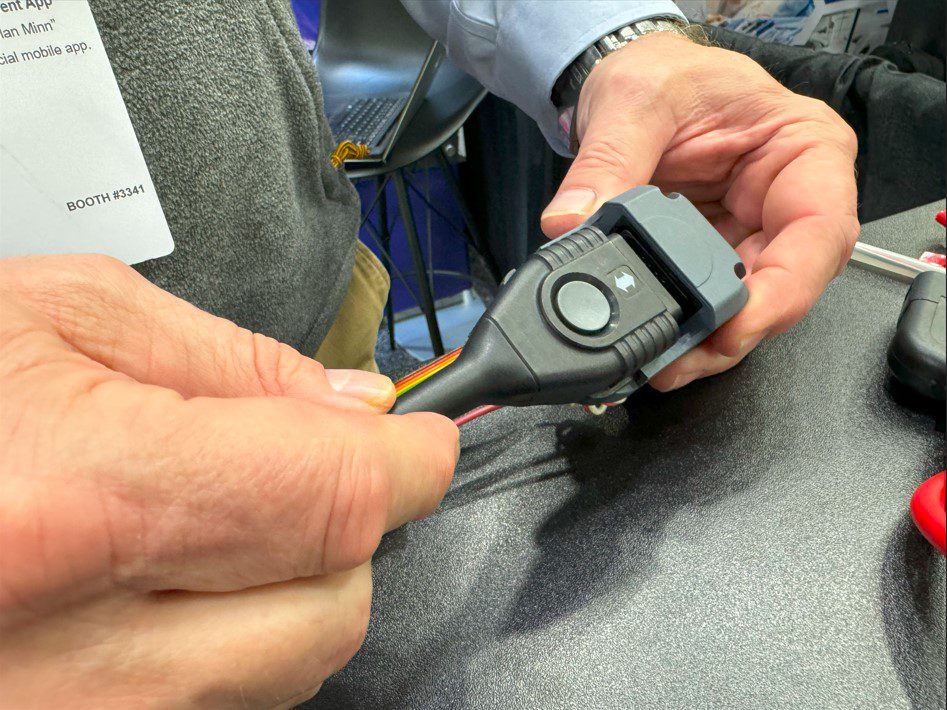
Bernd Richter’s bespoke rugged connectors include this custom assembly for a defibrillator.
At Bernd Richter’s booth, attendees could examine the German company’s extremely rugged interconnect products, including high-power connectors, medical cables, lead wires, and Holter EKG cables. The company, a recent Amphenol acquisition, provides custom interconnects for medical and military applications. “More than 80% of our business is in the medical industry, and we have a great team of engineers who can design very unique assemblies for custom challenges. We offer everything from custom keying to specific geometries, pin counts, additional PCBs, and ruggedization features,” said David Krohn, VP of sales. The company’s reputation for durability is near-legendary; Krohn shared an example of a customer who required a rugged cable assembly for a defibrillator. In the field, it outperformed expectations when the device got caught up in a law enforcement situation and was dragged, along with an officer, for more than two miles. The device stood up to that unexpected test due to its rugged cable design.

Smiths Interconnect introduced new high density D04 connectors.
Smiths Interconnect debuted its durable new new DO4 high-density connector, which boasts more than 80 pins, along with additions to the Hypergrip line that offer the reliability and ease of use this line of plastic circulars is known for, but in a new disposable format. This variant is rated for up to 30 mating cycles and offers all the performance aspects of the Hypergrip in a cost-effective, limited-use format.

AMETEK EMC’s booth displayed products for laser processing, fine wire, and cable assembly technologies.

Trexon’s engineered products for medical technologies included complex and highly ruggedized assemblies.
Trexon also had a new product to show off, a CAT 8 cable that will deliver fast, rugged performance in medical equipment such as imaging. Within the month, a new USB-C connector will also join the Trexon lineup. This booth also had an impressive selection of FFCs, sensors, and other components with etching and hybrid printing technologies using conductive ink — very useful for body-worn technologies such as monitors and disposable medical patches. The company is focusing its development energy into sensor technologies that will serve medical as well as automotive customers.

LEMO’s pioneering push-pull circular connectors remain a mainstay of clinical equipment. An extensive selection of variants on display at MD&M showcased versatility.
LEMO and sister company Northwire exhibited together, showing an assortment of new fine wire products and LEMO’s plastic connectors for medical applications, including the REDEL MP connectors. A mainstay in medical applications, the REDEL plastic range is widely used in electrophysiology catheters, electrosurgical devices, heart pumps, robotic surgical devices, and MRI machines. The MP is a modular product that can be configured to include power, signal, data, fiber optic, and fluidic connectivity in a single high contact density module that can be further customized with the integration of intelligence, such as an EPROM.
Trexon’s engineered products for medical technologies included complex and highly ruggedized assemblies.
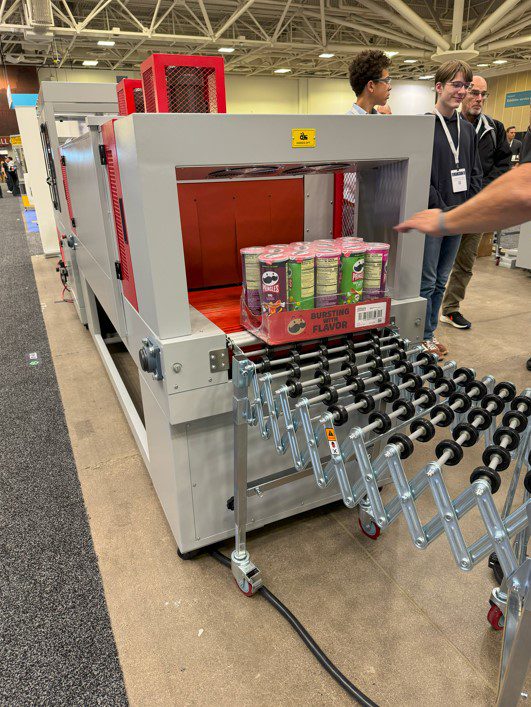
The Medical Alley ecosystem includes manufacturers that offer assembly of both components and finished devices. The full supply chain, from component and device design to manufacturing, packaging, and shipment is on display in a combined trade event: MD&M runs concurrent to the ATX Advanced Manufacturing show, MinnPack, Plastec, and D&M. In past years, the show floor was a sea of robotic arms and 3-D printing machines. This year, 3D printing seems to have taken a step back; despite the significant advances in addictive manufacturing. There were also fewer arms in motion; the once new technology has been so thoroughly integrated into manufacturing that it’s no longer exciting, although a few mini assembly lines demonstrated automated packaging technologies. Automation remains a major development, though.

TLC Electronics recently acquired a Komax Omega 750 machine that allows the company to automate wire harness production, saving 90% on labor. This is the type of equipment that will allow regional manufacturers to compete with overseas producers and keep components companies close to device manufacturers, making it easier to design new products and keep production closer to regional markets.

Another nod to the future could be found at the University of Minnesota’s Innovation Zone, a multi-department hub showcasing student projects and research developments in medical device innovation and advanced manufacturing. At most trade shows, the students come in on the last day to sample the professional world as a visitor. At the Innovation Zone, tomorrow’s engineers show off their own experiences and ideas.

The most energized and engaging stop on the floor, this group of new talent generators promises that Minnesota’s Medical Alley will continue to be the of center healthcare advancements in the years ahead.
To learn more about the companies mentioned in this article, visit the Preferred Supplier pages for AMETEK, Bernd Richter, Molex, Smiths Interconnect, amd Trexon.
Like this article? Check out our other Trade Shows articles, our Medical Market Page, and our 2024 Article Archive.
Subscribe to our weekly e-newsletters, follow us on LinkedIn, Twitter, and Facebook, and check out our eBook archives for more applicable, expert-informed connectivity content.

- Connectivity Is Reshaping Police and Security Vehicle Fleets - September 8, 2026
- Thermal Management Strategies with Liquid Cooling Connectors - August 11, 2026
- Rodent-Resistant Electronics - July 28, 2026