Advancing EV Motor Efficiency Through Magnet Wire Termination Innovation
The electric vehicle (EV) transformation has created significant engineering challenges in motor design, particularly in optimizing the electromagnetic performance of compact coil systems while meeting sustainability and cost-effectiveness requirements.

By FABIO DE PASQUALE, R&D, Product Development Engineer,
and Clinton Pereira, Supervisor, R&D, Product Development Engineer, TE Connectivity
A critical aspect of this evolution involves the strategic shift from traditional circular to flat magnet wire termination methods, a transition that directly impacts stator cavity filling factors, thermal management, and overall motor performance. Understanding these technological developments provides valuable insights into the future of EV motor manufacturing and the role of advanced termination technologies.
The Engineering Challenge
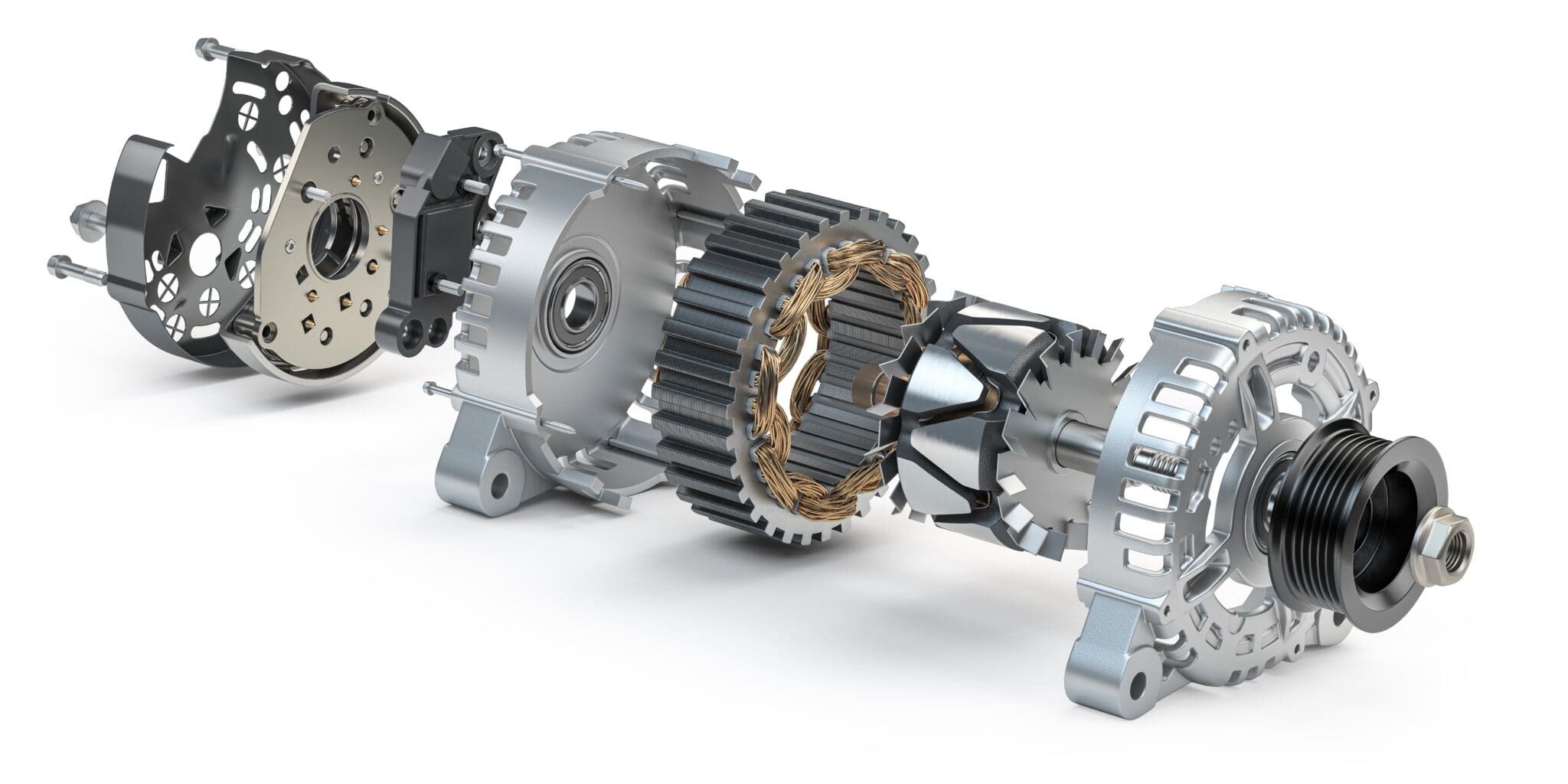
Electric motor efficiency fundamentally depends on maximizing the copper fill factor within the stator slots. Traditional round magnet wire configurations leave significant void spaces due to their circular geometry, limiting the amount of conductive material that can be packed into a given volume. This geometric constraint directly impacts several critical performance parameters:
Electromagnetic efficiency: Lower fill factors reduce the magnetic field strength achievable for a given motor size, limiting power density and efficiency.
Thermal management: Insufficient conductor packing creates hot spots and reduces heat dissipation capability, potentially limiting motor performance and lifespan.
Manufacturing complexity: Traditional termination methods requiring pre-stripping, soldering, or welding introduce process variables that can affect quality and increase production time.
Flat Magnet Wire: A Geometric Solution
The transition to flat magnet wire represents a fundamental approach to addressing these limitations. Rectangular conductors can achieve significantly higher fill factors compared to circular alternatives, providing several key advantages:
- Optimized space utilization: Rectangular geometry allows for more efficient packing within stator slots.
- Enhanced current density: Higher conductor volume per unit slot area enables increased power handling.
- Improved heat transfer: Greater surface area relative to cross-sectional area facilitates better thermal management.
- Superior frequency response: Reduced proximity effects at higher frequencies improve motor performance across operating ranges.
However, flat wire geometry introduces new challenges in termination technology, particularly in creating reliable electrical connections without compromising the conductor’s physical properties.
Termination Technology Evolution
Traditional magnet wire termination methods, including brazing, soldering, and welding, present several limitations when applied to flat conductors:
Process complexity: These thermal processes require precise temperature control and often demand chemical pre-stripping of insulation, adding complexity and potential quality variations.
Material degradation: High-temperature processes can alter the metallurgical properties of both the conductor and insulation, potentially affecting long-term reliability.
Environmental concerns: Chemical stripping processes and thermal methods generate fumes and waste, creating environmental and workplace safety considerations.
Manufacturing efficiency: Manual or semi-manual processes limit production rates and introduce human factors that can affect consistency.
Case Study: AMPLIVAR Splice Technology
TE Connectivity’s AMPLIVAR splice technology exemplifies an innovative approach to addressing these termination challenges through mechanical crimp technology specifically adapted for flat magnet wire applications.
The AMPLIVAR splice system utilizes precision-machined serrations within crimp barrels, featuring burrs designed to penetrate insulation and create direct metal-to-metal contact with the conductor. This mechanical approach offers several technical advantages:
- Solderless process: Eliminates thermal exposure that could compromise conductor properties or insulation integrity.
- Insulation displacement: Sharp-edged serrations automatically strip insulation during the crimp process, virtually eliminating pre-processing steps.
- Gas-tight sealing: Mechanical compression creates an airtight connection resistant to oxidation and environmental contamination.
Design Enhancement for Flat Conductors
The development of flat wire termination required specific design modifications to accommodate the unique geometry and mechanical properties of rectangular conductors.
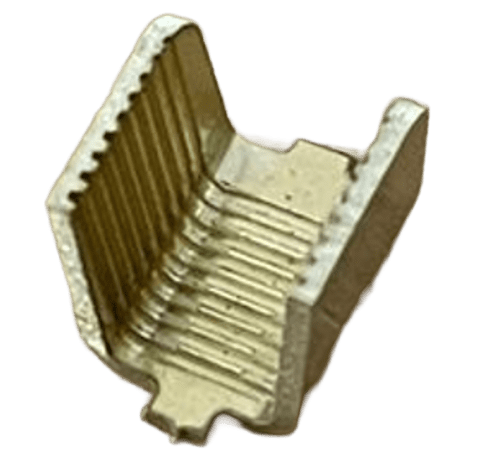
Single flat magnet wire termination
The shape and geometry were tailored to fine-tune the termination of the considered flat magnet wires, including an improved splice design for single/F-Crimp flat wire termination.
The transition to flat magnet wire in EV motor applications represents a significant advancement in electromagnetic design, offering substantial improvements in power density and thermal performance. However, realizing these benefits requires equally advanced termination technologies that can maintain the integrity and reliability of these connections while supporting efficient manufacturing processes.
Like this article? Check out our other articles on Innovation and EV’s and HEV’s, our Automotive Market Page, and 2025 Article Archive.
Subscribe to our weekly e-newsletters, follow us on LinkedIn, Twitter, and Facebook, and check out our eBook archives for more applicable, expert-informed connectivity content.

- Advancing EV Motor Efficiency Through Magnet Wire Termination Innovation - October 28, 2025