What are Quantum Sensors?
Meet the Sensor: Quantum Sensors
Quantum sensors are a highly complex sensing device that measures physical quantities with extreme precision. They can measure time, temperature, distance, gravity, electromagnetic fields, and more. They use the principles of quantum mechanics, such as superposition, entanglement, and quantum coherence, to measure physical quantities. They range in size and abilities, and are used in quantum computing, medical devices, military equipment, navigation systems, and automotive systems, such as lidar and cybersecurity for vehicle-to-everything (V2X) networks.
Quantum sensors operate by exploiting the fragile quantum states of particles like atoms, ions, or photons. These states are highly sensitive to environmental changes, allowing the sensor to detect magnetic fields, electric fields, temperature, pressure, gravity, motion, or rotation. For example, when atoms are exposed to a magnetic field, their energy levels shift. A quantum sensor can detect these shifts using lasers and interpret them to measure the field’s strength and direction.
Applications in the automotive industry
Quantum sensors are also used in navigation and advanced automotive applications. In cybersecurity applications, quantum-safe cryptographic sensors help secure vehicle-to-everything (V2X) communications against future quantum computing threats. In material testing and diagnostics, quantum sensors can detect minute structural changes or stress in materials, helping improve vehicle safety and durability.
Applications in the military industry
In 2025, DARPA launched the Robust Quantum Sensors (RoQS) program to develop quantum sensors that are inherently resistant to environmental disruptions, ensuring they can operate reliably outside of a laboratory without sacrificing their sensitivity. The ultimate goal of the program is to integrate these sensors into Department of Defense platforms.
Connectorization
Quantum sensors are connected to integrated circuits with specialized interfaces and connectors. These interfaces must support high precision, low noise, and sometimes cryogenic operation capable of operating at extremely low temperatures (below 4 K) for quantum computing or high-precision automotive systems.
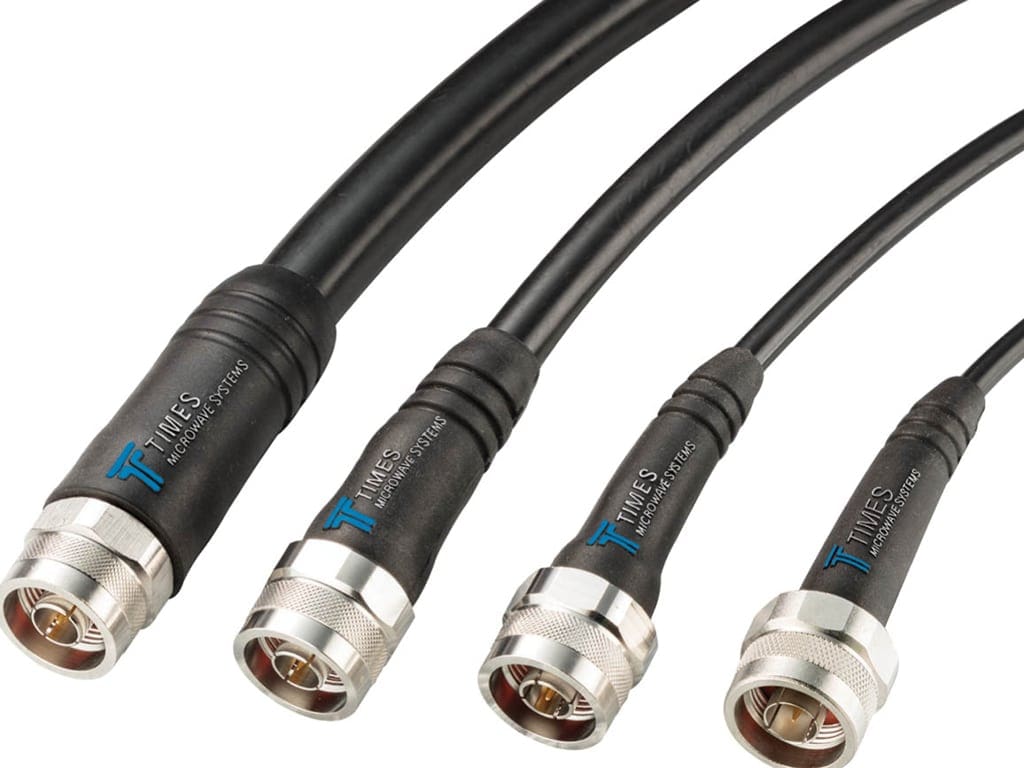
Times Microwave Systems offer non-magnetic cables. These, along with UHF and mini-UHF connectors, are used in lower-frequency applications or legacy quantum systems.
Quantum sensors also use RF connectors for applications that operate using microwave signals, especially when dealing with qubits or spin-based sensors. A Times Microwave Systems blog discusses the value of RF interconnects in these situations: “High-performance coaxial cable assemblies (which include both the cable and connectors) are crucial in delivering precise, high-frequency microwave signals to the qubits to change their state and perform operations. Using coaxial cable assemblies in quantum computing also helps mitigate the effects of environmental noise and other sources of signal degradation, allowing for more reliable and precise quantum operations.”
Common RF connectors used with quantum sensors include SMA, TNC, QMA, and UHF/mini-UHF connectors. These connectors are chosen for their low insertion loss, high shielding effectiveness, and compatibility with cryogenic and ultra-low noise environments.
For quantum sensors that rely on photonic signals, optical fiber connectors are used, including LC, SC, and ST connectors: Standard in fiber-optic communication. These are essential for transmitting quantum information via photons and minimizing signal degradation over distance.
Cryogenic-compatible connectors
Quantum sensors often operate at cryogenic temperatures. Specialized cryo-compatible SMA or SMP connectors are specified for these applications to maintain signal integrity.
Once quantum sensor data is conditioned and digitized, it is transmitted via LVDS (Low-Voltage Differential Signaling) for high-speed, low-noise digital communication and for control and configuration of sensor modules. CAN or Ethernet protocols are used for integration into automotive networks.
Markets and Applications
Automotive, Medical, Test & Measurement, Consumer
Quantum sensing is used in navigation and positioning, geophysical surveying, medical and biological imaging, materials and electronics characterization, precision timekeeping, and fundamental physics research. In vehicles, they are used for navigation, fleet tracking, and autonomous driving.
Suppliers
Quantum manufacturers include Robert Bosch GmbH, BAE Systems, QuantumDiamonds, and others. RF interconnects are available from Rosenberger, Times Microwave Systems, and others.
Related products
Like this article? Check out our other Meet the Connector and Connector Basics articles, our Automotive Market Page, and our 2025 Article Archives.
Subscribe to our weekly e-newsletters, follow us on LinkedIn, Twitter, and Facebook, and check out our eBook archives for more applicable, expert-informed connectivity content.

- Connectivity Is Reshaping Police and Security Vehicle Fleets - September 8, 2026
- Thermal Management Strategies with Liquid Cooling Connectors - August 11, 2026
- Rodent-Resistant Electronics - July 28, 2026