What are Gas Sensors?
Meet the Connector: Gas Sensors
Gas sensors are a category of electronic devices that detect and measure the presence of various gases. Also known as air or air quality sensors, these electronic devices are essential parts of safety systems, industrial operations, and pollution controls, and they identify substances that may pose a threat to humans or animals, such as carbon monoxide. They work by detecting the concentration of a gas and converting it into an electrical signal that can be measured, monitored, and acted upon by a system. Different sensor types target specific gases such as carbon monoxide (CO), methane (CH₄), ozone (O₃), hydrogen sulfide (H₂S), or oxygen (O₂).
The first modern gas detector was invented by Oliver Johnson in 1926 to detect combustible gases in mines. Prior to this development, miners used canaries to detect toxic gases; when the bird died, it was time to exit the mine. In 1815, Sir Humphry Davy, invented an oil flame lamp, called the Davy Lamp, to detect methane. The height of the flame changed in response to the presence of the gas. Johnson’s catalytic combustion sensor was a significant development in gas detection. Based on the catalytic oxidation principle, this sensor alerted users when combustible gases approached potentially explosive levels. This invention moved gas detection toward electronic sensors. Johnson went on to form Johnson-Williams Instruments, and the company developed sensors to detect other gases.
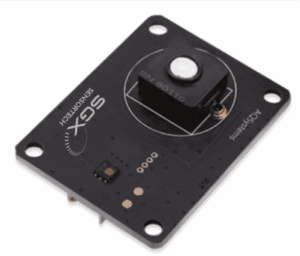
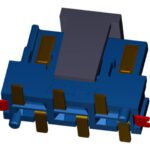
Amphenol SGX Sensortech PS1-CO-10-MOD from Heilind features a low profile solid polymer module for carbon monoxide 10ppm
Another critical development in electrochemical gas sensors is attributed to Naoyoshi Taguchi, who developed the MOS gas sensor in the 1960s in response to explosions occurring during the development of Japan’s gas infrastructure. Taguchi Gas Sensors, or TGS, are still widely used today.
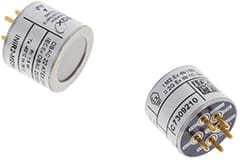
SGX SensorTech (Amphenol SGX SensorTech) INIR2 series digital gas sensors from DigiKey
Types of Gas Sensors
Gas sensors are classified based on their sensing principle:
Electrochemical sensors detect gas via a chemical reaction producing an electrical signal. Common for detecting toxic gases like CO or NO₂.
Metal oxide semiconductor (MOS) sensors measure resistance changes in a metal oxide (e.g., tin dioxide) when gases are present. Used in air quality sensors and breathalyzers.
Infrared (IR) sensors use IR light absorption to detect gases like CO₂ or hydrocarbons. Non-contact, highly accurate, used in industrial and medical applications.
Catalytic bead sensors detect combustible gases by oxidizing them on a heated bead, changing resistance. Used in mining, oil, and gas industries.
Photoionization detectors (PID) use UV light to ionize gases, detecting volatile organic compounds (VOCs). Highly sensitive for low-concentration detection.
Ultrasonic and laser gas detectors detect gas leaks using sound or light without physical contact. Used in industrial leak detection systems.
Regulatory
Gas sensors must comply with regulations to ensure reliability, as safety depends on proper functionality. They also require regular calibration and maintenance for accuracy.
Following the Farmington Mine disaster, in which 78 miners were killed in an underground methane explosion in West Virginia, the Federal Coal Mine Health and Safety Act of 1969 spurred the development of new gas detection technologies, including portable gas detection monitors and multi-gas detectors, that ultimately have saved thousands of lives.
Markets and Applications
Industrial, Medical, Mil/Aero, Consumer
Gas sensors are commonly used for safety (e.g., detecting toxic or explosive gases), environmental monitoring, industrial processes, and in smart systems like HVAC and embedded IoT applications. They are widely used in industrial environments to detect leaks or measure the presence of various gases. They are also used in consumer devices, such as carbon dioxide and smoke detectors.
Suppliers
Gas sensors are available from many suppliers, including DigiKey, Heilind Electronics, Mouser Electronics, Powell Electronics, and Waytek.
Like this article? Check out our other Meet the Connector and Connector Basics articles, our Connector & Cable Special Topics Market Page, and our 2025 Article Archives.
Subscribe to our weekly e-newsletters, follow us on LinkedIn, Twitter, and Facebook, and check out our eBook archives for more applicable, expert-informed connectivity content.

- Connectivity Is Reshaping Police and Security Vehicle Fleets - September 8, 2026
- Thermal Management Strategies with Liquid Cooling Connectors - August 11, 2026
- Rodent-Resistant Electronics - July 28, 2026