What are Coaxial Cables?
Meet the Cable: Coaxial Cables
Their design was first used in 1858 and patented by mathematician Oliver Heaviside in 1880, yet these reliable and cost-effective cables are still widely used to transmit data, video, and voice communication. Today, they are even used for power in certain applications.
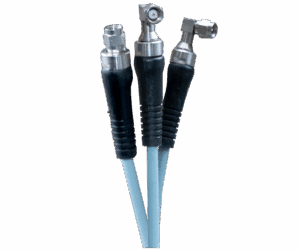
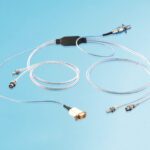
Cinch Connectivity Solutions Semflex DKF Metric Test Cable Assemblies offer a DC to 18GHz frequency range, 50Ω impedance rating, and 500 cycles of durability. Custom lengths are available, making them ideal for production test setups, production use, and high-end test laboratories.
Coaxial or coax cable is used to transmit high-frequency electrical signals with low losses. It is defined by its construction, which consists of an inner conductor and a dielectric (insulating material) surrounded by a concentric conducting shield. The name, coaxial, comes from the inner conductor and the outer shield sharing a geometric axis. Often, the cable has a protective outer sheath.
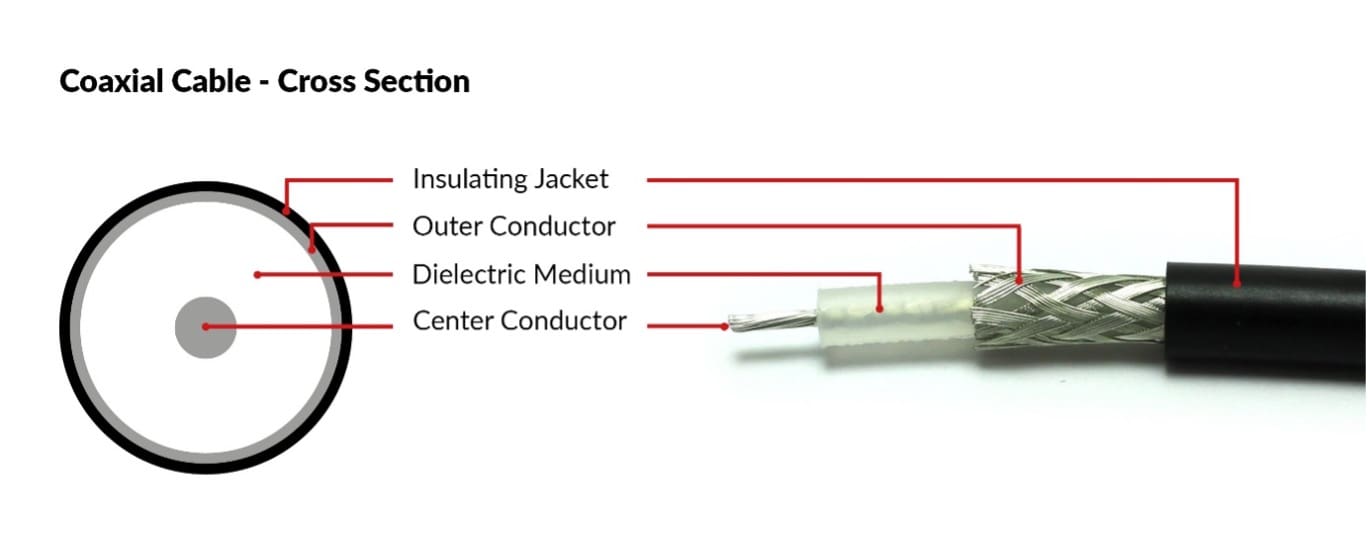
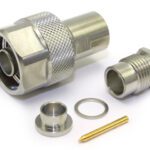
Image courtesy of COAX Connectors Ltd.
Coaxial cables are designed to prevent or minimize signal leakage, the passage of electromagnetic fields through the shield of a cable via ingress (an outside signal passing into the cable) or egress (the signal within the cable passing to the outside). Shield design balances performance and flexibility.
“The signal passing along a length of coaxial cable relies on a smooth path where the dimensions of the center conductor and outer conductor shielding are consistent, and the shielding prevents RF interference from the outside world. The majority of any loss occurs as power is absorbed by the cable as the signal travels along its length. However, in a connector, which has a comparatively short length, loss is mainly the result of reflections due to changes in materials and dimensions,” said Brian Tea, sales manager, COAX Connectors Ltd.
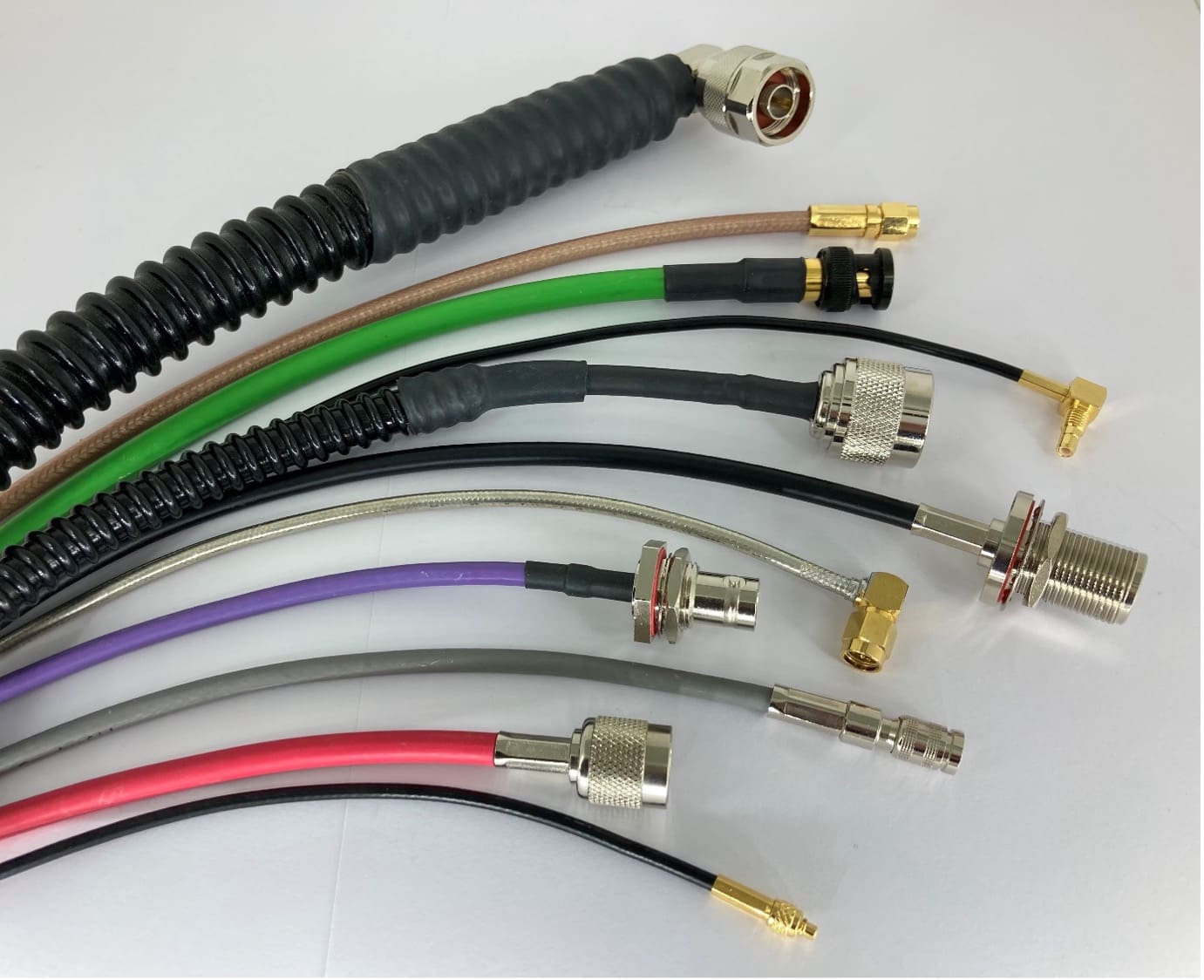
COAX Connectors designs and manufactures coaxial connectors and complete cable assemblies. Most of the COAX Connectors range is available with IP68 rating including cable assemblies.
Common Types of Coaxial Cables
RG (Radio Guide) coax cables are identified by a numbered classification that designates specific characteristics, such as the cable’s size, performance, and applications. In addition, it is often used as a loose guide to the contact size. Examples include:
- RG6 is used for satellite TV and broadband internet.
- RG11 has lower attenuation rates, making it ideal for long-distance transmission such as outdoor installations or large-scale infrastructure.
- RG59 is used for CCTV systems and short-distance video transmission.
Plenum coax cable is specifically designed for use in air-handling spaces, such as ventilation systems and ceiling cavities. Its fire-resistant outer jacket ensures compliance with safety regulations and low-smoke properties meet strict building safety codes.
Lighter and more compact coaxial cable that maintains signal integrity and meets the necessary aviation requirements is used in aerospace applications.
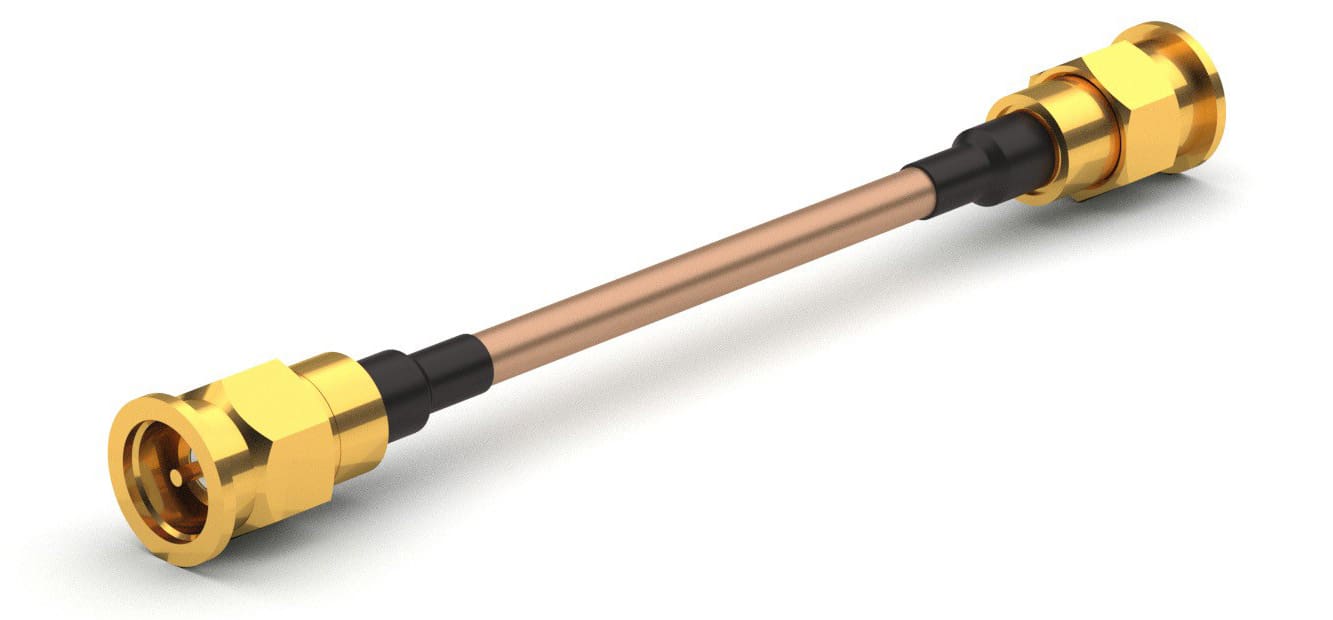
Adam Tech offers a versatile range of coaxial cable assemblies designed to support high-frequency signal transmission across various industries. These assemblies utilize coaxial or RG cables with a standard impedance of 50 Ohms, ensuring stable and efficient performance in RF applications. All assemblies are RoHS compliant and engineered to deliver consistent signal integrity and durability in demanding conditions.
Design Notes
Standards: IEC 61196-1-108:2025 specifies test methods for determining the phase, phase constant, phase and group delay, propagation velocity, electrical length, and mean characteristic impedance of coaxial cables for use in communications systems. Earlier IEC standards address materials and construction requirements. MIL-DTL-17 provides detailed testing procedures, material requirements, and performance characteristics for high-reliability flexible and semi-rigid coaxial cables used in military and aerospace.
Impedance: Coaxial cables have a characteristic impedance of 50, 52, 75, or 93 Ω. Most data, voice, and general RF applications use 50 Ohms while 75 Ohms is predominantly used in broadcast, telecommunication, and video applications.
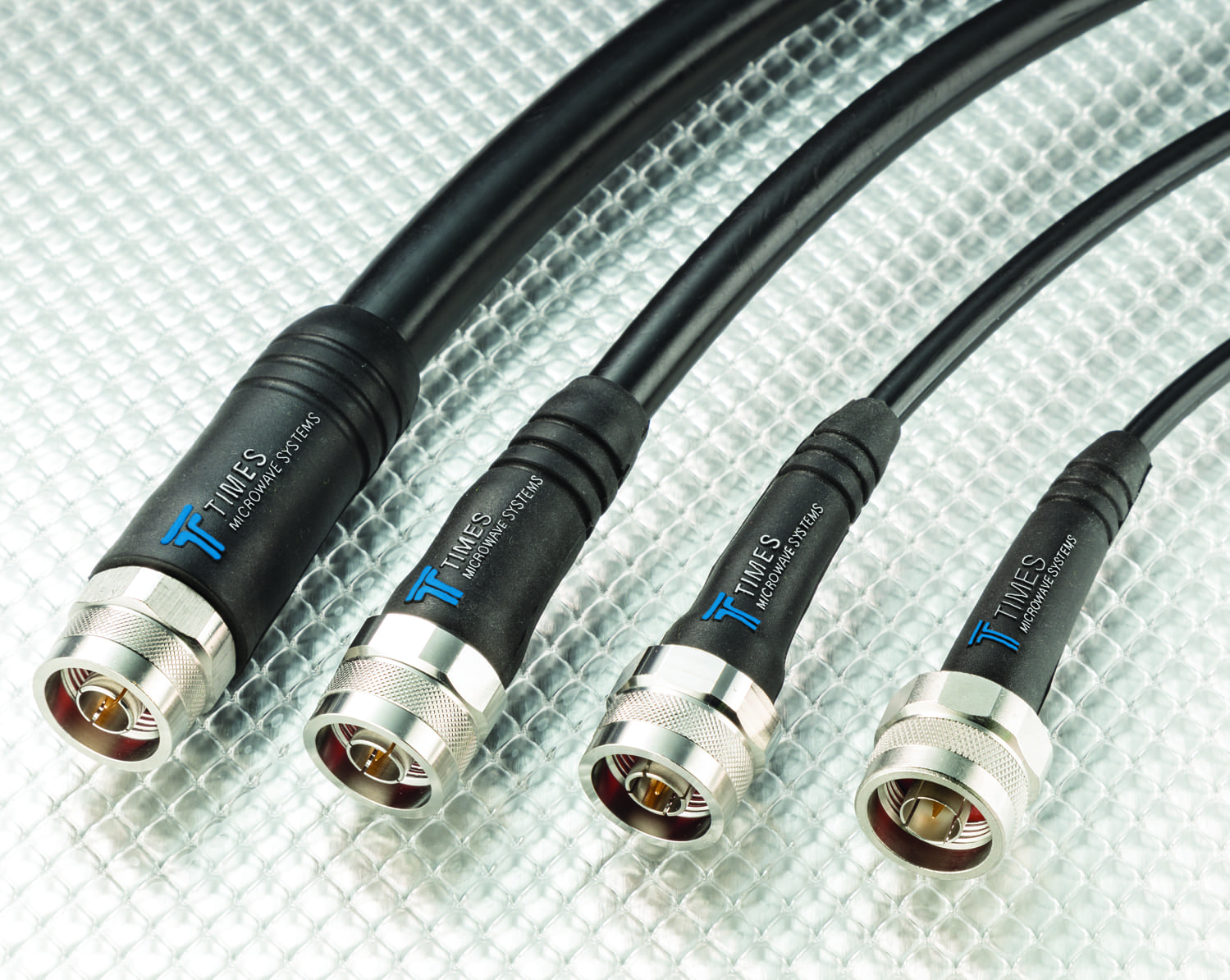
Times Microwave’s LMR cable solution available from PEI Genesis features a full range of highly flexible, rugged, low loss braided cables designed for optimal performance. These cables are built for durability and ease of use, offering the fastest and simplest connector installation available on the market. LMR cables outperform RG cables of similar size, making them an ideal choice for various applications. Their superior design ensures reliable signal transmission while minimizing loss, allowing for efficient communication.
Material considerations: The inner conductor is usually a solid copper, stranded copper (more flexible), or copper-plated steel wire (often used for cable TV). Silver plating improves high-frequency performance.
The insulator surrounding the inner conductor is either solid plastic, foam plastic, or air with spacers that support the inner conductor and prevent it from touching the shield. A common choice option for lower-loss cables is solid polyethylene. Solid PTFE is used in plenum-rated cables.
The next layer, the shield, is typically one to four layers of woven metallic braid and metallic tape, which allows flexibility but leaves gaps. It may be silver-plated. A double-layer shield is sometimes used to increase performance. Today it is more common to have a thin foil shield covered by a wire braid. Often, multiple alternating layers of foil-shield and wire braid (two to four layers) are used.
The outer insulating jacket that goes over the shield is plastic, such as PVC, depending on the environmental factors.
Environmental properties: The insulating jacket may require fire-resistant materials. Outdoor applications may require resistance to ultraviolet light, oxidation, rodent damage, or the impacts of being buried. Water-blocking gel protects the cable from water infiltration through minor cuts in the jacket.
Markets and Applications
Telecom, Industrial, Consumer, Medical, Military and Aerospace
Coaxial cable is used by cable, telephone, and internet companies to transmit data, video, and voice communication. Today, with the use of the right converter, it is also used for power. Power over Coax (PoC), allows power and data to be transmitted at the same time using existing coax cable, greatly simplifying installation and expansion of applications like surveillance systems. Other applications include high-speed computer data buses, cable television, connecting antennas to radio transmitters and receivers, and medical devices and equipment. It is used in home, business, medical, and industrial settings, as well as military and aerospace applications.
Suppliers
Coax cable is available from many suppliers, including Adam Tech, Amphenol CIT, Axon Cable, Cinch Connectivity Solutions, COAX Connectors Ltd, EDAC, iCONN Systems, JAE, Molex, Nicomatic, PEI-Genesis, Samtec Inc, Smiths Interconnect , TE Connectivity, Times Microwave Systems, Trexon, and Winchester Interconnect.
Related products
Like this article? Check out our other Product Roundup, Product News, and Connector Industry News features and our 2025 Article Archives Article Archives.
Subscribe to our weekly e-newsletters, follow us on LinkedIn, Twitter, and Facebook, and check out our eBook archives for more applicable, expert-informed connectivity content.

- Custom Cable Assemblies: A Value-Add Solution - October 13, 2026
- Fiber Optics Product Roundup - October 13, 2026
- October 2026 Connector Industry News - October 13, 2026