Waterproof Connectors: Ready for Not-So-Fair Weather Conditions
Water presents one of the greatest challenges for interconnects. It can enter connections in the form of humidity, submersion, or spray during use or cleaning processes and lead to corrosion that will degrade connectivity and product longevity. Waterproof connectors must be designed in from the start.
Article Contributed By Mark Boyadjian, Customer Solutions Director & Product Evangelist at Neutrik Americas
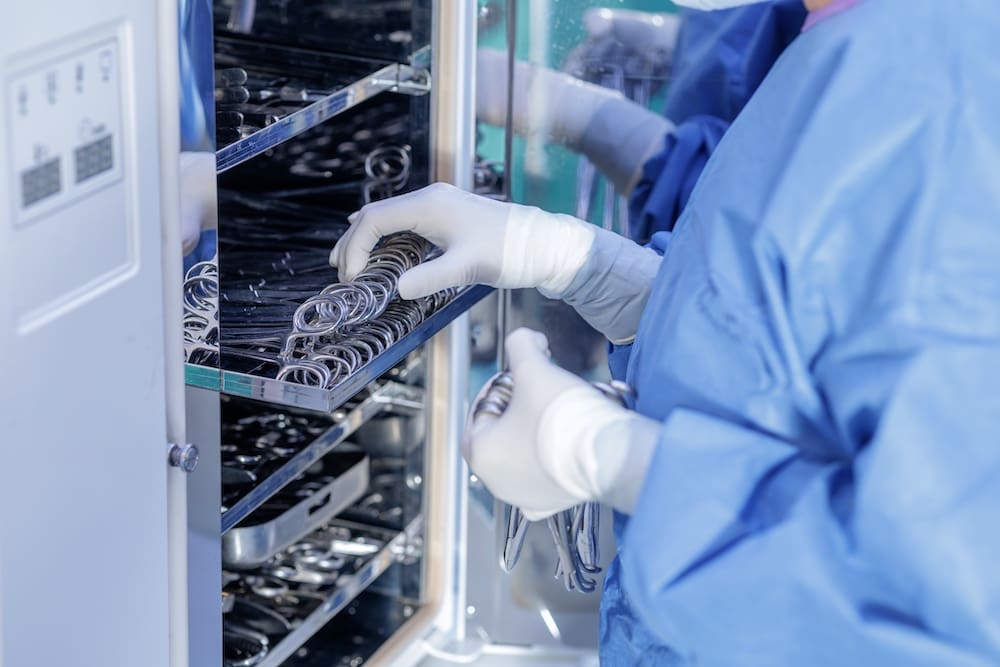
With the increasing use of electronic systems subjected to outdoor elements, wet or humid locations, and corrosive environments, making reliable connections that can resist less-than-ideal conditions has become critical. Industries where technologies are subject to inclement weather, such as transportation and industrial, require ruggedized interconnects to ensure power and signal through changing extremes. Equipment that operates indoors also needs waterproof connections, such as food production and medical equipment that is exposed to liquids and sterilization processes.
IP-ratings (Ingress Protection), sealing solutions, and UV-resistant materials are an essential part of the service life solution for these industries. This article looks at some of the biggest offenders and offers suggestions regarding materials and design of connectors to weather the storm.
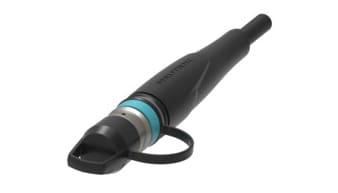
With new technology based on fiber lenses, Neutrik’s opticalCON HYBRID MED achieves an extremely robust signal with minimal loss. The optical connection is exceptionally well protected by its lenses and an additional sealing cover.
Water
Water presents one of the greatest challenges for protecting connections. Water can work its way into a device via the connector in numerous ways. Conditions ranging from light but soaking rain, torrential downpour, high-pressure jets, underwater submersion, and humid locations all, potentially, can disrupt the performance of equipment or ruin connections.
Specifying components that are appropriate for these diverse conditions is a critical part of electronic design. How we address this also depends on whether the connection is for permanent fixed-use devices or for situations where the equipment is routinely relocated and requires frequent mating cycles.
Fixed devices can integrate a number of protective features, including liquid tight fittings, adhesive heat shrink tubing, liquid electrical tape, silicon tape, and gel-filled terminals, to name a few. If toolless connection/disconnection is required, the design complexities are compounded. The latching mechanism and design features that facilitate the ease of operation for mating/unmating may create an opening for moisture to enter the system. These electronics may be exposed to the same conditions as the permanently installed device but the ability to disconnect without heading back to the truck or shop for a tool increases the need for ingress protection.
Solutions can be hand-threaded, twist-locking, and spring-latching. For the cable-to-connector intersection, we can use a gland, O-ring(s), conical seals, overmolding, or a combination of these. When mated, the key is to maintain adequate protection around the connection point to keep water out.
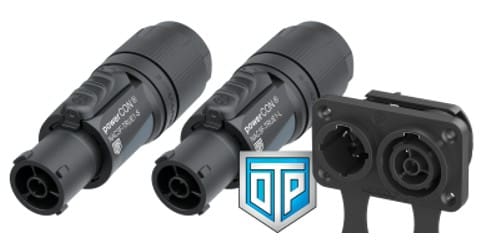
powerCON TRUE1 & powerCON TRUE1 CG TOP (TRUE OUTDOOR PROTECTION) IP-rated with secure TOP environmentally sealed connections that keep the power going through rain, dust, dirt, and extreme rugged touring conditions.
UV exposure
With prolonged exposure to UV rays (e.g., sunlight, gas discharge lamps, UV LEDs), plastics can undergo a process called photo-oxidation. This can lead to damage like cracking, discoloration, fading, and a weakened structure. It occurs because UV radiation creates free radicals within the plastic, breaking down the polymer chains. Not every type of plastic has the same susceptibility to UV light, but common types that degrade include polycarbonate, polyolefins, and PVC.
Technical compounds that can resist UV exposure are needed to eliminate or at least prolong the life of the polymer, extending service life from months to years. This is not always an easy recipe to develop, as some connector parts need to be firm and flex-resistant (e.g., handles, push parts, housings, latches), while others need to be softer (e.g., sealing parts, grip areas, bushings). There is also the matter of color, which when added can interfere with UV stabilizers, possibly degrading the plastic’s mechanical or chemical properties.
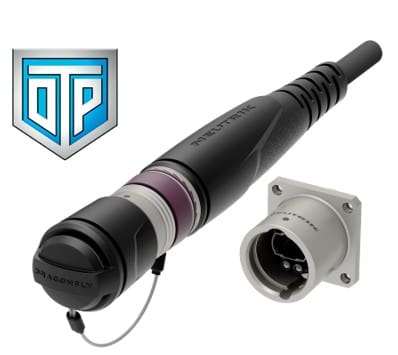
opticalCON DRAGONFLY TOP FIBER CONNECTOR (TRUE OUTDOOR PROTECTION) IP65 standards, all-metal housing with copper braided shield, stainless steel strength member, ruggedized FIBER lenses, safeguarded against water, dirt, and UV corrosion.
Corrosion
Saltwater in coastal or offshore areas, cruise ships, cleaning products, high temperature humid locations, wastewater treatment, and fertilizer production are all examples of conditions that can attack plastics and metals alike, rendering them incapable of performing reliably, then eventually not at all.
Corrosion-resistant materials, including stainless steel, copper, and aluminum, form protective oxide layers. Specialized alloys like nickel-chromium and high-performance nickel alloys can endure harsh conditions. Plastics that include PTFE and polypropylene contain features that make them a better choice to avoid corrosion over other plastics.
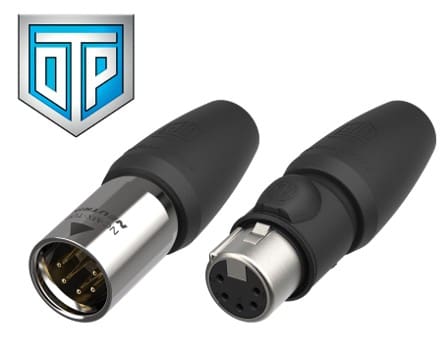
XLR TOP SERIES CONNECTORS (TRUE OUTDOOR PROTECTION) The X-TOP series is a “heavy-duty” XLR cable connector for outdoor production. Outdoor protected by mating with related cable/chassis connector of the XLR TOP range (IP65), designed with polyamide (PA66) insert and UV-protected rubber, providing an extremely secure connection for continual outdoor lighting, audio, and more.
Application matching
If your application requires multiple mating cycles under any of the conditions outlined, sourcing connectivity products that contain some or all the following properties can create a “ruggedized” system solution. These components can help connected devices provide a longer service life:
- Spring latch or twist locking mating system
- Technical polymers using UV resistant materials
- Stainless steel or nickel alloy body, housing
- Gold over electroless nickel plating over bronze base contact metal
Keeping the connection
Reliable connectivity in challenging environments can be achieved in numerous ways. Every scenario for deployment of electronics will have its own considerations. Using interconnects with features and materials that can withstand what the weather, chemicals, or geographic location throw at them makes your system more than a fair-weather solution.
Visit Neutrik to learn more about interconnect solutions for challenging environments.
Like this article? Check out our other Connector Basics articles, our Medical Market Page, and our 2025 and 2026 Article Archive.
Subscribe to our weekly e-newsletters, follow us on LinkedIn, Twitter, and Facebook, and check out our eBook archives for more applicable, expert-informed connectivity content.

- Printing at the Edge of Possibility: How TE Connectivity Leverages Micro-3D Printing - October 13, 2026
- A Five-Layer Clad Solution for High-Performance Battery Interconnects - October 6, 2026
- High Voltage Interlock for Commercial Vehicles: A Must-Have or a Nice to Have? - September 29, 2026