VITA 90 VNX+ Ratification Locks in the Next Generation Standard
This new standard defines compact, rugged, modular, open systems architecture for high performance embedded computing that supports RF, video, and optical signal applications.

In February 2026, VITA 90 VNX+ ratification marked the culmination of nearly a decade of work since the transition from VITA 74 began. The VITA 90 family of standards defines compact, rugged, modular, open systems architecture for high performance embedded computing. “It is very important to highlight that VITA 90 is an evolution, rather a slight upgrade to the VITA 74 specification,” said Craig Petrie, vice president, Aerospace and Defense Solutions (ADS) Division, Molex.
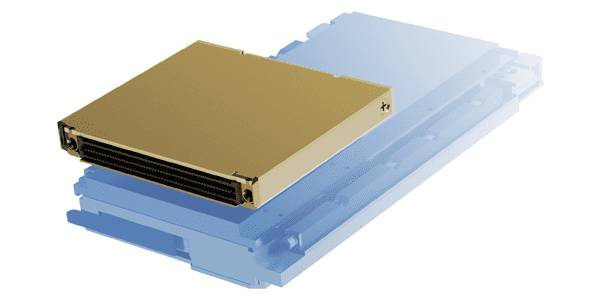
Fig. 1 VNX+ size comparison to 3U VPX
VNX+ is physically very small, about the size of a deck of playing cards, as illustrated in Fig. 1. Its compact size and ruggedness are targeted to applications in severely SWaP-constrained environments, mainly UAVs, missiles, satellites, sensor pods, and wearable systems for modern warfighters. Since being ratified by VITA and ANSI, and adopted by SOSA, VITA 90 VNX+ is a recognized open standard for the DoD and NATO.
“The significance of the standardization is that it changes the ‘make-versus-buy’ dynamic that customers need to work through on new programs. Historically when creating very small, rugged systems, there were no open standards to use at that level, so customers typically relied on custom implementation with proprietary technology and connectors. This meant there was little or no compatibility among small electronics. VITA 90 brings a very deep, rich open standard to that very small, compact form factor,” said Petrie.
Compared to VITA 74, which has one base standard, VITA 90 has a base standard and “dot extensions” that allow for innovation. These extensions detail specifications that define the various physical and electrical layers of the Small Form Factor (SFF) ecosystem. In addition to the base standard (e.g., 90.0), VITA 90.1 specifies slot and module profiles while VITA 90.2 governs the optical and coaxial contacts for supporting RF and video. Additionally, VITA 90.3 addresses power and storage specifications, whereas VITA 90.4 covers advanced cooling techniques, including conduction, liquid cooling or oscillating heat pipes, along with retention mechanisms. VITA 90.5 addresses space-grade requirements, including radiation tolerance and specific serial protocols. Finally, VITA 90.7 expands on VITA 90.2 with an additional standard for specific coaxial/optic aperture configurations. Together, these extensions provide a new frontier of opportunity to push the limitations of what is currently possible with traditional 3U form factors.
A good example of the benefit of the dot extensions is the increase in power consumption. Under VITA 74, the standard for power consumption was 20 watts. VITA 90 can go up to 95 watts, representing a significant improvement in power density. “But to achieve that you need to take advantage of the dot extensions,” Petrie added. “For example, VITA 90.3 and 90.4 allow the use of alternative cooling technologies. Instead of conduction cooling, liquid cooling could be used, for example, which empowers designers to push the envelope a little bit further. That didn’t exist in the previous standard.”
Looking ahead, the “dot” standards plus SOSA alignment will offer true modularity and future-proofing by enabling “plug-and-play” mixing of payload, switch, power and I/O modules across vendors. This will facilitate faster processor or sensor upgrades without requiring entire chassis redesigns—cutting obsolescence risk and lifecycle costs dramatically.
The ratification represents an industry milestone, giving manufacturers, integrators, and defense primes, the green light to design, procure, and deploy systems with high confidence, knowing the specification is not going to change. Having transitioned from a draft working specification to a formal document recognized by the DoD and SOSA, anything labeled VITA 90-compliant can be trusted to work in the application it is specified for. The make-versus-buy dynamic is evident as a result. “The VITA 90 modules, depending upon the connector used, are only 30% the volume of a 3U VPX card. That is very attractive if 3U VPX is just too big for what you need. So, it’s a pivotal moment. As a result, there are a lot of projects being based on this today, with a lot of influence on technology roadmaps and product portfolios over the next two to five years,” Petrie said.
VITA 90 VNX+ and AI
Today, AI is used in applications for inference, the processing of data in real-time to generate predictions or responses. While training the large language models happens in the data center, inference happens at the edge in close proximity to the sensor, for example, in the camera unit dealing with image processing tasks. This is used in aerospace and defense for targeting and tracking.
“In 2017, with the previous spec, there was a limit to what these modules could do from a processing perspective. The sensor would sample the data and then move it somewhere else in the system to be processed,” said Petrie. “Now, with this new standard, we can move more of the processing into the sensor. If you’re sampling from a camera interface or radio frequency antenna, such as in a radar, you can actually process that raw data on this little module using an FPGA, RF chip, or embedded processor that has artificial intelligence cores inside.”
The new standard addresses the increased power required as well as the need for cooling and faster connections in and out of the module with a richer suite of connectors to use. “Before we had very basic digital connectors. Now we’ve got high-density digital connectors and coax and optical. This means we can implement 100 and 400 gigabit Ethernet as data planes. We can digitize the sensor data, process it, and send it over optical connections to another part of the system. This opens up a lot more capability compared to what came before,” Petrie said.
More capability and increased ruggedness make it suitable for harsh environments. Whereas convection cooling (passing air over the components) was previously required, now conduction and liquid cooling, options that don’t need any airflow over the parts, can be used. Eliminating concerns around dust increases the types of environments these solutions can be deployed.
The ratification of VITA 90 VNX+ also mitigates issues of compatibility, reduces the risk of obsolescence, and lowers lifecycle costs. “All open standard modules based on VITA 90 should be compatible. If I’m a customer creating a solution that doesn’t use open standards, I need to coordinate all the different cards being designed to make sure they work. I incur the cost, the risk, and the work of qualifying them all together. But now I can say to different vendors, I would like you to supply a VITA 90-compliant power supply, a processor card, a switch, or an I/O card. As long as they’re verified to be VITA 90 compatible, I can integrate them together more like high-tech Lego blocks. With increased competition, you can choose from more vendors and reduce supply chain risk,” Petrie said. “There are real monetary benefits of this. It’s not just about the technology and how fast things go and what power they consume. Real logistics and economics are involved in the open standards.”
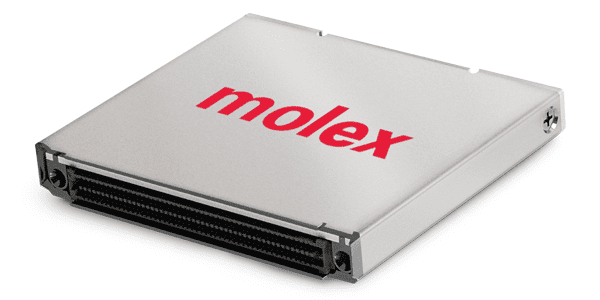
Fig. 2 Molex VNX+ Processing Module Concept
At just one month in, this is still in the very early stages of adoption. Beyond the technical ratification, Molex is actively steering the ecosystem through strategic collaborations, direct customer interactions and technical feasibility studies to align evolving product roadmaps with VNX+ as a key technology (see Fig. 2) for specific defense and aerospace use cases. To that end, Molex announced a strategic collaboration with AMD last year to accelerate the development of high-performance embedded solutions using new generations of FPGAs, direct RF chips and embedded processors.
The existence and success of these standards represent a major turning point in compact embedded systems that will unlock new frontiers in aerospace and defense. “It’s going to take a while before more products are announced in this space. But we’ve seen from customers that there’s a lot of momentum and an intention to adopt VITA 90 for future applications,” Petrie concluded.
Visit the Preferred Supplier page for Molex to learn more about the company and its products.
Like this article? Check out our other Standards articles, our Military and Aerospace Market Page and our 2025 and 2026 Article Archives.
Subscribe to our weekly e-newsletters, follow us on LinkedIn, Twitter, and Facebook, and check out our eBook archives for more applicable, expert-informed connectivity content.

- Ceramics in Space: BME X7R MLCC - October 20, 2026
- Test & Measurement Product Roundup - October 20, 2026
- Advanced Connectivity-Automation, Robotics, AI, and Machine Learning - October 20, 2026