Connectivity Solutions for Freight Logistics and Optimization
Carrier connectivity extends from the computing resources behind freight optimization and tracking software to IoT systems that keep an eye on the cargo to the heavy-duty interconnects that empower the freight vehicles that move packages, materials, animals, and goods around the world. From connectors to antennas, a full array of interconnects is involved in these incredible journeys.
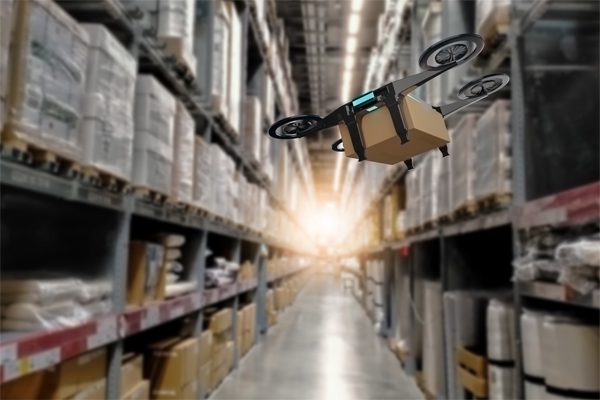
In the global supply chain, billions of shipments are in motion across thousands of miles, from point of extraction or production to storage warehouses and final destinations. These journeys require multiple modes of movement to meet the specific needs of materials, fuels, equipment, parts, finished goods, foods, and even live animals. Transfers across modes create potential for items to end up in the wrong places — or the wrong hands. For instance, this spring in Europe a truck loaded with limited edition Formula 1 KitKat bars was intercepted by thieves. The company is hoping to be able to track the chocolate via codes on individual chocolate bars, but IoT-connected methods of cargo monitoring could have given KitKat continuous visibility. Greater connectivity could have saved the day.
The latest logistics technologies offer unprecedented ability to monitor cargo across every step of the supply chain, with the help of a huge array of interconnects. Connectors, cabling, sensors, and antennas are all called into action in complex networks that enable satellites and base stations to exchange information about specific packages, pallets, and shipping containers on the move between warehouses and multimodal transportation networks. From data collection at the package level to vehicle telematics and facility infrastructure, connectors make real-time freight visibility possible.
Ruggedized for the road
Cargo movement across different modes and environments presents a challenge to electronic monitoring systems. “When it comes to passive interconnect, mechanical failures are the primary concern,” said Dean Smith, Senior Product Marketing Specialist for Industrial Through Panel and Field Power Connections, Phoenix Contact USA. Shock and vibration are constant environmental challenges, as well as temperature fluctuations and moisture, so logistics and shipping systems must include ruggedized interconnects to prevent failure in the field. Considering the environments that connector will be exposed to will help guide specification, he said.
“Vibration‑ and shock‑resistant designs are critical for transport solutions. Water or fluid can ingress through damaged seals on cable entries or between mated connectors, so it’s important to ensure seals are composed of materials suitable to the environment. Impact damage to the interconnect housing can be another risk point. Plastic connectors are often quite robust, but sometimes metal housings are needed for extra protection.”
Another consideration for logistics systems is corrosion-resistant coating that protects connections from salt, chemicals, or cleaning agents. “Interconnects that incorporate metal bodies or UV-resistant plastics help prevent UV degradation that leads to structural failure.”
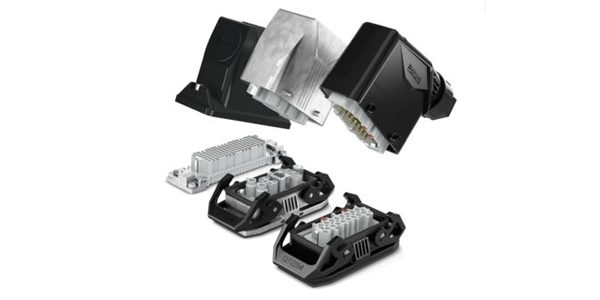
Phoenix Contact’s HEAVYCON heavy-duty rectangular connectors provide reliable power, data, and signal connections for logistics equipment that is exposed to outdoors environments.
Components that serve logistics networks tend to be ones that have been proven in other markets. Heavy duty, environmentally rugged products that function in transportation, automation, and industrial applications are a solid choice for warehouse systems, vehicle telematics, and cargo units that travel by ship or air and reach last-mile destinations by road and rail.
Common interfaces streamline movement
Using common interfaces makes it easier to maintain reliable connectivity across vehicles, facilities, and operators. This also enables easier repairs and system design changes. “Utilizing an interconnect system that transcends any one specific application makes integrating one application, like freight tracking, easier to merge into a larger ecosystem,” said Smith. He says freight operators and warehouse operations benefit from using modular interconnects for the overall system, instead of focusing on any single type of tracking device. “Common application areas would be industrial IoT and remote monitoring systems, smart infrastructure and utilities, transportation systems (rail, ports, mobile equipment), warehouse automation and material handling, and process automation and outdoor control cabinets.”
Phoenix Contact provides interconnects for sensor and gateway enclosures mounted to containers, trailers, or vehicles; programming ports that allow safe, sealed access to power and data without opening the enclosure; and wiring for sensors that measure temperature, humidity, shock, door status, or asset location.
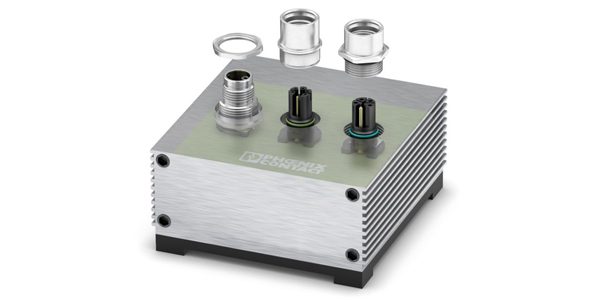
Phoenix Contact M12 Power connector distributes power to multiple devices used in the freight management system.
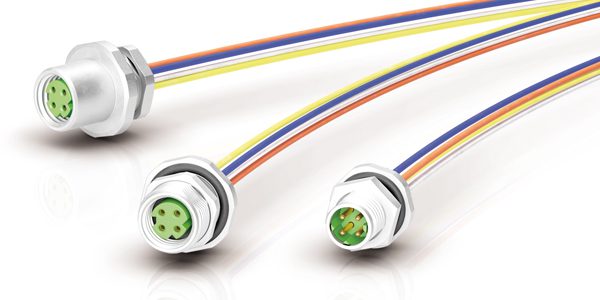
binder’s M8-D-coded connectors are used in transportation and logistics systems, such as connecting sensors and controllers in conveyor systems or controlling and monitoring transport vehicles.
M-type connectors are one common standard frequently employed for logistics equipment such as the scanners used beginning at the production line and continuing on through docks, warehouses, and cargo operations. These versatile, compatible connectors operate behind the scenes and offer high-speed data transmission, ease of use, and an interchangeable standard interface. binder’s M8-D-coded connectors featuring single wires are a new variant that allows users to customize wiring to their specific needs, delivering improved transmission performance, particularly for Ethernet and Profinet applications operating in facilities.
Package-level logistics
For the individual shipments and cargo being scanned with this equipment, the tracking picture has grown considerably more sophisticated in recent years. Cellular IoT trackers combine an LTE-M or NB-IoT modem, a GNSS receiver, and environmental sensors into a unit compact enough to ride inside a single package from origin to destination. Transmitting location and condition data directly to cloud platforms, these devices can flag issues like unexpected stops or sudden route changes in near real time. NFC-enabled smart labels printed directly onto packaging are another package-level tracking option.
When cargo goes missing, the last confirmed GPS location can pinpoint where a package was removed from the supply chain and cellular tower triangulation can approximate a device’s position even when GPS is blocked inside a steel shipping container. Some high-value shipments are equipped with covert trackers designed to survive a theft scenario. KitKat will no doubt employ these for future special editions.

This asset-level approach inspired KYOCERA AVX to develop a smart ear tag for cattle ranchers. The xTpro is attached to individual animals to track them in the fields, as well as on the way to market and beyond. This asset tracker is a fully customized, all-in-one antenna supporting LTE, GNSS, and NTN satellite bands that operates beyond cellular infrastructure. It weighs 51.5 grams (about as much as an egg) in a small form factor. There are no external connectors — the antenna interfaces directly with the modem chipset via PCB traces and micro-coaxial connections, eliminating the mechanical weak points that external connectors would introduce on a device subject to constant movement and weather exposure. The tag integrates a 250mW solar panel and battery with an intelligent feature-backoff scheme, meaning the power management circuitry keeps the device functioning across extended deployments.
“We anticipate that transportation assets will continue to evolve into more intelligent decentralized systems, driving the need for more interconnects with improved reliability and lifecycle performance,” said Smith. “Driving that would be factors such as higher onboard power availability for sensors, gateways, and AI‑enabled edge devices; increased use of hybrid connectors carrying power and data in a single interface; and more modular and serviceable designs (decentralization) that allow quick replacement or upgrades in the field.”
Like this article? Check out our other Antennas, Heavy Duty and IoT articles, our Transportation Market Page, and our 2025 and 2026 Article Archives.
Subscribe to our weekly e-newsletters, follow us on LinkedIn, Twitter, and Facebook, and check out our eBook archives for more applicable, expert-informed connectivity content.

- Connectivity Is Reshaping Police and Security Vehicle Fleets - September 8, 2026
- Thermal Management Strategies with Liquid Cooling Connectors - August 11, 2026
- Rodent-Resistant Electronics - July 28, 2026