AI Leadership: The Race to Global Technology Supremacy
AI leadership could give countries a major advantage in exploring advanced physics, energy production, and cybersecurity, as well as developing new materials, medications, and manufacturing processes that will leave other nations in the dust.

Competition between nations, tribes, cities, and individuals seems to be baked into human experience and has resulted in stunning cultural advances as well as devastating wars. In the past, political dominance or land acquisition were primary incentives to gain the upper hand. More recently, technology and advanced product development have become key battlegrounds where the ability to excel in entirely new markets is won or lost. Manufacturing capabilities for such diverse products as flat panel displays, clothing, consumer electronics, solar panels, and fireworks has become concentrated in select countries that dominate the market. That did not happen by accident, but largely through informed long-term strategic commitments. Conversely, the decision to relocate manufacturing of a specific class of products such as home appliances to another country is often driven by short-term economic considerations where established supply chains and low-cost labor make future reshoring economically difficult.
The current race to achieve supremacy in artificial intelligence is the most visible struggle with several hundred billion dollars being invested by each of a handful of competing nations. Participants see AI leadership as giving them a major advantage in exploring advanced physics, energy production, and cybersecurity as well as developing new materials, medications, and manufacturing processes that will leave other nations in the dust. The expected advantages of AI superiority include economic, political, and military dominance that could determine world order over the next 20 years. It is yet to be proven whether AI will be capable of fulfilling these lofty expectations, but the resources being applied to build ever larger, more complex AI computer clusters and advanced software are unprecedented.
Although countries from around the world have recognized the importance of AI technology to their future and are investing in building their own internal capabilities, it appears that the United States and China have the resources and commitment to become the global AI superpowers.
The United States has historically been recognized as a leader in development of new technology, with a long history of creative innovation backed by world-class university research as well as private industry research and development. The motivation in our capitalist economic system has been driven by potential profitability in the sale of practical applications.
To some degree, the United States has relied on the entrepreneurial spirit of its citizens and companies to discover, develop, and apply next generation technology and products. Government support has historically included research grants, access to government resources, or specific development contracts. The Defense Advanced Research Projects Agency (DARPA) is a research and development agency of the U.S. Department of Defense with a charter to develop emerging technologies for military applications. Traditionally, the National Science Foundation (NSF), National Institutes of Health (NIH), and Department of Energy (DOE) have conducted or funded research that has advanced technology, created new medications and treatments, and developed sustainable energy sources. NASA has led in the development of materials that have enabled travel in space as well as served needs on Earth, such as memory foam and advanced water filtering systems.
Private industry has also been a prolific source of technological development in the U.S. Many years ago, Bell Labs was a wellspring of innovation with groundbreaking technologies, including the transistor, lasers, and the first practical solar cell. Several leading connector manufacturers created internal research departments that established the basic principles of reliable electrical contact design as well as the mechanics of fretting corrosion.
Leaders across all industries recognize the necessity to innovate or die. Rather than funding their own research facilities, some companies have chosen to partner with leading colleges and universities to develop advanced materials and processes that may result in new and better products. U.S companies have benefited from having access to our world-class universities that attracted the brightest students, from the states and from around the world. Many foreign students choose to remain in the U.S. after graduation and have contributed to our supremacy in a wide range of technical fields. Legions of independent innovators continue to invest their life savings in start-up companies with the hope of perfecting a unique product or technology that will make them rich. Most fail, but a few go on to become major corporations; Hewlett-Packard, Apple, and Microsoft each started in a garage.
Nvidia is an example of a company started by three dissatisfied technologists who identified an opportunity in a growth market with a disruptive product at the right time. They released their first graphics processing unit (GPU) in August 1999, which focused on consumer gaming computer applications. Timing is everything. The enormous computational requirements of emerging AI made the GPU the ideal device to handle huge AI workloads. Nvidia recently reached $4 trillion market capitalization. Not bad for a 32-year-old company.
China is a formidable opponent in the race to technical superiority and has taken a different approach to technology development. It prioritizes long-term self-reliance and global leadership, specifically in high-tech sectors. China encourages development of new technology through a multi-faceted state-driven approach:
- China’s government policy and strategic planning includes a five-year plan that is regularly updated by the Central Committee of the Chinese Communist Party, and addresses evolving economic and social development goals. It is a strategic plan that promotes self-reliance in science and technology through R&D funding. The “Made in China 2025” plan focused on reducing dependence on foreign technology and boosting domestic capabilities in select sectors.
- A major aspect of Chinese technology development is the commitment to directly fund R&D for development of new technology. Once a product or technology is identified as important, the government will fund the development and production capacity at levels that enable the ability to offer lower prices than competitors can afford in the initial stages of production. The objective is to achieve early domination of that product category and long-term control of prices. Government agencies are encouraged to buy from domestic tech firms providing an immediate built-in volume market.
- Ensuring availability of trained personnel to support these efforts results in emphasizing education in science, engineering, and mathematics starting at primary grades and continuing through college. The state invests heavily in university research programs that support aspects of the current five-year plan. Chinese companies are rewarded for filing patents and have become the global leader in new patent filings.
- China has created domestic economic and tech zones that offer tax advantages and innovation incubators that are often close to potential users. When necessary, China will invest in or make strategic acquisitions of foreign companies to leapfrog a long technology development cycle or acquire critical intellectual property. China has been accused of state-sponsored IP theft.
- The Chinese government has encouraged Smart City communities that can provide a platform for testing and refining next generation products. Regulatory demands may be relaxed to allow accelerated product development in a real-world environment. In some cases, this has led to unhealthy air and water quality.
- This competitive approach to advancing technology superiority also includes the ability to enact export controls to restrict access to critical technology and resources. For example, China is restricting use of its battery technology outside of the country to cement its lead in electric vehicle production. China recently threatened to weaponize sales of critical materials such as rare earths that are essential to the manufacture of advanced electronics devices. China is not the only country to use this tactic. An advanced nuclear reactor development program supported by Bill Gates suffered a severe setback when Russia was determined to be the only source of the required high-assay, low-enriched uranium fuel. The project has been delayed until a domestic source can be developed.
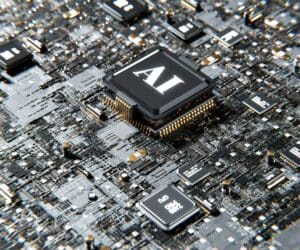
Export restrictions on the most advanced U.S. semiconductor chips has caused the Chinese government to invest close to $47.5 billion in their National Integrated Circuit Industry Investment Fund aimed at expanding domestic semiconductor manufacturing capacity.
The American AI community panicked when China announced DeepSeek, an AI startup that develops and provides open-source large language models that deliver performance similar to large American systems but require significantly less computing horsepower, making it more cost effective. It is yet to be determined if DeepSeek represents a serious threat to the U.S. approach to AI.
The United States is seen as the leader in advanced semiconductor chip design, and the CHIPS Act of 2022 (also known as the Research and Development, Competition, and Innovation Act) is poised to invest $53 billion to upgrade our ability to fabricate the most advanced semiconductor chip geometries. TSMC has committed over $100 billion to build three new chip fabrication plants in Arizona.
The intensifying rivalry between the United States and China may be motivated by more than simple economics and national pride. Unlike the United States, which seeks economic growth through innovation, the scholar Robert D. Atkinson recently argued that in the Chinese regime, the desire to make money is secondary. “Its primary goal is to damage America’s economy and pave the way for China to become the world’s pre-eminent power.” The current struggle for technical superiority may actually be a proxy for the long-term effort to achieve world leadership.
Visit Bob Hult’s Connector Supplier archives to read his ongoing coverage of high-speed advancements and see his industry event reports, including DesignCon and OFC 2025.
Like this article? Check out our other Artificial Intelligence articles, our Datacom Market Page, and our 2025 Article Archive.
Subscribe to our weekly e-newsletters, follow us on LinkedIn, Twitter, and Facebook, and check out our eBook archives for more applicable, expert-informed connectivity content.

- The Power of Having Options - September 15, 2026
- XPO, Addressing the I/O Panel Bottleneck - June 30, 2026
- Agentic and Neuromorphic Computers Enable the Future of Digital Computing - May 26, 2026