Inside Device Connectivity: The Hidden Enabler of Software‑Defined Vehicles
As the automotive industry moves rapidly toward software‑defined vehicles (SDVs), attention often centers on large‑scale architectural change. Centralized computing, zonal controllers, and high‑speed vehicle networks are widely recognized as foundational to this transition. These shifts are essential—but they do not tell the full story.

By Mike Spaccarotella, Product Manager, TE Connectivity, Automotive
A less visible transformation is taking place inside the vehicle’s electronic modules. As electronic control units (ECUs) consolidate into high‑performance computing nodes, inside device connectivity is emerging as a critical enabler of software‑defined architectures. How data and power move within devices, between printed circuit boards (PCBs), processors and internal interfaces, is increasingly shaping what SDVs can realistically deliver.
What is inside device connectivity?
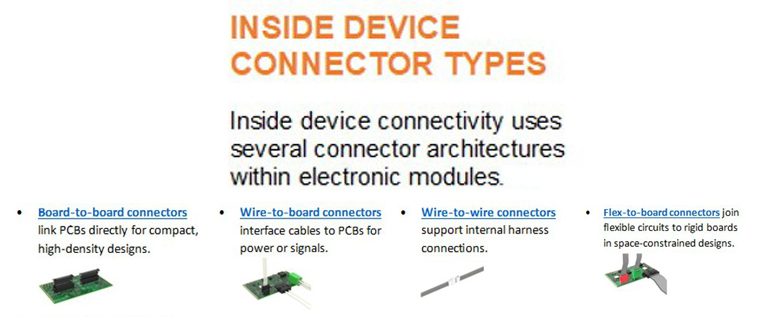
Inside device connectivity refers to the interconnection technologies used within an electronic module rather than across the vehicle. This includes board‑to‑board, wire‑to‑board, wire‑to‑wire, and flex‑to‑board interfaces that link PCBs, chipsets, power components, and internal I/O within compact housings such as ECUs, zonal controllers, battery management systems, and high‑performance compute units.
Unlike vehicle‑level connectors designed to span long distances and endure external environmental exposure, inside device connectivity is optimized for dense packaging. Key priorities include maximizing data density, integrating power and signal paths, preserving signal integrity and maintaining mechanical reliability in tightly constrained spaces.
As SDV architectures drive greater consolidation and integration, these internal interconnects are no longer secondary design considerations. They now influence compute capability, thermal management, electromagnetic compatibility (EMI), manufacturability, and long‑term scalability in next‑generation automotive electronics.
From distributed ECUs to integrated compute nodes
Traditional automotive architectures relied on dozens, sometimes hundreds, of discrete ECUs distributed throughout the vehicle. Each controller performed a narrowly defined function and connected through expansive wiring harnesses. While workable when functionality was largely fixed, this approach became increasingly complex as software content, sensor data, and connectivity demands expanded.
To manage that complexity, the industry began consolidating electronics into domain‑based architectures. Today, that evolution continues toward centralized and zonal designs built around a small number of high‑performance computers supported by zonal controllers that manage localized I/O and power distribution.
These approaches reduce wiring mass, support over‑the‑air updates and make software deployment more scalable. At the same time, they fundamentally change what happens inside each electronic module. Fewer units now carry dramatically more functionality, driving higher port densities, tighter packaging, greater power integration and far more demanding internal signal‑integrity requirements. In short, fewer boxes no longer mean simpler boxes.
Inside the box: Where SDV demands converge
Electronic modules supporting ADAS, automated driving, infotainment, and energy management are becoming densely populated environments. Data rates continue to climb, power demands increase, and available space shrinks, often simultaneously.
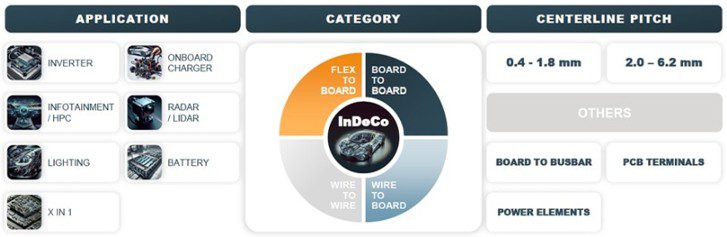
Inside device connectivity plays a central role in managing this convergence. Board‑to‑board, wire‑to‑board, and flex‑based interconnects are no longer passive components added late in the design cycle. Increasingly, they shape PCB layout strategies, thermal paths, assembly processes, and long‑term serviceability.
Several trends are accelerating this shift:
- Rising data density: Automotive Ethernet, multigigabit SerDes links and high‑resolution sensor interfaces are moving closer to centralized compute and zonal controllers. Maintaining signal integrity inside compact modules requires interconnects engineered for controlled impedance and robust EMI performance.
- Power integration: As centralized computing and power electronics coexist within the same housings, internal connectors must carry higher current levels while coexisting with sensitive data signals, without increasing overall module size.
- Scalable modular design: Automakers pursuing platform strategies favor PCB‑centric architectures that can be reused across vehicle programs. Modular internal designs support standardization and enable hardware platforms to scale with software features rather than requiring frequent redesigns.
Together, these forces elevate inside device connectivity from a supporting detail to a system‑level enabler.
Moving beyond “follow the wire”
Many legacy automotive designs extended vehicle‑level wiring concepts into the module itself. Internal connections often relied on short wire harnesses, familiar and flexible solutions, but not always optimized for density, electrical performance or automated assembly.
As SDV architectures mature, this “follow‑the‑wire” mindset is giving way to more PCB‑centric approaches. Direct board‑to‑board and flex‑based interconnects reduce internal cabling, shorten electrical paths and deliver more predictable high‑speed performance. They also enable higher levels of manufacturing automation, an increasing priority as electronics content continues to rise.
While similar approaches are common in data center and consumer electronics, automotive environments impose stricter demands. Internal interconnects must withstand vibration, extreme temperature cycling, humidity, and long service lives, often exceeding a decade, without performance degradation. Achieving higher density without sacrificing durability remains a defining challenge.
Enabling software‑defined vehicles from the inside out

Mike Spaccarotella, Product Manager, TE Connectivity, Automotive
Software‑defined vehicles are often described through abstraction, decoupling software from hardware to enable continuous feature evolution. But abstraction still depends on physical reality. Central compute nodes, zonal controllers and OTA frameworks all require hardware platforms capable of supporting dense, high‑performance internal interconnections over time.
The transformation underway inside electronic modules may attract less attention than vehicle‑level architectural shifts, yet it is equally decisive. By rethinking inside device connectivity and moving toward PCB‑centric, modular and high‑density designs, the industry is laying the physical foundation that software‑defined vehicles demand. Inside device connectivity may be hidden from view, but its role in enabling the next generation of vehicle architectures is becoming increasingly clear to those designing them.
Visit TE Connectivity to learn more.
Like this article? Check out our other Board-to-Board and Connected Vehicles articles, our Connector & Cable Special Topics Market Page and our 2026 Article Archives.
Subscribe to our weekly e-newsletters, follow us on LinkedIn, Twitter, and Facebook, and check out our eBook archives for more applicable, expert-informed connectivity content.

- The Challenges of Electric Flight: How Engineers Are Rethinking Power - October 20, 2026
- Printing at the Edge of Possibility: How TE Connectivity Leverages Micro-3D Printing - October 13, 2026
- A Five-Layer Clad Solution for High-Performance Battery Interconnects - October 6, 2026