What are Thermocouple Modules?
Meet the Connector: Thermocouple Modules
Thermocouple modules are a compact subsystem or interface circuit device that connects a thermocouple sensor to an electronic system. A thermocouple module converts small millivolt signals from thermocouples into usable digital or analog signals. Integrating one into a circuit makes temperature sensing plug-and-play, especially common in embedded systems and industrial automation.
Thermocouples were invented by Thomas Johann Seebeck in 1821. He discovered that a circuit made from two dissimilar metals produced a voltage when the junctions were at different temperatures. This is the Seebeck Effect, the foundation of thermocouples. Companies like Maxim Integrated, Analog Devices, and Texas Instruments were early producers of integrated circuits for thermocouple signal conditioning and led the way to the development of the thermocouple module.
Today, thermocouple modules are commonly used in medical devices, vehicle systems, industrial machinery, or any other application that involves monitoring temperature. Thermocouples, or temperature sensors, are one of the most commonly specified sensor types.

Endress+Hauser temperature sensor module, available from DigiKey, detects a range from 50 °C to 200 °C.
A thermocouple module unit can involve several functions.
Cold-junction compensation: Thermocouples measure differential temperatures; a module compensates for the temperature at the connection point (cold junction).
Signal amplification: The voltage generated by a thermocouple is small (in millivolts), so amplification is required.
Analog-to-digital conversion (ADC): Converts the analog signal into digital for microcontroller or computer processing.
Filtering and linearization: Provide accurate temperature readings.
Some modules also include digital outputs (SPI, I2C, UART) and isolation to protect against noise or voltage differences.
Design Notes
Specification guidance for connectors
DIN-rail or panel-mount industrial modules almost always come with built-in terminal blocks or mini thermocouple jacks. The engineer doesn’t choose the connector, but simply selects the module that matches the thermocouple type and termination style.
Embedded modules (PCB cards, DAQ boards, or IC-based thermocouple front ends) typically provide solder pads, pin headers, or board-edge connectors. In these cases, the engineer is responsible for specifying and designing in the right connector (e.g., miniature thermocouple jack, pluggable terminal block, or rugged circular connector) that mates with the cable assembly.
High-reliability or custom systems (medical, aerospace, defense) often require the engineer to choose the connector to meet mechanical, environmental, and regulatory requirements. Making the best choice involves a number of considerations:
- Connector material compatibility: The mating connectors should use the same alloy as the thermocouple type (e.g., Type K, Chromel/Alumel) to prevent measurement errors from unintended junctions.
- Polarity control: Keyed thermocouple connectors maintain correct polarity, especially in field service applications.
- Contact reliability: Connectors rated for low-level millivolt signals with stable, corrosion-resistant contacts are solid choices.
- Mechanical durability: Locking or latching features help withstand vibration, shock, or frequent mate/unmate cycles.
- Environmental sealing: For harsh environments, specify connectors with IP-rated housings, strain relief, and shielding against EMI.
- Integration fit: Verify footprint compatibility with PCB headers or panel-mount connectors and consider cable routing to minimize noise pickup.

Axon’ Cable provides cable solutions for thermocouplers.
Cable specification guidance
Cable choice is just as critical as the module and connectors, since thermocouples are highly sensitive to junction errors and noise. Designers should consider:
Conductor alloy match: Use extension or compensating cable made of the same alloys as the thermocouple type (e.g., Type K extension cable = Chromel/Alumel) to avoid introducing additional thermoelectric junctions.
Shielding & noise control: Choose twisted-pair construction with overall foil/braid shielding to minimize pickup from EMI, especially when routing near motors, RF sources, or switching supplies.
Insulation & jacket materials: Select insulation that suits the environment: PVC for general use, PTFE or FEP for high-temperature and chemical resistance, fiberglass for extreme heat, or silicone rubber for flexibility.
Mechanical protection: Consider armored cable, braided sleeves, or strain-relief boots for applications exposed to vibration, abrasion, or frequent handling.
Length & signal integrity: Keep cable runs as short as possible to minimize voltage drop and noise susceptibility; if long runs are unavoidable, verify module input impedance and consider differential inputs.
Temperature rating: Ensure the cable insulation and jacket ratings exceed the maximum service temperature, not just the sensor tip temperature.
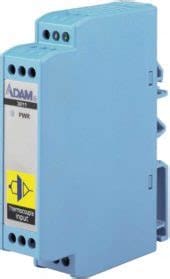
Mouser Electronics offers the Adamtech 3011-AE Thermocouple Input Module.
Markets and Applications
Medical, Industrial, Transportation, Automotive
Suppliers
Thermocouple modules are available in many variations from many suppliers, including Adafruit, Analog Devices, Maxim Integrated, Omega Engineering, SparkFun, and Texas Instruments. They are available from distributors, including Avnet, DigiKey, Mouser Electronics, and Kensington Electronics.
Related products
Environmental sensor
Visit Connector Supplier’s Buyers Guide to find thermocouples modules and other environmental sensor suppliers.
Like this article? Check out our other Meet the Connector and Connector Basics articles, our Medical Market Page, and our 2025 Article Archives.
Subscribe to our weekly e-newsletters, follow us on LinkedIn, Twitter, and Facebook, and check out our eBook archives for more applicable, expert-informed connectivity content.

- Thermal Management Strategies with Liquid Cooling Connectors - August 11, 2026
- Rodent-Resistant Electronics - July 28, 2026
- EU Battery Regulation Prompts Design Changes for Battery Connectors - July 14, 2026