Medical Devices on the Move
In the field, at home, and even in hospital settings, demand for medical devices that are small, light, durable, reliable, and portable are creating pressure for smaller interconnects.

Portability is an ongoing trend for medical devices. Monitoring equipment is no longer limited to a fixed location, even within a hospital setting. To achieve this portability, devices must be small, lightweight, and durable. The interconnects used in them, therefore, must also be smaller, lighter, durable, and of course, reliable. This presents some challenges as well as some unique solutions.
“The use of monitoring devices particularly in triage facilities, where equipment is used on many people during the course of a day, has seen a growing trend towards disposable connectors and those that are sterilizable in autoclaves while still achieving the high levels of performance required. This has led connector manufacturers to look at using different materials than previously used and in some cases develop completely new designs,” said Brian Tea, sales manager at COAX Connectors Ltd.
“New portable wireless patient monitoring devices are sleek and smaller than before. They need to communicate via Wi-Fi, Bluetooth, or even GSM cellular connectivity, so they have multiple antennas for remote patient monitoring,” said Ali Zeeshan, account and marketing manager at I-PEX. “These portable monitors are connected wirelessly to a central monitoring station. Data monitored from patients such as heartbeat, oxygen rate, blood pressure, blood chemistry are digitized and can be sent over an antenna to central stations in real time.”
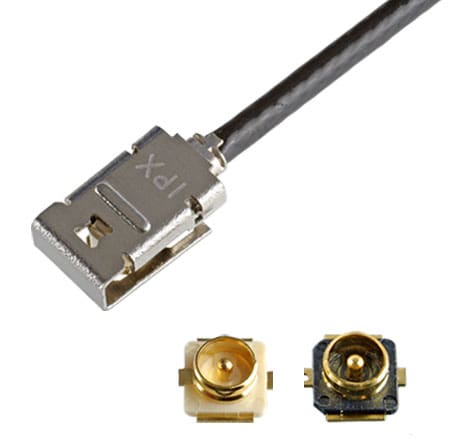
MHF from I-PEX is a series of ultra-miniature RF coaxial connector and harness solutions for antenna connections in wireless devices.
Device design and interconnect selection impact the ability to transmit data accurately and efficiently, which is a high priority in a medical setting. “Engineers can maximize signal integrity, which means less loss of signal going from the logic board to the antenna even before it gets transmitted. But at the same time, we are also finding that as the size becomes smaller, there are routing and flexibility challenges,” said Zeeshan. Connectors that can accommodate different sizes of coax cables address these issues.
“MHF connectors are sort of a go-to solution when it comes to connecting those antennas to the logic ports. That’s their main function. Unlike a lot of other players, MHF connectors have this option to use different coax gauges,” Zeeshan said.Portable heart defibrillators, or AEDs (automated external defibrillators), are often used in rugged environments — outdoors, in ambulances, and in hospitals — in emergency situations where they get thrown around a lot. They must be robust to maintain performance capabilities while withstanding rough handling. One connectivity solution is FPC (flexible printed circuit) connectors.
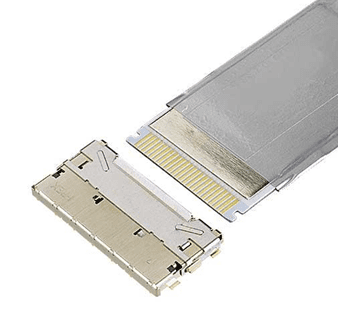
I-PEX EVAFLEX features an auto-lock mechanism, high-speed transmission, and high temperature resistance.
“FPC is becoming faster and more flexible. Depending on the choice of material, you can send high-speed and low-speed signals over FPC. One of our customers is using our version, EVAFLEX, for this application,” said Zeeshan. “EVAFLEX is sort of a special product. It’s got a locking feature. So even with all the throwing around and moving around, it does not detach.”
In addition, applying shock to a human body creates vibrations. “The locking function is very helpful for sustaining signal connectivity,” said Dai Yamada, general manager – connector marketing at I-PEX.
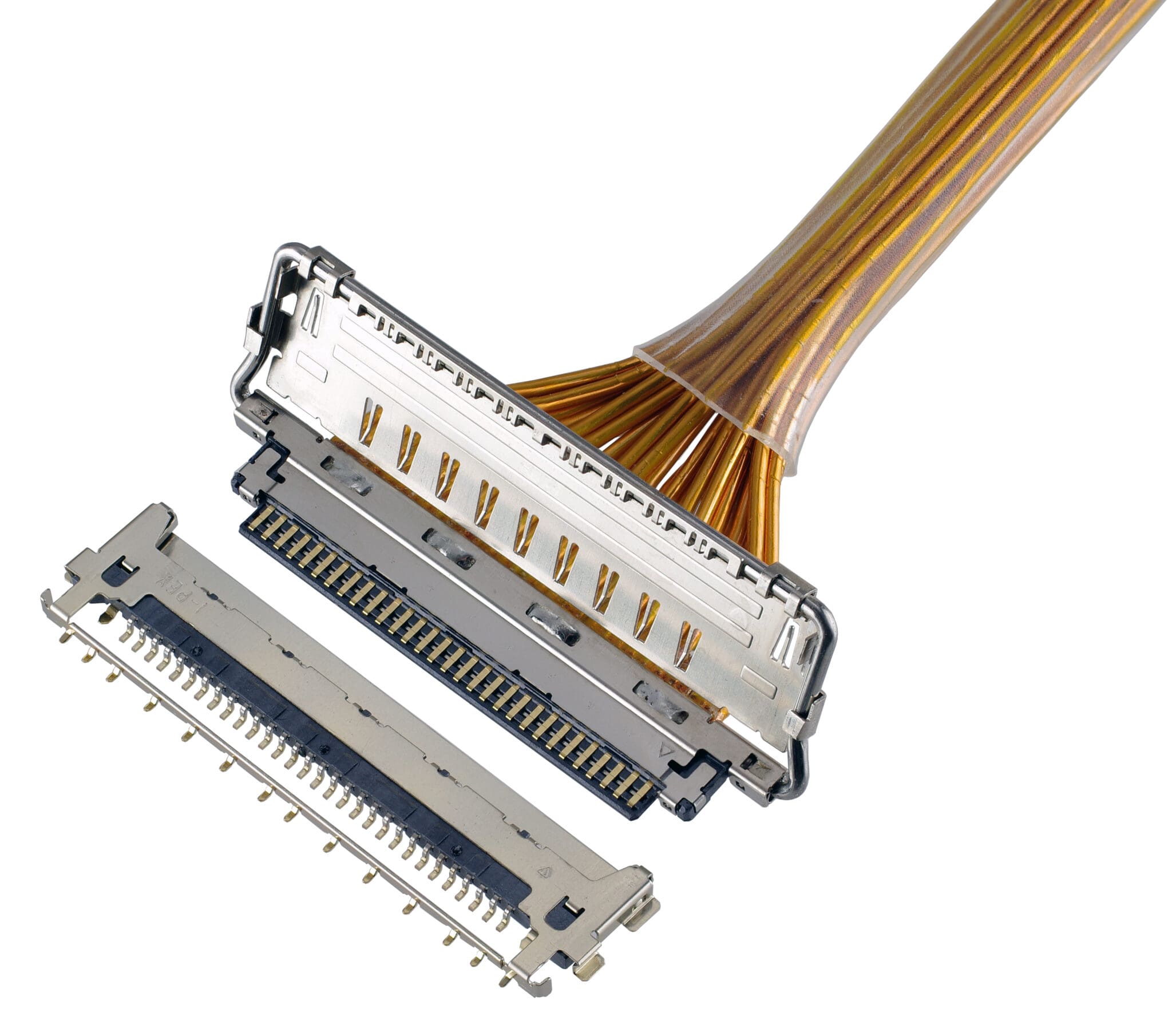
I-PEX CABLINE for high-speed data transmission and optional EMI shielding
Portable medical devices have displays to show monitoring results such as blood pressure or heart activity, or visual indicators for operating the device. Some applications require camera
connectivity. “Camera signals are brought to the main logic board via micro coax cables, which provide flexibility and high speed over the micro coax harness. When there’s a need to connect the display with the logic board, that’s where these harnesses sit,” said Zeeshan. CABLINE micro-coax connectors are an example. “CABLINE connectors are considered high-speed product families. Interestingly, we were surprised to see customers using them for ultrasonic probes, which is a low-speed application.”
Zeeshan explained that the portable ultrasonic monitors have a transducer on a probe. The gel or other liquid is applied on the head of probe to take the imaging data from the body. The back end of that transducer requires a high reliability connector to take those imaging signals to the monitor for post-processing. The cable harness provides shielding, which is necessary because the space is quite constrained. “They also want to have high flexibility so that they can connect and disconnect from the back of the transducer, so let’s say after maybe 60 or 70 cycles, instead of changing the whole probe, they just go to the back end of the transducer and use a new harness,” he said. “The imaging data on that probe is pretty high resolution, so that’s one reason they use CABLINE.”
Signal integrity is a high priority for this type of equipment. The more compact, the greater the need for shielding, but limited space makes that difficult. Some new portable compact blood analyzers allow users to go in the field, sometimes to areas that are hard to reach. They take a blood sample to do a platelet culture, for example, analyze it, and then transmit the data from that location. “They put the sample in a chamber inside the instrument. The door of that chamber is radio controlled, and they want to lock and unlock it remotely. Because the instrument is so compact, it doesn’t have a lot of space to shield these signals, and they want to reliably open and close that chamber. That requires eliminating signal interference,” Zeeshan said.
Another reason customers choose CABLINE for low-speed data transmission is because it is also a highly shielded compact harness. “In addition, the EMI cover is integrated into our connectors. With limited space, the customer is unable to apply an additional EMI cover shield component. To add components on top of the connectors, they need to solder down into the PCB for grounding functions and this requires additional space on the PCB. Integrating the EMI cover function into the connector saves space on the PCB and helps isolate each signal,” said Yamada. “Even the weaker signals from instruments must be transmitted reliably over the antenna to ensure high accuracy measurements.”
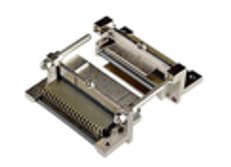
High mating cycles are yet another challenge for connectors in portable medical devices. One application example is a patient monitoring display. “It’s like a huge cell phone or tablet PC that docks to the bedside and needs a highly reliable connector to transmit information, typically within the hospital. The physician or physician’s assistant can take this monitoring system, look at the data, analyze it, put in notes, and then bring it back to the bedside docking station for the next physician to access and review. It is very popular,” said Zeeshan. “This is a unique product because there are so many risks. It is a complete PC with some input connectors for, perhaps, ultrasonic probes or heart monitoring probes. It is an expensive system, but if that docking connector fails due to a lot of mating and unmating, the whole system is useless.”
I-PEX developed the high cycle MINIDOCK ruggedized connector solution for this purpose. “We used some specialized plating to ruggedize the metals and got it qualified in an FDA-approved monitoring device,” Zeeshan said.
Portability going forward
“There is every reason to believe that miniaturization and ability to use equipment remotely will continue, meaning connector manufacturers will need to further reduce size and weight of their products while maintaining high performance and reliability,” said Tea.
Yamada added that customer requirements also include waterproofing and the ability to withstand autoclaving and sterilization processes, factors that can be addressed through customization.
Furthermore, as these devices become smaller and more portable, they’re going to use a battery, which raises concerns around heat generation and dissipation in the connectors. “Maintaining a very high conductivity means making contacts that have minimal resistance. We are challenged with finding new alloys which would enable the low resistivity or high conductivity and minimize the power loss in the connector itself. There are many different materials out there. You have to find the balance of heat dissipation, resistance, and all the different properties the customer requires,” Zeeshan said.
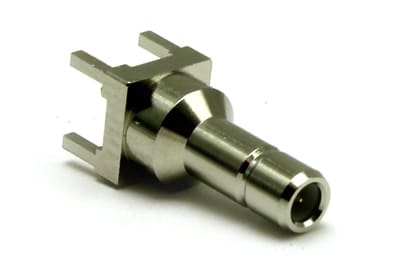
“The foremost requirements for connectors in medical applications continue to be high performance and reliability. Measurements and results must be accurate and consistent throughout the equipment’s lifetime. This not only requires strong design and development, but also stringent manufacturing processes and the use of the best material for the application,” said Tea. “To make the equipment as user friendly as possible and to reduce downtime when changes to configuration are necessary, connectors must be easy to install, provide a secure reliable connection, and be safe for both the medical practitioner and the patient.”
To learn more about the companies mentioned in this article, visit the Preferred Supplier pages for I-PEX and COAX Connectors Ltd.
Like this article? Check out our other Connector Basics articles, our Medical Market Page, and our 2025 Article Archive.
Subscribe to our weekly e-newsletters, follow us on LinkedIn, Twitter, and Facebook, and check out our eBook archives for more applicable, expert-informed connectivity content.

- Custom Cable Assemblies: A Value-Add Solution - October 13, 2026
- Fiber Optics Product Roundup - October 13, 2026
- October 2026 Connector Industry News - October 13, 2026