Four Essential Sensors
Sensing technologies that monitor the physical world are essential to technologies across the spectrum. Learn about four commonly specified environmental sensors and how each one works.
Article Contributed by Amphenol Sensors
Every time a thermostat adjusts a building’s temperature, a ventilator responds to a patient’s breathing, or an air-quality alert fires on a phone, a sensor made it possible. These small devices perform a deceptively simple job: they translate a physical quantity such as heat, pressure, gas concentration, moisture, or particulate mass into an electrical signal that a circuit can act on.
The physics behind that translation varies widely by sensor type, and understanding it helps engineers choose the right device, interpret its limitations, and avoid common specification mistakes. This article covers five sensor families that appear across automotive, medical, industrial, and environmental applications: temperature, pressure, carbon dioxide, humidity, and airborne particulate matter.

Temperature
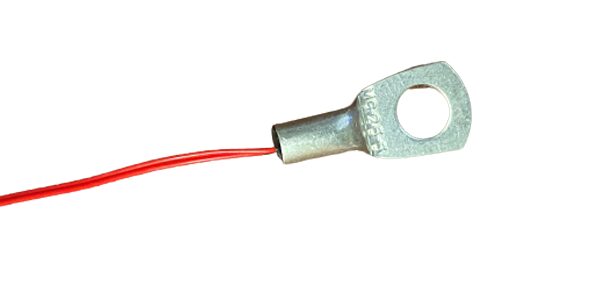
Temperature sensors convert thermal energy into an electrical signal. The two most common passive types are NTC thermistors (resistance falls as temperature rises) and PTC thermistors (resistance rises), both widely used for precise, low-cost measurement in embedded systems. For applications where contact is impossible or undesirable — measuring a rotating shaft, molten material, or a patient’s skin without touching it — non-contact infrared sensors detect emitted thermal radiation using the Stefan-Boltzmann law. A third variant, the inrush-current-limiting thermistor, is less a measurement device and more a protective one: placed in series with a power supply, its high cold-state resistance limits the surge current that would otherwise stress capacitors and rectifiers at switch-on.

Pressure / MEMS
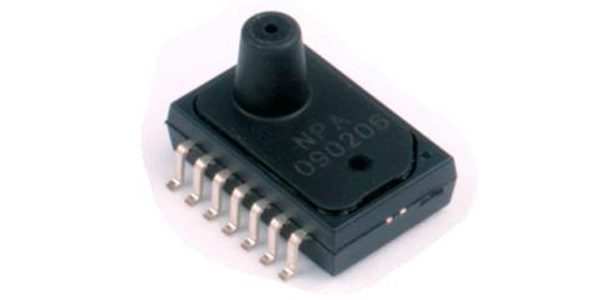
Micro-electromechanical systems (MEMS) pressure sensors etch a tiny silicon diaphragm onto a chip using semiconductor fabrication processes. When pressure deflects the diaphragm, piezoresistors embedded in the silicon change resistance in proportion — an effect called piezoresistivity. A Wheatstone bridge converts those resistance changes into a millivolt-level differential voltage. MEMS sensors can be made extraordinarily small, consume little power, and achieve high accuracy, making them the dominant technology for medical blood-pressure monitors, automotive manifold absolute pressure (MAP) sensors, weather instruments, and industrial process control across a range from a fraction of an inch of water column to several thousand PSI.
Carbon dioxide (CO₂)
Non-dispersive infrared (NDIR) is the established method for measuring CO₂ concentration. A broadband infrared source shines through a sample chamber; CO₂ molecules absorb light strongly at 4.26 µm while a reference channel at a non-absorbing wavelength stays constant. The ratio of the two channels gives concentration in parts per million. NDIR sensors are selective, stable over time, and accurate to single-digit ppm levels — properties that make them the standard for indoor air-quality monitoring, greenhouse climate control, safety alarms in fermentation or storage facilities, and in-cabin automotive HVAC systems. Drift over time is a known challenge; self-calibrating designs periodically reference known-clean outdoor air to compensate automatically.
Humidity
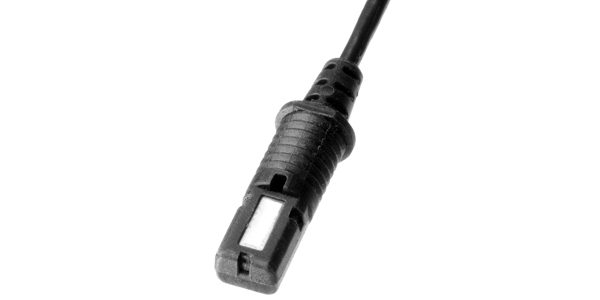
Relative humidity sensors most commonly use a capacitive polymer film whose dielectric constant shifts as it absorbs or releases water vapor — a predictable, reversible physical change that can be read as a change in capacitance. Integrated circuits combine that capacitive element with an on-chip temperature sensor (required to calculate relative humidity from absolute moisture content) and signal conditioning, outputting calibrated digital readings over I²C or SPI, or an analog voltage.
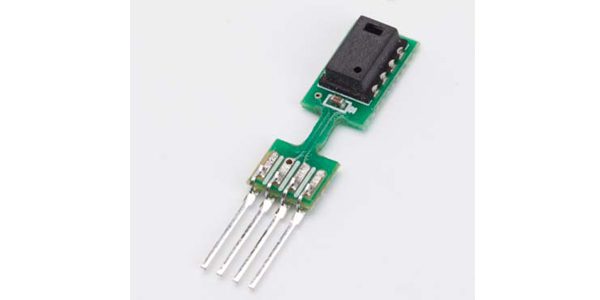
For environments with condensation, chemical exposure, or wide temperature swings, probe-form-factor designs enclose the sensing element in a housing that protects it while still allowing vapor exchange. Humidity measurement is fundamental to HVAC efficiency, pharmaceutical storage compliance, food production, and weather instrumentation.
To learn more about sensor technologies, visit Amphenol Sensors.
Like this article? Check out our other articles on our Sensors/Antennas Market Page, and our 2026 Article Archive.
Subscribe to our weekly e-newsletters, follow us on LinkedIn, Twitter, and Facebook, and check out our eBook archives for more applicable, expert-informed connectivity content.

- A Five-Layer Clad Solution for High-Performance Battery Interconnects - October 6, 2026
- High Voltage Interlock for Commercial Vehicles: A Must-Have or a Nice to Have? - September 29, 2026
- Case Study: A Partnership to Improve Rail Health - September 29, 2026