Automotive Sensors Improve Performance, Comfort, and Safety
Today’s vehicles rely on electrical signals to optimize performance, maximize efficiency and safety, and control the interior environment, thanks to automotive sensors. 
Automobiles have become, in many respects, computers on wheels—gathering and processing significant amounts of data to ensure vehicle performance as well as safety and comfort for drivers and passengers. Sensors have been used in automobiles for decades, but as mechanical systems like cables and hydraulics are increasingly being replaced with drive-by-wire systems that perform functions electronically, they are becoming even more important.
Drive-by-wire setups are found in three main driving systems.
- Throttle-by-wire, or electronic throttle control (ETC) is now standard on most new cars. When the accelerator pedal is pressed, a sensor sends a signal to the ECU to open the throttle valve.
- Brake-by-wire is found in many hybrid, electric, and luxury vehicles. The pressure is registered when the brake pedal is pressed and sensors signal an electric motor to apply the brake pads. This system also manages regenerative braking in electric and hybrid vehicles.
- Steer-by-wire, an emerging technology available in some production vehicles, completely removes the mechanical steering column between the steering wheel and the wheels. In the event of a system failure, these vehicles utilize redundant backups transferring the control from the primary to the secondary steering control system.
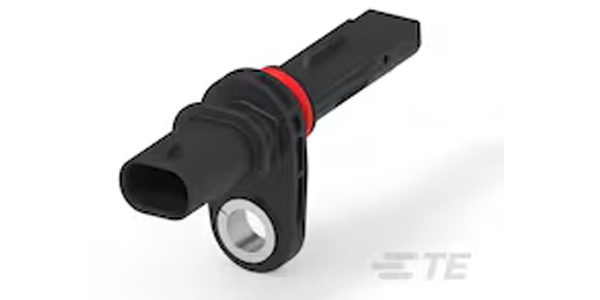
TE Connectivity’s High Resolution Wheel Speed Sensors provide precise and detailed wheel rotation data, essential for enhancing the performance of vehicles with advanced driver-assistance systems (ADAS) and autonomous driving capabilities. Using advanced GMR technologies, these sensors excel in accuracy and reliability to deliver critical information that supports a wide range of modern and next-generation functions.
Wheel speed sensors
Wheel speed sensors are used to inform several aspects related to the vehicle’s function. High-resolution wheel speed sensors precisely detect wheel speed, position, and direction, sending that information to the electronic control unit (ECU) so the anti-lock braking system (ABS), traction control, and stability control function properly during braking or in low traction driving situations. This function is essential for advanced driver assistance systems (ADAS) and autonomous vehicles.
“Wheel speed sensors also assist with self-parking,” said Corneliu Tobescu, Vice President and Chief Technology Officer, TE Sensors, TE Connectivity. “They indicate exactly where the car is and the position of the wheel to achieve a better parking outcome.”
Tobescu added that these sensors must be extremely resistant to the harsh environment at the wheel. High temperatures and thermal shocks require high durability and robustness of the sensor to prevent sensor failure due to leakage from water and snow present while driving.
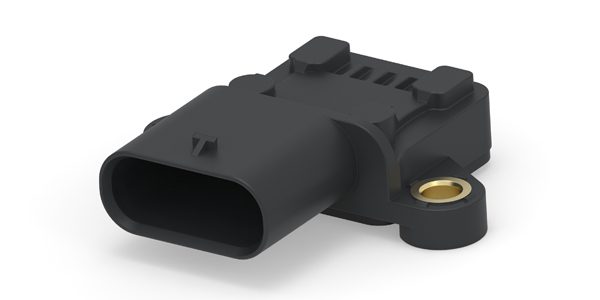
TE Connectivity’s custom pedal travel sensor accurately monitors brake pedal movement, ensuring responsive and safe braking by detecting the driver’s brake intention. This sensor is integral to the vehicle’s braking system, providing crucial data for responsive and safe braking.
Brake system position sensors
Brake systems in modern vehicles use a pedal travel sensor (PTS) and a motor position sensor (MPS). The pedal travel sensor measures how far and how fast the driver presses the brake and sends precise data to the ECU to control deacceleration and safety features. It can also support throttle control and clutch control by measuring the position of the acceleration pedal and clutch pedal.
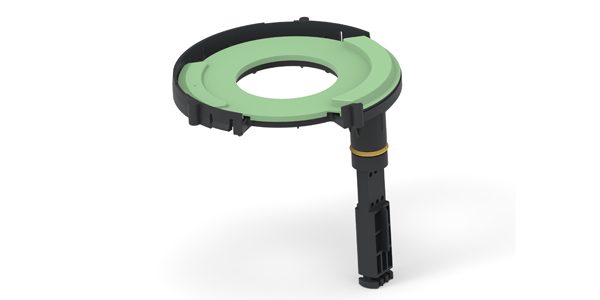
Motor position sensor from TE Connectivity
In the brake system, the motor position sensor detects the angular position of the rotor or brake motor, signaling feedback to the brake control unit to modulate the braking pressure, and manages inverter currents to support the braking through the e-motor.
“We’re moving from hydraulics to the next generation which is electromechanical braking systems, and we are providing the sensor signals that support the actuation of the braking system control. With all this information provided by the sensors, we are increasing the safety in the cars,” said Tobescu. “Before we just looked at the wheel speed for information to drive the ABS. Now it is much more. In the future, cars will be self-driving. They need to have these complementary systems that will ensure that the right decisions are being made with reliable information and eliminate mistakes.”
The ECU compares the information from the wheel speed sensor and the braking system to make sure they match and are working properly. To increase safety, these systems incorporate dual or triple redundancy (multiple independent sensors in the pedal housing). If an error or a fault occurs, the ECU immediately switches to the secondary circuit to maintain vehicle control.
Pedal travel sensors and motor position sensors use contactless magnetic technologies, including Hall effect and Eddy current.
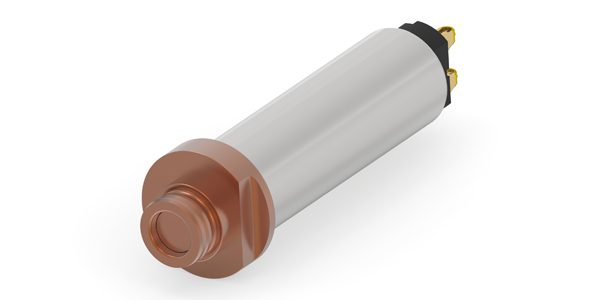
Hydraulic brake pressure sensor from TE Connectivity
High pressure sensors
In automotive brake systems, high pressure sensors provide the feedback signal to ensure the target braking force is applied to the wheels. The high pressure sensor works with the PTS and MPS sensors to ensure reliable brake system function and passenger safety.
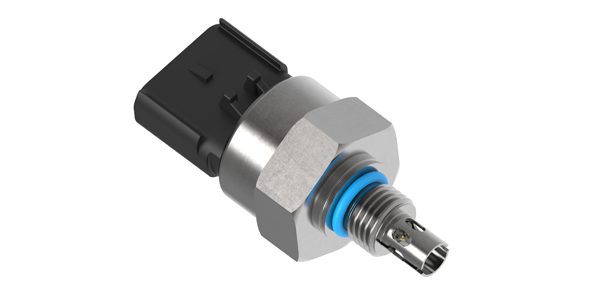
TE’s OPS3 is an oil property sensor (OPS) directly and simultaneously measures the dynamic viscosity, density, dielectric constant, resistance (Rp), and temperature of oils. This sensor features an on-board microprocessor for real-time data analysis with 12-24 volts supply.
Oil property sensors
An advanced diagnostic device, the oil property sensor continuously monitors the health and quality of engine oil. Unlike sensors that measure oil level or pressure, the oil property sensor simultaneously measures the critical properties that determine the exact condition of the oil.
- Dielectric constant indicates the presence of water, antifreeze (glycol), soot, and acid build-up—contaminants are detected by how well the oil holds an electrical charge.
- Viscosity, the thickness of the oil, ensures it can properly lubricate the engine, even at extreme temperatures.
- Density, the oil’s mass, can indicate heavy fuel dilution or severe contamination.
- Temperature is crucial for determining the overall stress on the fluid.
The oil property sensor enables smart monitoring by calculating exactly how hard the engine has been working and how degraded the oil is. This can extend the time between oil changes or indicate the need for preventative maintenance. The sensor also detects leaks and failure through sudden changes in viscosity or the dielectric constant. This is used in passenger vehicles but is especially important in heavy duty vehicles. It addresses safety, maintenance, and environmental concerns.
This type of sensor is also being tested for monitoring the liquid used to cool the battery in electric vehicles. “The battery needs to be maintained at a constant temperature during driving in order to maximize performance and range. Dielectric strength is also critical to ensure the reliability of the battery system,” said Tobescu.
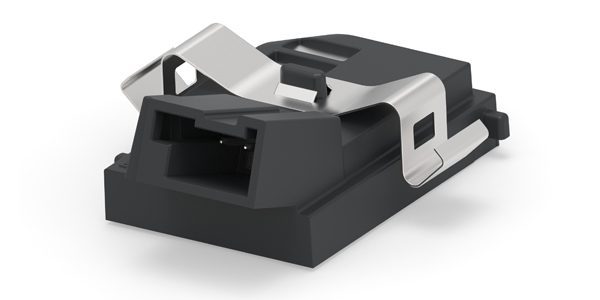
Anti-fog sensor from TE Connectivity
Humidity sensors
Humidity sensors detect and measure water vapor to provide accurate measurement of dew point and absolute humidity. The sensor predicts and avoids fogging by combining relative humidity (RH) and temperature (T) measurements and activating the HVAC. “What is most important for the humidity sensor is the response time, particularly regarding fogging,” Tobescu said. “The HVAC consumes a lot of power from the battery, reducing the driving range. Activating the HVAC quickly, and at a lower level, before the windshield starts to fog, is a major factor in extending the range.”
Environmental sensors, like humidity and temperature, are also being used to improve the in-cabin comfort of the passengers.
Force sensors
Force sensors are used in many applications in automotive safety testing, for example to measure the effort generated on the anchor point of seat belts during crash tests or, the forces applied to the handle of the hand brake. The data collected from the force sensors help OEMs develop systems that meet and exceed industry standards.
The rapid expansion of sensor technology is fundamentally reshaping vehicle architectures, enabling smarter, safer, more efficient and autonomous mobility systems. Modern vehicles already rely on dozens, if not hundreds, of sensors to monitor everything from engine performance to environmental conditions, and this number is expected to grow significantly with the rise of electrification and autonomous driving. As vehicle systems continue to evolve, sensor innovation is critical, and along with low latency signal propagation and high-speed data communication, will be key to unlocking the full potential of next-generation architectures.
Visit the Preferred Supplier page for TE Connectivity to learn more about the company and its products.
Like this article? Check out our other articles on our Sensors/Antennas Market Page, and our 2026 Article Archive.
Subscribe to our weekly e-newsletters, follow us on LinkedIn, Twitter, and Facebook, and check out our eBook archives for more applicable, expert-informed connectivity content.

- 2026 Push-Pull Connectors Product Roundup - October 6, 2026
- October 2026 New Connectivity Products - October 6, 2026
- Taking the Complexity out of Power Distribution - September 29, 2026