Bulgin’s Thisen Bird Becomes a Whitworth Scholar
Whitworth Scholarships support the engineering careers of apprentices by helping to fund their education.
In 1841, Sir Joseph Whitworth, an English engineer, entrepreneur, inventor, and philanthropist, devised the British Standard Whitworth (BSW), the world’s first screw thread standard. The BSW was widely accepted throughout the United Kingdom and internationally, influencing engineering practices globally, and forming the foundation for other thread standards. Whitworth’s aptitude for mechanics first became apparent when he left school and began an apprenticeship at his uncle’s cotton mill. This led to an extensive career developing his skills working for others and eventually starting his own successful company manufacturing lathes and machine tools.
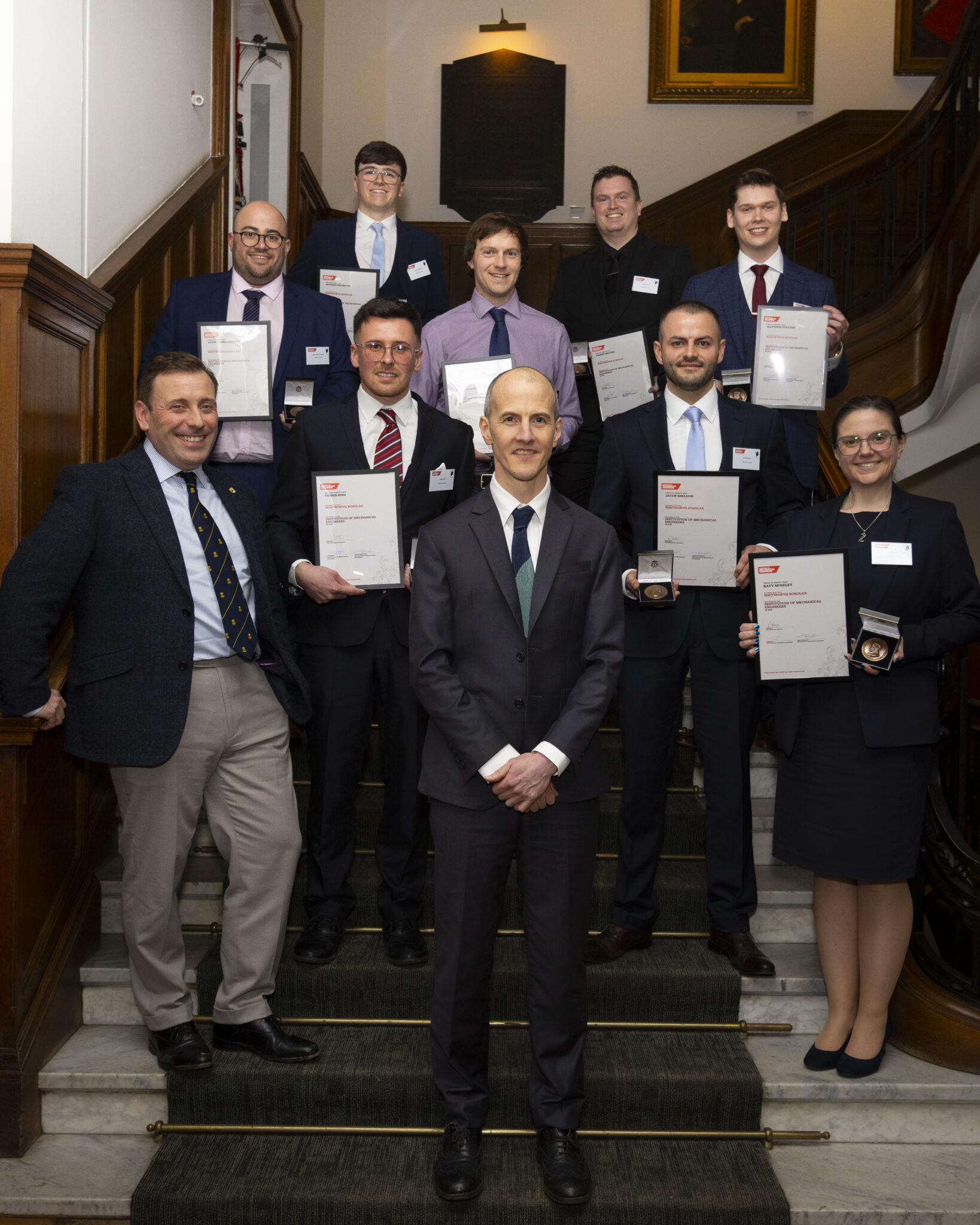
New Whitworth Scholars, including Bulgin’s Thisen Bird (second from left, bottom row).
Whitworth’s own hands-on experience strengthened his belief in technical education. Having achieved financial success, in 1868 he founded the Whitworth Scholarship for the advancement of mechanical engineering. The Whitworth Society, comprised of Whitworth Scholars and Award Holders, was founded in 1923 to honor his support of vocational training and to carry on his vision by promoting outstanding engineers and engineering in the UK. The scholarship program is linked to the Institution of Mechanical Engineers (IMechE) and supported by the Whitworth Society.
In March 2026, Bulgin announced that Thisen Bird, Associate Product Manager at the company, had been recognized as a Whitworth Scholar, marking a significant milestone in his engineering career that reflects his academic success and commitment to ongoing professional development. Connector Supplier spoke with Thisen about this honor.

Thisen Bird, Product Manager, Bulgin
How did your selection as a Whitworth scholar come about?
The Whitworth Scholarship is essentially for apprentices, those who have done a vocational course for a few years to start and can demonstrate a hands-on role on the tools. Sir Joseph Whitworth specifically wanted young engineers to be supported in their education following their time as apprentices.
After submitting the detailed application outlining my experience and career to that point, I was interviewed by a panel of Whitworth Scholars (individuals who have successfully completed the rigorous requirements of the program), to ensure that I met the principles of the society. After that, I was selected as a Whitworth Award Holder and received scholarship funding toward my studies at university. I did my studies part-time and continued working. During that time, I kept in touch with them by writing self-reflection reports every year. At the final report, they determine whether or not to bring you on as a Whitworth Scholar.
What does it mean to be a Whitworth Scholar?
As a Whitworth scholar I can use the accolades like the designation WhSch and membership for life in the Whitworth Society. That gives members access to a community of like-minded engineers that have been on the same path. They hold annual events, such as the annual commemoration dinner around the 18th of March to mark the date in 1868 when Joseph Whitworth wrote to Benjamin Disraeli offering to establish the Whitworth Scholarships. The Society aims to support engineers who are looking to do a university course, and in turn, those engineers support the next generation who come through the program.
What was your apprenticeship piece that qualified you for this award?
My vocational training was in mechanical engineering while I was a service technician for the oil and gas company NOV. I worked on the factory floor, servicing oil and gas equipment, whilst going to college two days a week. The scholarship criteria required applicants to have completed at least two years of an apprenticeship or vocational course. I completed three years, reaching Level 3, which is just below the level required to begin a university degree. About eight years after that, my local Institution of Mechanical Engineers (IMechE) representative told me about the society and the scholarships for people who have had vocational courses or apprenticeships. I applied when I was doing my master’s. Now that I’ve completed my master’s degree, I’m part of the society.
What was your career path following your apprenticeship?
I finished my apprenticeship and, unfortunately, I was made redundant at that time. After that, I worked in a few technician roles, but I always had the urge to keep learning and eventually earn a degree. With a job and a mortgage, though, I knew I couldn’t go back to university full time, so I looked for courses that would fit around work. I then joined a company in Cambridge that supported me in studying part time. I started with a Higher National Certificate (HNC), which is an entry-level higher education qualification, and completed that over two years. I then progressed to a Higher National Diploma (HND), which took another two years, followed by a two-year top-up program that enabled me to gain an undergraduate degree in Engineering Design. I changed jobs a few times along the way and, by the time I completed my degree, I was working at Bulgin. Over the years, I’ve gone from a very hands-on role, building and assembling products, to becoming a project engineer at Bulgin, and now I’m a product manager. I’ve gradually transitioned from engineering into the commercial side of the business and having that engineering background is a real advantage. It helps me make informed decisions and define the right products to develop.
What role do apprenticeships, continuing education, and professional development play in the engineering sector? Why is this combination of experience and education important and valuable in general and to companies like Bulgin?
From my apprenticeship to getting my master’s took about 13 years. I know a university degree would normally take three years, but by studying part time I was able to gain experience while working. It was a longer journey, but there are different ways of doing it, and this route worked for me. In terms of apprenticeships or graduates, it’s important to have these opportunities and doors into Bulgin for people to learn and develop themselves personally and professionally. When people feel valued and supported, they’re more likely to stay. That’s important to Bulgin because this is the next generation of lead engineers and senior leaders of the business who will secure the direction and future of the business. It has been really beneficial to me and I’ve rewarded Bulgin with all the new products that we’re now launching as a result of them believing in me. I’m now helping to train the next generation of talent. So it kind of trickles down throughout the business.
How is your experience and education helping in your current role as product manager?
I completed a postgraduate program in Global Product Development and Management at Cranfield University. It covered core product design and development, alongside new methods of product development, as well as engineering management, supply chain management, and operations management. Having that engineering background, and the experience I gained as a project engineer, has really helped me. It’s about putting that into practice and thinking ahead — what’s emerging, what we can develop, what we can integrate into existing products, what we can upgrade, and what direction we should take in developing our projects and products. This is now visible in the releases that we’ve had for the last few years. The idea is not to make me-too products. We’re just beginning to generate new IP and developing the next generation of connectors from a Bulgin perspective, keeping that harsh environment connectivity really at the front.
What is your advice for up-and-coming engineers?
I think it’s to pursue what makes you tick, what interests you. As you go along, you might pivot, you might want to do something slightly differently in your career. Maybe you want to do design or you want to go down the testing route or something completely different. Once you’ve gone down one path, don’t think that’s the only way you can go. I’m part of IMechE and the core principles of that pretty much aligned with most engineering institutions out there. Keep your options open, just consider all avenues, and see what one suits you best.
Visit the Preferred Supplier page for Bulgin to learn more about the company and its products.
Like this article? Check out our other Innovation articles, our Datacom Market Page, and our 2026 Article Archive.
Subscribe to our weekly e-newsletters, follow us on LinkedIn, Twitter, and Facebook, and check out our eBook archives for more applicable, expert-informed connectivity content.

- Electronic Technology is in the Wind - September 1, 2026
- 38999 Connectors Product Roundup - September 1, 2026
- September 2026 New Connectivity Products - September 1, 2026