COM-HPC 1.3 Takes Computing to the Intelligent Edge
To increase functionality at the edge of the network requires more compute power, higher speeds, and higher I/O, to support more memory, especially with IoT and AI.

The original COM-HPC® specification was released by PICMG (PCI Industrial Computer Manufacturers Group) in 2021 to meet the evolving demands of embedded computing. COM-HPC 1.3 is the third revision of the specification, which is built on incremental improvements in performance and capabilities for emerging memory-centric and AI uses cases.
PICMG COM Express®: A little history
In 2005, PICMG launched COM Express, which became one of the most popular embedded hardware standards in the world. “When COM Express was launched, it was bleeding edge. It was small. It was fast. It was dense. It aligned with the road maps from the x86 providers. It did all the things that all the embedded computing ecosystem needed,” said Matthew Burns, Samtec. COM Express continued to evolve with eight different types, four different sizes, and three major revisions while supporting vendor interoperability and technology reuse via the same modular architecture. The latest revision of the COM Express specification further expanded the data throughput of the existing COM Express interconnect.
Burns explained that the COM Express technical working group optimized the signal integrity of the COM Express interconnect and form factors. “With the help of the connector vendor, the COM Express TWG improved performance from PCIe 3.0 (8 GT/s) to PCIe 4.0 (16 GT/s). From a PCI Express standpoint that gets you another generation of embedded chips, especially on the x86 ecosystem. Everybody’s happy,” he said. “However, the latest Intel/AMD x86 solutions plus the ARM ecosystem, RISC-V, FPGAs, and GPUs continued to evolve in performance and functionality. A new COM architecture was needed to address the future needs of these complex and diverse compute architectures.”
Why COM-HPC 1.3?
COM Express remains a viable architecture for many embedded computing applications. However, COM-HPC supports server-grade performance at the intelligent edge. As originally intended at the 2021 release, COM-HPC would enable high data throughput supporting PCIe 5.0 (32 GT/s) with a futureproof pathway to PCIe 6.0 (64 GT/s PAM4).
PCI-SIG eventually released the PCIe 6.0 specification in 2022. In 2024, efforts were started within PICMG to formalize the metrics to enable PCIe 6.0 capabilities in COM-HPC 1.3. Complementary, PCIe 6.0 support allows for Compute Express Link (CXL) 3.x functionality within the COM-HPC ecosystem for coherent connectivity for memory and accelerator resources over the PCIe interface.
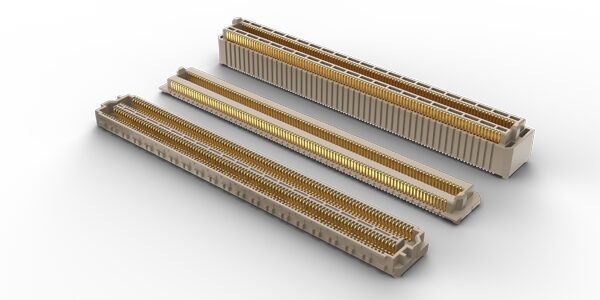
Samtec COM-HPC connectors
Additionally, the MIPI C-PHY 3.0 specification was released in 2025 by the MIPI Alliance. MIPI C-PHY controls the interface between cameras, displays, and application processors in multimedia applications. As a result, the COM-HPC technical subcommittee within PICMG worked diligently to add these enhanced capabilities to the COM-HPC specification.
The committee also addressed power efficiency and power management. The introduction of Modern Standby (S0ix) takes advantage of the latest energy-efficient operating modes of application processors. PCIe clock signals are now bi-directional, allowing more efficient power management.
Lastly, they looked at optimization of GPIO (general-purpose input/output) to clarify and remove some questions that were raised by version 1.2. Some additional I2S interfaces were added for additional support for audio applications, along with capability to support SMBus.
COM-HPC 1.3 connector enhancements
The original COM-HPC connectors used traditional BGA-style solder ball terminations. However, ongoing innovation shows that newer solder column terminations provide many benefits compared to solder ball terminations. So, the COM-HPC 1.3 specification includes new connector options that use the new termination technology. Mechanical updates further strengthen the ecosystem.
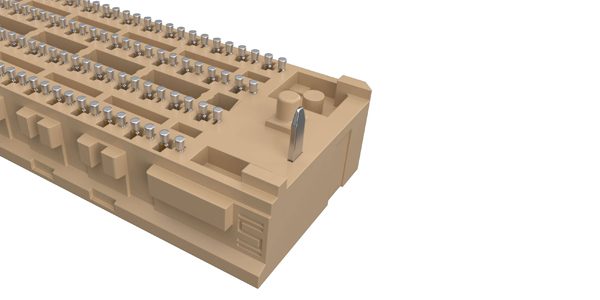
Solder column termination on COM-HPC connectors
Solder column board termination is ideal for dense, high-speed interconnects like COM-HPC. This new technique is fully compatible with existing PCB footprints, but a larger rectangular stencil aperture is required to ensure optimal soldering results. Other advantages include:
- Consistent, reliable solder joints for long-term durability
- Large post design for proper fillet thickness and a generous wettable surface area, enhancing solder joint reliability
- Successfully tested Solder Joint Reliability per IPC-9701 (-55˚C to +125˚C)
- Seamless drop-in compatibility with existing layouts, ensuring a smooth transition with minimal disruption
- Greater production flexibility to support cost-effective manufacturing
The COM-HPC 1.3 specification represents the ongoing commitment to continuous improvement within the PICMG COM-HPC ecosystem. The latest version adds important features and benefits while fully preserving backward-compatibility. It’s also a demonstration of open standards accelerating innovation in the embedded ecosystem. Multiple suppliers of the COM-HPC connectors are now listed in the specification, enhancing supply chain flexibility and availability.
Visit the Preferred Supplier page for Samtec Inc. to learn more about the company and its products.
Like this article? Check out our Military and Aerospace Market Page and our 2026 Article Archives.
Subscribe to our weekly e-newsletters, follow us on LinkedIn, Twitter, and Facebook, and check out our eBook archives for more applicable, expert-informed connectivity content.

- Ceramics in Space: BME X7R MLCC - October 20, 2026
- Test & Measurement Product Roundup - October 20, 2026
- Advanced Connectivity-Automation, Robotics, AI, and Machine Learning - October 20, 2026