Pushing the Limits of Handheld Gaming
Storage demands in portable and handheld gaming devices are approaching those of gaming PCs, but with far less internal space. With the growth of game installations, storage capacity, data access performance, and battery life have all become design considerations.
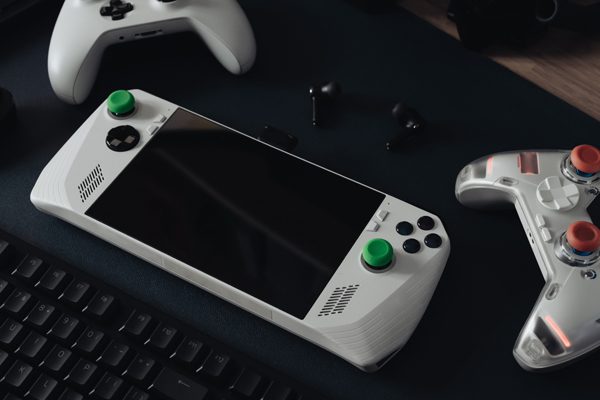
As gamers push the limits of portable and handheld gaming, the hardware technology is advancing to keep up with those demands. Enhanced gaming capabilities, longer battery life, and increased storage are just some of the areas connector companies are addressing to maximize the gaming experience. Connector Supplier asked Maxine Chien, Marketing Project Manager-Product Marketing at ATTEND Technology, about the latest developments.
How do handheld gaming devices balance portable design with storage capacity, data access, and expansion needs? What do these requirements mean for connectors and sockets?
Storage demands in handheld gaming devices are approaching those of gaming PCs, but with far less internal space. As game installations grow, storage capacity, data access performance, and battery life have all become design considerations. Many PC-based handhelds use an internal M.2 SSD for primary storage, a microSD card slot for capacity expansion, and USB Type-C for external storage, displays, and docking stations.
These requirements shape connector and socket selection from the start. Limited enclosure space constrains connector dimensions and PCB layout, while high-speed storage and external data transmission raise the bar for signal integrity and contact reliability. Each interface also brings its own mechanical requirements, depending on whether it is installed once, swapped by players, or connected to cables every day.
How do microSD cards support larger game libraries? How do socket size, insertion mechanisms, and contact reliability affect device integration and everyday use?
As game installations grow, internal SSD capacity may no longer keep up with players’ expanding game libraries. Expanding storage through microSD requires no disassembly, allowing players to add higher-capacity cards for more games and downloadable content or organize libraries across multiple cards. Compared with replacing an internal SSD, microSD expansion is generally more convenient, although installing and running games from removable storage depends on device and platform support.
As some handhelds adopt microSD Express, removable storage is also moving toward higher transfer performance. microSD Express uses PCIe and NVMe technology to provide greater data transfer bandwidth than conventional UHS-I interfaces, helping address the data-access demands of larger games. Its high-speed mode, however, requires support from the card, a compatible socket, and the host system.
Beyond transfer performance, microSD socket mechanics and contact reliability remain essential. Card slots on handhelds are typically located along the enclosure edge and must balance accessibility with limited mounting space. A push-push mechanism makes cards easier to insert and eject, while adequate card retention and contact force help reduce poor connections, card detection errors, and interrupted data access when devices are carried or exposed to vibration or impact.
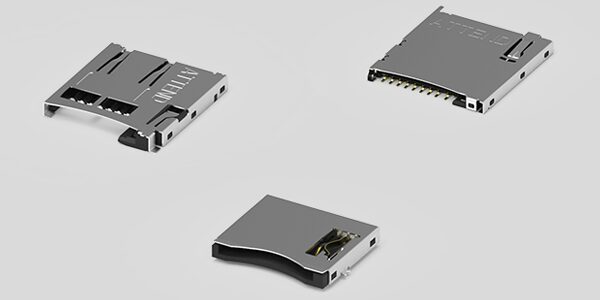
ATTEND’s microSD socket series includes UHS-I and UHS-II interface options, with configurations featuring push-push mechanisms and low-profile designs to address accessibility, contact reliability, and integration within limited enclosure space.
M.2 2230 remains a common SSD form factor in PC-based handhelds, typically using PCIe Gen4 NVMe interfaces for high-speed storage. Some newer handhelds are also adopting M.2 2242 or 2280 modules to accommodate different storage capacities and system design requirements. As game installations continue to grow, SSD integration must address not only storage capacity and data access performance but also power consumption and thermal management.
For hardware engineers, M.2 socket selection involves SSD form factors, interface compatibility, PCB layout, and mechanical retention. M.2 SSD modules of different lengths can share the same M key interface, provided the motherboard offers the appropriate mounting positions and thermal design. In a handheld, the SSD often sits close to the SoC and the cooling system, depending on the layout. The socket therefore has to hold the module securely against the vibration and shock of a device that gets carried and occasionally dropped, while keeping it flat enough for a heat spreader or thermal pad to make proper contact.
High-speed signal transmission is another key consideration. As PCIe data rates increase, PCB routing, impedance control, and connector electrical performance must meet increasingly demanding design requirements.
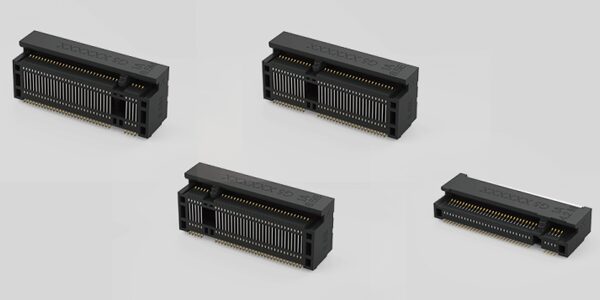
ATTEND’s M.2 socket series supports high-speed SSD integration, including options designed for PCIe Gen5 applications to address the evolving needs of next-generation storage systems.
How do USB4 connections provide a path to external storage and docking configurations? What are the additional requirements for connector mounting, cable handling, and reliable data transmission?
USB Type-C provides a physical interface that can integrate high-speed data transfer, video output, and power delivery in handheld gaming devices. USB4-enabled handhelds can connect external SSDs and docking stations through compatible USB Type-C ports, with some USB4 implementations supporting data rates up to 40 Gb/s. When the host system provides the appropriate DisplayPort video output and USB Power Delivery (USB PD) capabilities, compatible docking stations can also support external displays, peripherals, and charging, extending handheld use to larger-screen gaming and desktop configurations.
From a hardware engineering perspective, USB4 is more than a faster data rate. At 40 Gb/s, signal quality depends on the whole path, so connector electrical performance and cable selection matter as much as the host controller and PCB layout. Running external storage and a display through a single dock also raises the question of how the available link bandwidth is split between data and video, within the limits of the host, dock, and cable.
Mechanical reliability is another challenge for handhelds. Unlike stationary equipment, handhelds may be held and moved while charging or connected to peripherals. Cable strain, lateral loading, and repeated mating can stress USB Type-C connectors and their PCB solder joints. Connector retention features, termination design, and mating durability must therefore be evaluated against actual usage conditions.
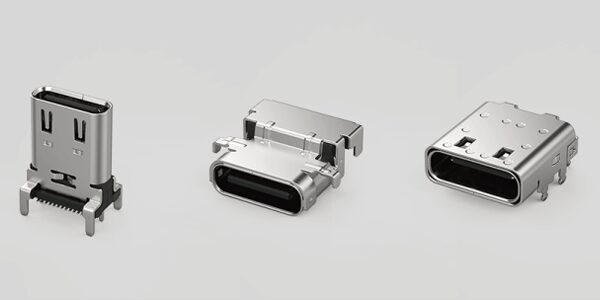
ATTEND’s USB4 Type-C connectors support data rates up to 40 Gb/s, with receptacles rated for 10,000 mating cycles in accordance with USB Type-C durability requirements. These specifications help engineers address high-speed connectivity and repeated-use requirements in handheld gaming devices.
How do manufacturers balance limited space, storage performance, mechanical durability, and expansion options in portable gaming hardware?
A key design challenge in handheld gaming devices is integrating high-speed storage, cooling systems, batteries, and multiple external interfaces within a compact enclosure. These components compete for PCB space while also being constrained by thermal paths and power requirements. Manufacturers must therefore balance storage capacity, performance, expansion capabilities, and mechanical space according to product positioning rather than simply reducing individual component dimensions.
SSD integration provides a practical example. M.2 2230 modules measure 22 × 30 mm, and their shorter length helps accommodate compact PCB layouts. M.2 2280 modules measure 22 × 80 mm, offering more component area for different NAND flash configurations, controllers, and thermal designs, but requiring a longer mounting area. Regardless of form factor, engineers must consider compatibility among the M.2 socket, module mounting position, clearances around nearby components, and cooling structures. Actual SSD performance also depends on the PCIe interface, controller, power consumption, and thermal management, not simply module dimensions.
External expansion involves a different set of trade-offs. Each high-speed USB Type-C port adds PCB routing, impedance control, and signal integrity work, and its placement must account for enclosure openings, cable insertion clearance, and mechanical support. For this reason, some handhelds reserve USB4 for higher-end models while using USB 3.2 ports elsewhere. A microSD slot, meanwhile, needs enough clearance for card insertion and removal along the edge of a thin enclosure.
In addition to storage and speed, what else are gamers looking for?
Storage capacity and data access speed remain important considerations when choosing handheld gaming devices, but market expectations are shifting from individual hardware specifications toward a more complete gaming experience. As handhelds expand from gaming on the go into desktop entertainment and cross-device applications, players are looking beyond game library capacity and loading times to battery life, connectivity, ease of use, and long-term value.
Battery life and external expansion have become important parts of the user experience. Players want sustained gaming performance alongside longer operating times and convenient charging, as well as the flexibility to connect external displays, external storage, and docking stations when switching between portable and desktop use. This increases the value of versatile interfaces such as USB Type-C.
Cloud gaming and game streaming are also changing expectations for network connectivity. Beyond local storage and loading performance, stable wireless connections, low latency, and network quality directly affect streaming smoothness. As next-generation wireless technologies such as Wi-Fi 7 are introduced into handhelds, wireless connectivity is becoming an increasingly important aspect of the gaming experience.
Upgradeability and flexibility also deserve attention. Players want the option to expand game storage with microSD cards or upgrade internal SSDs where supported to meet future capacity needs. For a connector supplier, this buy-low-and-expand-later approach puts more weight on the interfaces that users rely on for expansion. These interfaces are used in different ways: a microSD socket is inserted and removed repeatedly as players swap cards, while an M.2 socket for a replaceable SSD must securely retain the module, with mating durability suited to occasional upgrades. Matching retention and the appropriate mating-cycle rating to each role becomes a real selection criterion rather than a footnote.
What is on the horizon for gaming technology?
Next-generation handhelds will be defined not only by higher hardware performance but also by the ability to deliver a more complete PC gaming experience. Recent high-end handhelds show manufacturers integrating powerful processors, high-refresh-rate displays, larger batteries, and more versatile connectivity into portable designs. Looking ahead, the challenge will be maintaining consistent gaming performance within limited space and power budgets while improving battery life, thermal efficiency, and ease of use.
Another important trend is greater integration with external devices. High-speed NVMe SSDs and removable storage continue to support growing game library requirements, while technologies such as USB4, DisplayPort video output, and USB Power Delivery (USB PD) can enable external displays, external storage, docking stations, and charging through compatible USB Type-C ports, depending on system capabilities. As wireless technologies such as Wi-Fi 7 become more widely adopted, handhelds will also offer greater flexibility across local gaming, online multiplayer, and cloud streaming. Together, these developments are transforming handhelds from portable gaming devices into more versatile mobile PC gaming platforms.
For the connector industry, future requirements will extend beyond miniaturization to balancing high-speed signal transmission, power handling, and mechanical reliability within limited PCB and enclosure space. Different interfaces also present distinct design priorities: external ports must withstand frequent insertion and removal and cable-induced stress, while internal storage interfaces emphasize secure module retention, signal integrity, and long-term connection stability. As handhelds evolve into more capable mobile PC gaming platforms, connectors will play a growing role in supporting overall system performance and user experience. Emerging technologies such as modular memory may also create new upgrade opportunities, although broader adoption will depend on product architecture and market demand.
Visit the Preferred Supplier page for ATTEND to learn more about the company and its products.
Like this article? Check out our other articles on our Consumer Market Page, and our 2026 Article Archives.
Subscribe to our weekly e-newsletters, follow us on LinkedIn, Twitter, and Facebook, and check out our eBook archives for more applicable, expert-informed connectivity content.

- Pushing the Limits of Handheld Gaming - November 10, 2026
- Right Angle Board Mount Connectors Product Roundup - November 10, 2026
- November 2026 Connector Industry News - November 10, 2026