What is a Data Bus?
This communication architecture allows for the smooth exchange of data inside a computer, or occasionally between different systems, components, and applications.
A data bus is the set of connections within the CPU, memory, and peripherals used to carry data and is one of the main factors in a computer’s processing power. It consists of hardware such as wires, optical fiber, and bus slots, as well as software including communication protocols. A shared physical pathway, the data bus is typically composed of wires or traces on a circuit board, that allows multiple devices to communicate. Unlike networks, which route addressed packets across switches, buses use arbitration protocols to manage which device can transmit data over the shared pathway.
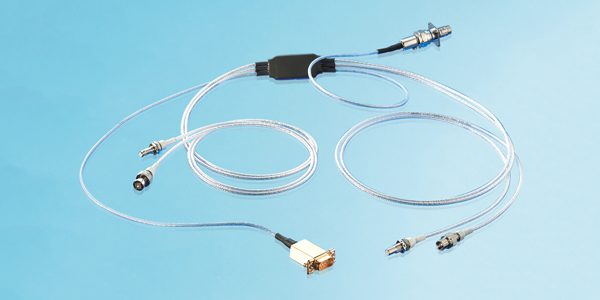
Axon’ Cable designs and manufactures components for data transmission systems in compliance with MIL-STD-1553 that offer high data security, signal integrity, EMI protection, weight and space saving, as well as fast diagnostics of all equipment connected to the bus. Axon’s data bus products include 22, 24 and 26 AWG screened twisted-pair cables designed to meet 77Ω nominal impedance. They can be connected to different types of couplers, such as in-line couplers, crimp couplers, rack couplers, relay couplers, removable couplers, and accessories.
Origin & Development
In the earliest machines moving data between the CPU, memory, and peripherals was hand-wired point-to-point, but as systems grew more complex, engineers favored a shared, standardized pathway — the bus — rather than custom wiring for every device pair. One of the most influential early general-purpose buses was DEC’s Unibus, developed for the PDP-11 line around 1969 by Gordon Bell and student Harold McFarland at Carnegie Mellon University. As systems grew, DEC (Digital Equipment Corporation) also introduced Q-bus (a lower-cost, multiplexed variant for smaller systems), Fastbus (for higher-performance systems), and Massbus (a dedicated I/O bus for the VAX and late-model PDP-11s).
The S-100 bus (also called Altair bus) is an early computer bus developed by MITS in the microcomputer era of the mid-1970s. Fun fact: Designer Ed Roberts was missing some hardware at the time of the launch, so he added open slots where the missing components could be added later. The open design allowed outside companies to build compatible cards. The S-100 was later standardized as IEEE 696-1983 but has since become inactive.
From the 1970s to the 1990s, shared standards replaced proprietary wiring design, due to the microprocessor and the availability of general-purpose integrated circuits. Modern data buses are included with system/internal buses that connect the CPU and memory, as well as with peripheral/expansion buses. They have largely been developed by microprocessor/IC makers like Intel, Motorola, Zilog, Texas Instruments, and Fairchild whose chips shaped bus signal standards industry-wide.
Quite possibly the single most important development in modern bus history is the shift from wide parallel buses (ISA, original PCI, parallel SCSI) to high-speed serial buses (PCIe, SATA, USB) in the early- to mid-2000s. Since then, the evolution of high-speed serial databuses has focused on signal integrity, protocol convergence, and architectural scale. As copper-based signaling approached its physical limits, the industry moved away from simple binary NRZ (non-return-to-zero) voltage shifts toward advanced modulation, unified software layers, and alternative physical mediums like optics.
Design Highlights
The physical/electronic products that combine to create a data bus typically include:
- Conductive traces or wires – copper traces etched into a printed circuit board (PCB), or discrete wires/ribbon cables for external buses.
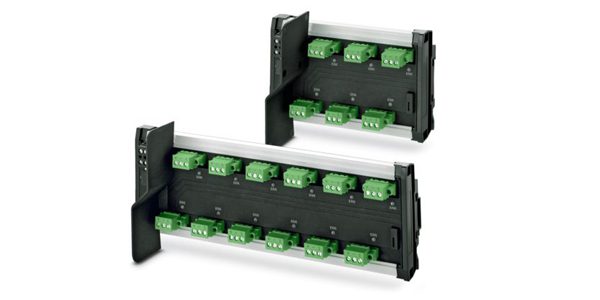
- Backplanes – a passive PCB with multiple identical connector slots wired in parallel, into which circuit cards plug.
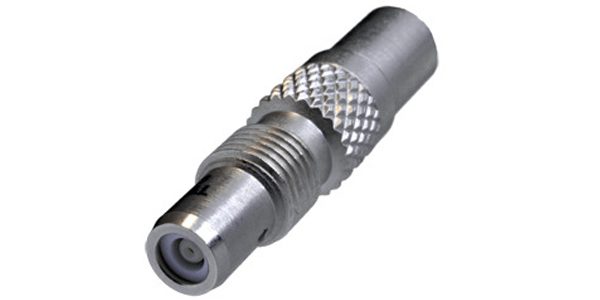
- Cable assemblies and connectors – for buses implemented off-board (e.g., SCSI ribbon cables, SATA cables, USB cables).
- Bus controller/arbitration chips – logic that manages which device can transmit at a given time.
- Transceivers/driver ICs – chips that put signals onto the bus and read them off (needed because a shared electrical line requires careful voltage/impedance management).
- Bus repeaters – used to extend a bus across multiple segments.
Markets & Applications
Automotive and Transportation are currently among the largest markets due to the large number of electronic control units in today’s vehicles and the number of functions they handle, such as engine control, ADAS, ABS, airbags, power steering, as well as EV battery management.
Aerospace & Defense (avionics) – MIL-STD-1553, a military bus created by the U.S. Department of Defense is used in many military and civil transport aircraft, spacecraft, and ground vehicles. ARINC-429 is the commercial aviation counterpart.
Industrial Automation – Called fieldbuses in this market, they link PLCs, drives, sensors, and valves in process industries (oil and gas, chemical, power generation), discrete manufacturing lines, and building automation via Modbus (notably, free/open and extremely widely deployed), PROFIBUS, DeviceNet, CANopen, and the industrial Ethernet variants (EtherCAT, PROFINET, EtherNet/IP), as well as BACnet or LON (used in building automation).
A wide range of applications in other markets also use data buses, including agricultural equipment, elevators and escalators, medical instruments, ships and maritime systems, robotics, lighting control, 3D printers, and even model railways.
SUPPLIERS
Many connector suppliers carry products for data bus, including Axon’ Cable, Amphenol Aerospace, AMETEK, Cinch Connectivity Solutions, Lumberg, Phoenix Contact, Radiall, Rosenberger, TE Connectivity, WAGO, and Weidmuller
Multiple distributors, including DigiKey, Heilind Electronics, PEI-Genesis, Powell Electronics, Sager, and Waytek carry these products as well.
RELATED PRODUCTS
Like this article? Check out our other Meet the Connector and Connector Basics articles, our Military and Aerospace Market Page, and our 2026 Article Archives.
Subscribe to our weekly e-newsletters, follow us on LinkedIn, Twitter, and Facebook, and check out our eBook archives for more applicable, expert-informed connectivity content.

- What is a Data Bus? - October 6, 2026
- What is an Antenna Connector? - September 29, 2026
- USB-C Serves Industrial Design with Rugged Variants - September 22, 2026