What is a Solid-State Lighting Connector?
Solid-state lighting (SSL) connectors are interconnects developed for LED (and OLED) illumination products. DigiKey described these products this way:
“Products in the solid-state lighting connector family are interconnect products designed and marketed with particular focus on the needs of LED-based illumination applications. In general, this implies a focus on low product and assembly costs, predominantly for wire-to-board applications with relatively low mating cycle life expectancies and current capacities of a few amperes or less.”
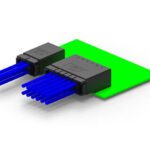
Physically, they tend to be small, single-row connectors built to survive demanding lighting environments, with options for UV resistance in both wire-to-wire and wire-to-board configurations. SSL connectors in outdoor applications are typically sealed.
the basic characteristics of SSL connectors include a relatively low pin count (typically two to four, though as many as 12 contacts), a very low profile, compatibility with hand and automated assembly, adaptability to unique application needs, and low cost, with tin- or gold-plated contacts, depending on the application.
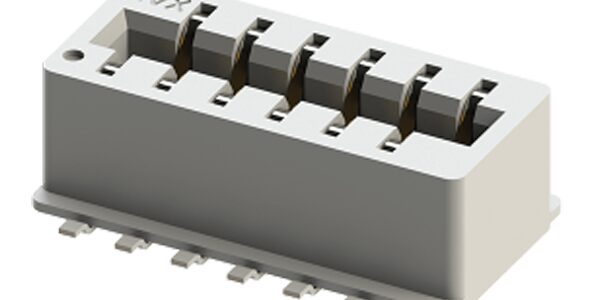
KYOCERA AVX: Card edge connectors have taken on a new role in the world of solid state lighting (SSL) as the LED has become the dominant source of efficient illumination.
Origin & Development
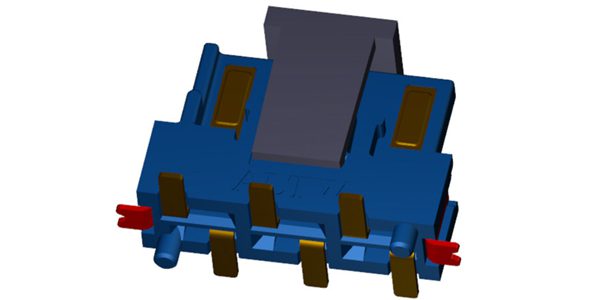
SSL connectors emerged as a distinct product category in the late 2000s to early 2010s, as LED lighting expanded from its initial use in indicator lights and displays into mainstream illumination. While there is no single “inventor,” AVX (now KYOCERA AVX) is frequently credited as an early mover in specialized SSL interconnects. To meet the SSL market’s performance requirements, AVX designed a custom LED lighting connector system built around the 9159 Series, a 2-piece, board-to-board, surface-mount connector using a new 5-amp, gold-plated, beryllium-copper spring contact rated from -40 °C to +125 °C. AVX later expanded the line to include board-to-board versions tested to IEC specs for shock, vibration, and temperature-cycling, rated at 3 A with a temperature range of -55 °C to +125 °C. Molex, TE Connectivity, and others are credited with advancing the existing technology rather than building all-new SSL products.
Since the early 2010s, SSL connectors have evolved from simple 2-contact power-only connectors toward higher pin counts supporting dimming and color control; sealed, waterproof designs (IP67) for use outdoor and in wet locations. Most recently, standards-driven interfaces (Zhaga Book 18/20, DALI-2) have formalized mechanical and data/power interfaces so components from different vendors can interoperate, rather than every luminaire maker specifying a bespoke connector.
Design Highlights
In 2021, DigiKey reported that, in addition to light sources shifting to LEDs, the design and form factor of the connectors as well as the fixtures (called luminaires) for LED-based lighting have also changed. The connectors carry lower voltage DC at currents typically in the 3 amperes (A) to 7 A range. An LED-based lighting system is often part of a control network supporting the Digital Addressable Lighting Interface (DALI) and Zhaga industry standards for smart, energy-saving, high-performance lighting as part of an intelligent home or office. Before proceeding with an LED-based lighting system design, engineers must become familiar with the standards and how they’re reflected in real-world connectors as new designs continue to emerge.
Markets & Applications
Automotive, Industrial, Construction
LED headlights, taillights, and interior lighting, and under-hood/body conditions; advanced driver-assistance systems (ADAS); lighting in industrial, residential, and commercial spaces; street lighting, landscape illumination, and architectural/façade lighting; signage, displays, and transportation lighting; smart/connected lighting and controls
Technical Specifications
This connector category remains largely non-standardized outside the Zhaga/DALI niches. Any single number here is representative of common practice, not a fixed industry spec. Always refer to manufacturers’ data sheets for up-to-date and accurate information.
| IDENTIFICATION | |
| Product / Series Name | Solid State Lighting (SSL) Connectors |
| Relevant Standards | Zhaga (notably Book 18 and Book 20); DALI/DALI 2; other applicable industry standards apply |
| MECHANICAL SPECIFICATIONS | |
| Shell/Housing Shape | SSL connectors are typically low-profile rectangular/block-style plastic housings. A minority (e.g., Amphenol LTW SSL 1.2/1.5 series) use small cylindrical plug/jack bodies for cable-to-cable outdoor use. |
| Shell Material & Finish | Housings are plastic. |
| Overall Dimensions | Highly variable by series; the defining trait is low profile. Exact W×H×D is series-specific with no common size-code system across manufacturers. |
| Mounting Type(s) | PCB (SMT or through-hole), wire-to-wire, wire-to-board, panel/field-installable (for outdoor cable connectors). Bulkhead/flange mounting is rare, seen mainly on sealed outdoor cable connectors. |
| Plug Types | Straight and right-angle are common; overmolded cable assemblies are common for outdoor/sealed applications. |
| Receptacle Mounting Styles | SMT or through-hole PCB receptacle headers predominate. |
| Mating Cycles (rated) | Generally low — this is a defining trait of the category. Most SSL connectors aren’t intended for frequent disconnect/reconnect. |
| Locking Mechanism | Push-lock (common on sealed cable connectors), latch, and simple friction/mechanical lock features to resist vibration and pull-out. |
| CONTACT SPECIFICATIONS | |
| Contact Count (range) | Typically 2 to ~12 positions; 2-position (power only) is most common, with higher counts (6–10+) growing to support dimming/color-control signals. Some poke-home families go 1 to 6 ways. |
| Contact Size(s) | Rated by current and by accepted wire gauge, typically 12–28 AWG depending on series (e.g., 18–26 AWG common range). |
| Contact Material & Plating | Copper alloy or phosphor bronze base; tin plating is common for cost-sensitive designs, gold flash/plating for lower-resistance, higher-reliability contacts. Beryllium copper spring contacts appear in some designs. |
| Termination Method(s) | Crimp, IDC (insulation displacement), solder, PCB through-hole, and SMT (reflow-capable) are all represented. |
| Current Rating (per contact) | A few amperes is typical for the core category (e.g., 2 A, 3 A, 5 A common); higher-current poke-home variants can reach up to 20 A. |
| Voltage Rating | Working voltage commonly in the 200–600 V AC/DC range depending on series; dielectric withstanding voltage commonly 600–2000 V AC for 1 minute. |
| SEALING & ENVIRONMENTAL | |
| IP Rating | Ranges widely by intended use: unsealed/no rating for indoor board-level connectors, up to IP67/IP68 for outdoor cable-to-cable connectors. |
| Sealing Type & Material | Peripheral gasket/O-ring seals (often silicone or similar elastomer) on outdoor overmolded cable connectors; no sealing on indoor PCB connectors. |
| Operating Temperature Range | Roughly -40 °C to +125 °C is a common overall span across the category, though individual series vary. |
| EMI/RFI Shielding | SSL connectors are almost always unshielded low-voltage DC power/signal connectors; shielding effectiveness ratings aren’t a standard spec in this family. |
| MATERIALS & COMPLIANCE | |
| Insulator Material | LCP (liquid crystal polymer) is very common for heat and light resistance suited to the LED-adjacent mounted environment; also PBT and glass-filled PA/PPA. |
| RoHS/REACH/Halogen-Free | RoHS compliance is standard/expected across the category. Halogen-free status varies by series. |
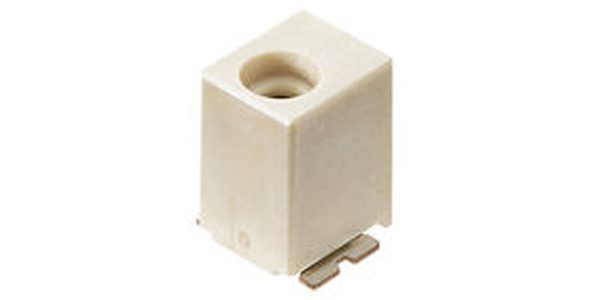
Molex SSL Connector 1 Position Receptacle, Poke-In Wire Board to Cable/Wire Solder
SUPPLIERS
Amphenol LTW, ept, Hirose, JAE, KYOCERA AVX, Molex, Samtec, TE Connectivity, WAGO, JST (DigiKey), and ERNI (acquired by TE in 2021) are some of the major suppliers.
Like this article? Check out our other Meet the Connector and Connector Basics articles, our Military and Aerospace Market Page, and our 2026 Article Archives.
Subscribe to our weekly e-newsletters, follow us on LinkedIn, Twitter, and Facebook, and check out our eBook archives for more applicable, expert-informed connectivity content.
- What is a Solid-State Lighting Connector? - September 22, 2026
- What is an Ultrasound Cable Assembly? - September 15, 2026
- What is a Power Cable? - September 8, 2026