Agentic and Neuromorphic Computers Enable the Future of Digital Computing
Agentic or “agent”-based computers are goal oriented and are built around one or more autonomous agents that can plan, make decisions, and act over time to achieve goals.
Computers have evolved into many forms, often to address specific applications or market segments. The mainframe computer from the 1960s was the genesis of a proliferation of computers that include supercomputers, workstations, servers, personal computers, embedded computers, single board microcomputers, and system on chips (SoCs).
Computer clusters designed for artificial intelligence are the latest iteration of this computer lineage. Except for quantum computers that harness the unique qualities of quantum mechanics to solve problems, classical computers are based on binary digital technology and are organized using a shared bus architecture.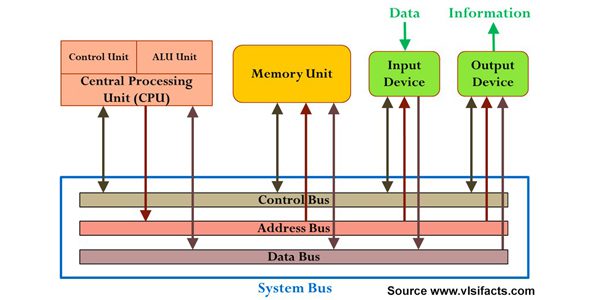
This structure has served the industry well as it allowed the ability to scale performance without requiring major technical advances.
Artificial intelligence computers take traditional digital calculation to the next level by using machine learning algorithms and Neural Processing Units (NPUs) to analyze immense quantities of data, identify patterns, and make predictions. An NPU is a specialized computer microprocessor that mimics the information processing function of the human brain. Possible outcomes are evaluated and adjusted for improvement. The result is the ability to quickly learn and adapt to tasks without the need for specific programming. Advanced techniques including reinforcement learning enables an AI system to learn behavior through extensive trial and error. The physical size and complexity of AI computers continue to experience exceptional growth to enable the processing of large learning models
We are now at the point where the scaling up process of conventional computers is beginning to encounter limitations including excessive power consumption and high-speed access to memory resources. Both factors represent technological bottlenecks to the development of more powerful AI computers. Computers based on agentic and neuromorphic technology utilize optimized architecture that offer capabilities that are not possible with conventional computers and are seen as essential evolutions of computer technology.
Agentic or “agent”-based computers are goal oriented and are built around one or more autonomous agents that can plan, make decisions, and act over time to achieve goals. They are memory-centric not compute centric with computing functions located near or integrated into memory. Unlike conventional computers that respond to a single prompt and operate by predefined rules, agentic AI systems break down goals into separate actions to proactively plan, reason, learn, pursue multi-step complex goals, and make decisions without human intervention. They can monitor results and adapt to improve outcomes.
AI agents are typically software systems that interact with their environment through sensors to perceive the physical world and actuators or software to implement action, enabling them to adapt to change.
Agentic computer agents often include:
- Perception modules
- World/state model
- Goal manager
- Planner/reasoner
- Action executor
- Memory (short- and long-term)
- Feedback and learning loop
Some of the defining characteristics of agentic computers include:
- Heterogeneous architecture that integrates multiple types of processors such as CPUs, GPUs, DSPs, and FPGAs. The system can optimize performance for specific workloads by selecting the most efficient device for the task.
- Persistent shared memory to reduce latency and power consumption. Eliminates current memory bottlenecks.
- High-bandwidth interconnects to enable increased throughput and act as a central nervous system. CXL and NVLink are examples of high-bandwidth interconnects.
- Rack-level computer with individual servers supporting coordinated functions.
From an architecture perspective, agentic computers replace a central bus with a switched fabric that provides many channels of asynchronous high-speed low latency communication between multiple semi-autonomous agents. A single shared bus would become a performance bottleneck.
The result is increased speed, reduced power, and application versatility to handle diverse workloads. Applications in customer service, automated software development, healthcare, and financial services would take full advantage of agentic computing.
Agentic computers suffer from software complexity and concerns related to lack of human guardrails and override which currently has limited industry adoption.
Agentic computers represent a significant step in the evolution of computers that emulate how humans solve problems in the real world.
Neuromorphic computers and software are designed to replicate the structure and functionality of biological neural networks. They offer the advantages of parallel processing of multiple tasks, fault tolerance, and extreme energy efficiency. Unlike clock-based computing, neuromorphic computers utilize spiking or pulsed signal neural networks that act similar to biological neurons making them ideal for dynamic event-based processing in real-time applications.
Neuromorphic computers use memristors to simulate synaptic connections in neuromorphic networks. A recently introduced fourth fundamental circuit element behind resistor, capacitor, and inductor memristors are passive non-linear devices that feature characteristics of both resistance and memory. A memristor’s resistance varies with the history of voltage/current applied to it and retaining this state after power is removed.
Neuromorphic processors and sensors are optimized for massive parallel processing and may feature multiple cores and co-located memory arrays. These devices feature ultra-low power consumption, low latency and are always on enabling the transition of intelligence to the edge for applications in robotics, autonomous transportation, and industrial automation. Neuromorphic computers offer the most effective solution to the power consumption and scaling limitations of current AI systems.
Neuromorphic computers replace bus and switch communication with direct point-to-multipoint links in a massive-mesh network modeled after the biological brain. Unlike conventional systems where data waits for access to an arbitrated central bus, neuromorphic computers avoid bottlenecks by moving data in event-driven spikes. Neuromorphic connectivity is decentralized and highly parallel.
Broad adoption may take some time as programming is limited, and performance benchmarks are not directly comparable.
Commercial agentic AI computers have begun to appear on the market from industry leaders including AWS, Microsoft, and Oracle. Fully autonomous, agentic computers are expected to be broadly available by 2030.
Neuromorphic microcontrollers and sensors are beginning to enter the market and will be used to build computers for use in medical wearables, adaptive robots, and autonomous vehicles.
The most likely scenario is that both agentic and neuromorphic computing capabilities will be complementary, combining the best advantages of each. Working together, a neuromorphic layer can efficiently process raw sensor data to quickly detect patterns and anomalies at the edge. The agentic layer could interpret data, establish goals, allocate resources, and deliver solutions. The result is greatly accelerated and scalable computation using a fraction of the energy required by current AI computers.
The components required to build agentic computers will likely remain similar to those used in conventional computers. Neuromorphic computers require specialized chips and sensors that have been optimized to mimic neural synapse. Both will make extensive use of high-performance copper and fiber optic cables. The intrinsic low power demands of neuromorphic computers will likely reduce requirements for heavy power distribution connectors typical in AI computer clusters today and may also alleviate some of the cooling issues.
Agentic and neuromorphic computers represent significant steps in the quest to achieving the long-term goal of creating Artificial General Intelligence (AGI). This new class of computer will be capable of outperforming humans in virtually all domains including reasoning, creativity, and problem-solving, leading to incredible advancements in science, medicine, and understanding of the universe. It could also result in massive social disruption as jobs for humans are eliminated.
Artificial Super Intelligence (ASI) represents the next stage beyond Artificial General Intelligence. That level of capability refers to a hypothetical intellect that vastly exceeds the cognitive abilities of the most gifted human minds. An ASI computer could enable exploration of technologies not even imagined by humans but would also introduce significant existential risks if not aligned with human values.
AGI is currently predicted to be achieved by 2040, but the recent rapid rate of advances in AI may bring AGI into reality sooner.
Visit Bob Hult’s Connector Supplier archive for more insights on computing advances.
Like this article? Check out our other Artificial Intelligence, High-Speed and Innovation articles, our Military and Aerospace Market Page and our 2026 Article Archives.
Subscribe to our weekly e-newsletters, follow us on LinkedIn, Twitter, and Facebook, and check out our eBook archives for more applicable, expert-informed connectivity content.

- The Power of Having Options - September 15, 2026
- XPO, Addressing the I/O Panel Bottleneck - June 30, 2026
- Agentic and Neuromorphic Computers Enable the Future of Digital Computing - May 26, 2026