What are MIL-C-24231 Connectors?
Meet the Connector: MIL-C-24231 Connectors
MIL-C-24231 specifies standards for the design, manufacturing, and testing of electrical connectors and related components for use in applications where pressure and water ingress are significant concerns, such as harsh underwater environments.
MIL-C-24231 is a Navy specification that covers pressure-proof single and multiple cable connectors, plugs, receptacles, adapters, hull inserts, and hull insert plugs. MIL-C-24231 specifies standards for the design, manufacturing, and testing of electrical connectors and related components used in environments where pressure and water ingress are significant concerns. Navy dry mate submersible interconnect applications are an example. MIL-C-24231 connectors are available in various shell sizes and contact configurations.
The MIL-C-24231 connectors, also called Portsmouth connectors, were designed and tested at the Portsmouth Naval Shipyard in Maine in the late 1950s, primarily for submarine use along with the connectorized hull penetrator, also detailed in MIL-C-24231. At that time, the connectors were incorporated into other pressure-proof components, including jackbox pressure-proof lights. All new submarine construction included use of MIL-C-24231 connectors and hull penetrators.
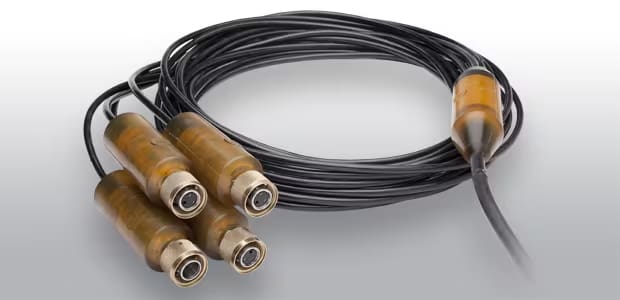
TE SEACON TE Connectivity’s MIL-C-24231 series connectors come in various shell sizes and contact configurations. Plugs can be supplied terminated and molded into waterproof cable assemblies or supplied in kit form. In addition, TE offers a GRE (Glass Reinforced Epoxy) overcoated version and offers a GRE backed polyurethane insert which eliminates water leakage through the connector when cable damage occurs.
The connectors are comprised of a Monel plug and receptacle body, and a coupling ring. An O-ring seals the plug to the receptacle. Welding normally seals and retains the receptacle to the hull penetrator or component. A molded insert, sealed to the receptacle with an O-ring, insulates the pin contacts and acts as a water barrier. A molded polyurethane insert insulates the socket contacts in the plug. A nylon insert in the receptacle thread locks the plug coupling in place. The plug is sealed to the cable with a molded polyurethane rubber boot that also provides strain relief.
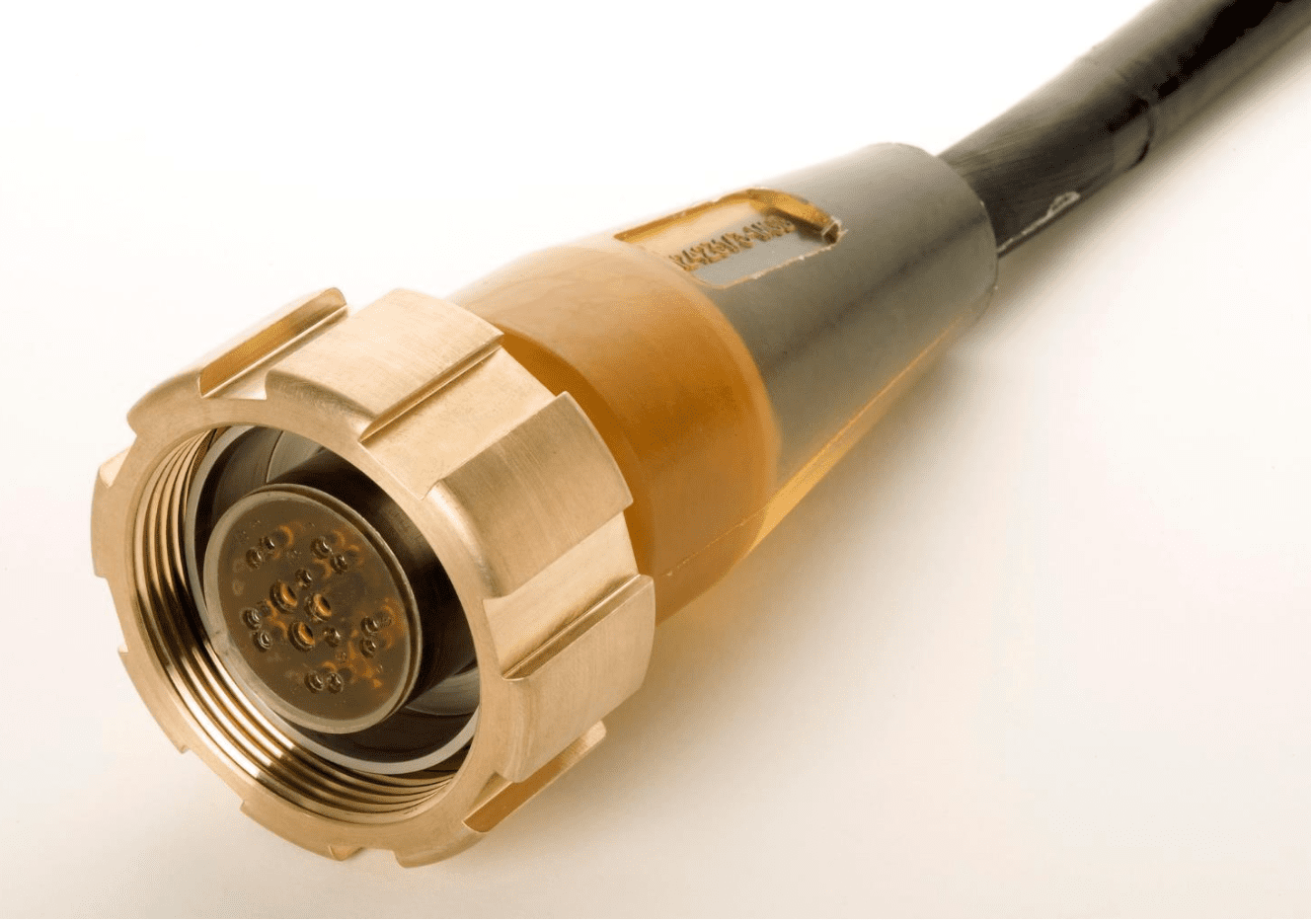
AMETEK GTMS connectors are manufactured and tested in strict accordance to MIL-C-24231 (Navy) and MIL-C-24217 (Navy). This series is available in a variety of styles to meet specific needs.
Design Notes
Material specifications:
Shell: Ni-Copper plug and receptacle, Ni-Al-Copper fittings
Coupling: Ni-Copper-BRZ (plug)
Insulator: polyurethane (plug), epoxy (receptacle)
Contact: copper (plug), alloy (receptacle), copper alloy (fittings)
Plating: Gold
Polyurethane overmolding is commonly used for termination and for bonding a cable and connector.
GRE (Glass Reinforced Epoxy) over-coating is available to prevent cathodic delamination.

Mounting types: Inline (cable to cable) or through hull
Contacts: Pins range from 3 to 40
Environmental properties:
Temperature
Operational Temperature -40 °F to 165 °F (-40 °C to 74 °C)
Storage Temperature -65 °F to 175 °F (-54 °C to 80 °C)
Pressure
Max Operational Pressure 2,000 psi (~4,500 ft/ ~3272 M)
Suppliers
TE Connectivity, AMETEK, Teledyne Marine
Related products
MIL-C-24217 connectors
Like this article? Check out our other Meet the Connector and Connector Basics articles, our Military and Aerospace Market Page, and our 2025 Article Archives.
Subscribe to our weekly e-newsletters, follow us on LinkedIn, Twitter, and Facebook, and check out our eBook archives for more applicable, expert-informed connectivity content.

- 2026 Push-Pull Connectors Product Roundup - October 6, 2026
- October 2026 New Connectivity Products - October 6, 2026
- Taking the Complexity out of Power Distribution - September 29, 2026