What is an Antenna Connector?
Antenna connectors are specialized RF coaxial connectors used to link antennas to coaxial or RF cables that connect to an electronic device such as a router, radio, transceiver, television, or wireless infrastructure. They are used in Wi-Fi and IoT devices, GNSS and navigation, aerospace and defense, and automotive systems. They carry radio-frequency signals through a shielded, controlled-impedance (typically 50 Ω) interface, keeping signal loss and leakage low at the point where the radio meets the antenna. This category includes SMA, RP-SMA, TNC, N-type, MMCX, and the U.FL/MHF families of connectors.
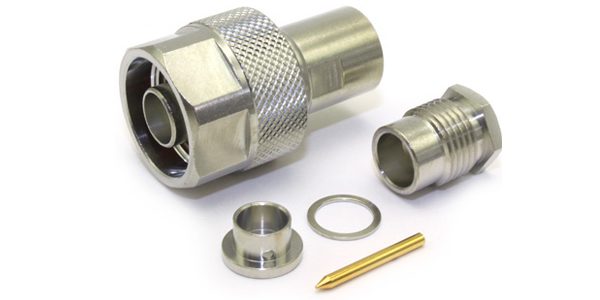
COAX Connectors designs and manufactures a full range of RF connectors for all antenna applications, from sub-miniature plugs to attach to a small antenna to large connectors for outdoor antenna installations, in both 50 and 75 ohm impedance.
Origin & Development
Antenna connectors originated with the coaxial connectors developed for radar and radio in the 1940s, when Bell Labs engineers Paul Neill and Carl Concelman produced the N-type, BNC, and TNC designs. The SMA followed in the 1960s as a solution for compact microwave antenna links, while micro-coaxial types such as MMCX and U.FL/MHF emerged in the 1990s and 2000s as a space-saving option for Wi-Fi and cellular modules. Reverse-polarity versions (RP-SMA, RP-TNC) became common in consumer Wi-Fi equipment after FCC rules discouraged user-swappable antennas.
Design Highlights
Engineers choose antenna connectors for a repeatable, shielded 50 Ω interface, with variations such as ruggedized outdoor feed lines (N-type, 7/16 DIN, 4.3-10) and board-level micro connectors (MMCX, U.FL) for applications where space is at a premium. Threaded coupling on SMA, TNC, and N-type resists vibration and supports sealing, while snap-on micro types are favored for smaller size applications. Many series are multi-sourced and interchangeable; SMA intermates with 3.5 mm and 2.92 mm precision connectors, and U.FL-style connectors are second-sourced as MHF and other variants, while reverse-polarity types will not mate with their standard counterparts.
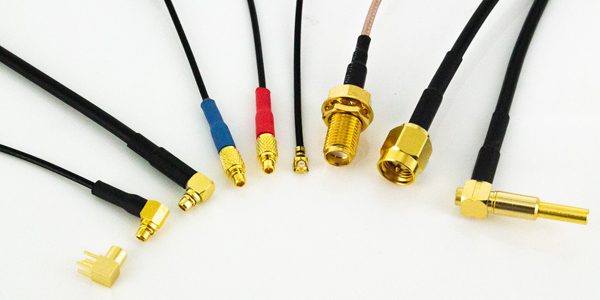
ATTEND offers a range of RF connectors and cable assemblies that feature MMCX, SMA, and MHF interfaces suitable for antenna applications such as wireless infrastructure, military and aerospace, and RF Test & Measurement.
Markets & Applications
Major markets for antenna connectors include wireless and cellular infrastructure (5G/LTE base stations, small cells, distributed antenna systems), Wi-Fi and IoT, GNSS and navigation, military and aerospace (radios, radar, telemetry, satellite communications), transportation and automotive (telematics and V2X), Test & Measurement.
Applications include Wi-Fi router and access-point antennas (RP-SMA), cellular tower and base-station feed lines (N-type, 7/16 DIN, 4.3-10), vehicle GNSS, satellite radio, and telematics antennas (FAKRA), radios (SMA, BNC), LoRa and cellular IoT modules (U.FL, MHF), and embedded antennas in laptops and wireless modules (MMCX, U.FL). Test & Measurement labs also rely on SMA and N-type connectors on antenna test fixtures.
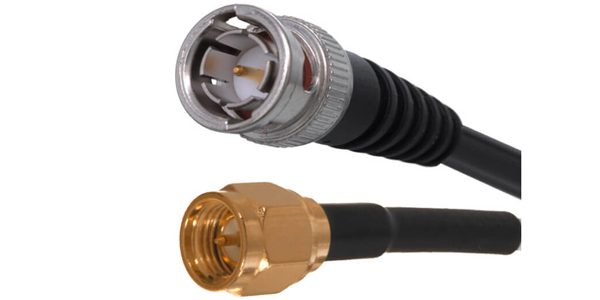
Cinch offers a variety of RF and coax connectors and cables for antenna applications. See Cinch’s RF & Microwave 101: Design Tips & Selection Guide
Technical Specifications
| IDENTIFICATION | |
| Product / Series Name | SMA; RP-SMA; TNC; RP-TNC; N-type; BNC; MCX; MMCX; SMB; U.FL / MHF; FAKRA; 7/16 DIN; 4.3-10 |
| Manufacturer(s) | Amphenol RF; TE Connectivity; Molex; Rosenberger; Hirose (U.FL); I-PEX (MHF); Cinch Connectivity Solutions (Johnson); Radiall |
| Industry Category | RF / Coaxial |
| Relevant Standards | MIL-PRF-39012 (SMA, TNC, N, BNC, SMB); IEC 61169 series; DIN 72594 / ISO 20860-1 (FAKRA); MCX, MMCX, and U.FL |
| MECHANICAL SPECIFICATIONS | |
| Shell / Housing Shape | Circular (coaxial) |
| Shell Material & Finish | Brass; stainless steel; beryllium copper (micro types); gold, nickel, tri-metal (white bronze), or passivated finishes |
| Overall Dimensions | Threaded couplings: SMA 1/4-36 UNS; TNC 7/16-28 UNEF; N-type 5/8-24 UNEF; Micro types (MCX, MMCX, U.FL): sub-6 mm profiles; U.FL approx. 3 mm × 3 mm footprint, ~2.5 mm mated height |
| Mounting Type(s) | Panel / bulkhead; PCB (through-hole, edge-launch, SMT); in-line cable |
| Plug Types | Straight; Right-angle; Crimp / solder cable plug; Reverse-polarity; Pigtail / cable assembly; Between-series adapters |
| Receptacle Mounting Styles | Jam-nut / locknut; Flange (2-hole, 4-hole); Bulkhead; Edge-launch; SMT; Through-hole |
| Mating Cycles (rated) | Typically 500 (SMA, TNC, N, BNC, MCX, MMCX); ~30 (U.FL / MHF) |
| Locking Mechanism | Threaded (SMA, TNC, N, 7/16 DIN); Bayonet (BNC); Snap-on (MCX, MMCX, SMB, U.FL); Latch (FAKRA) |
| CONTACT SPECIFICATIONS | |
| Contact Count (range) | 1 (single coaxial center contact); multi-port and ganged housings available |
| Contact Size(s) / AWG | Coaxial; sized per series to maintain impedance; typical cables: RG-174, RG-316, RG-58, LMR-195 / 400; 1.13 mm / 1.37 mm micro-coax (U.FL) |
| Contact Material & Plating | Beryllium copper; brass; phosphor bronze; gold, silver, or nickel plating |
| Termination Method(s) | Solder; crimp; clamp; PCB through-hole; PCB edge-launch; SMT |
| Voltage Rating | Varies by series; typical examples: SMA ~335 V RMS working / 1,000 V RMS dielectric withstanding; N-type ~500 V RMS working / 1,500 V RMS dielectric withstanding (verify against datasheet) |
| SEALING & ENVIRONMENTAL | |
| IP Rating | IP67 (sealed N-type, TNC, 7/16 DIN, 4.3-10, waterproof FAKRA); IP68 on select series |
| Sealing Type & Material | O-ring / gasket (silicone; EPDM; neoprene); Interfacial seals; Glass-to-metal hermetic (aerospace / space) |
| Operating Temperature Range | −65 °C to +165 °C (PTFE-dielectric SMA, TNC, N); −40 °C to +85 °C typical (MCX, MMCX, U.FL); −40 °C to +105 °C or higher (automotive FAKRA) |
| EMI / RFI Shielding | Shielded (360° coaxial); typically ≥ 90 dB for threaded series, varies by series |
| MATERIALS & COMPLIANCE | |
| Insulator Material | PTFE (most common); PEEK; polypropylene; LCP (micro types); glass (hermetic) |
| RoHS / REACH / Halogen Free | RoHS / REACH-compliant versions widely available; some MIL-grade parts use exempt finishes; halogen-free status varies by part number |
| ELECTRICAL PERFORMANCE | |
| Impedance (if controlled) | 50 Ω (standard); 75 Ω variants (BNC, SMB, N-type) for broadcast / video |
| Data Rate / Bandwidth | Frequency-based: SMA DC–18 GHz (to 26.5 GHz precision); TNC DC–11 GHz; N-type DC–11 GHz (to 18 GHz precision); BNC to ~4 GHz; MCX / MMCX / U.FL to ~6 GHz; 7/16 DIN to ~7.5 GHz; 4.3-10 to ~6 GHz |
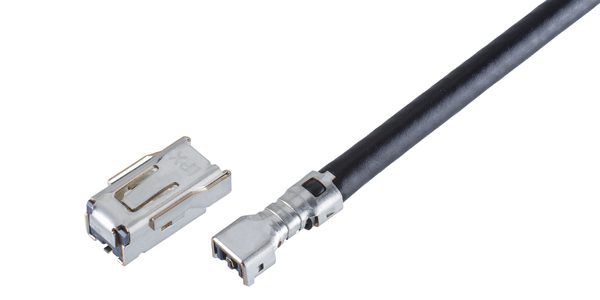
I-PEX’s MHF-TI is an RF connector engineered with high retention force to meet the harsh operating conditions of telematics networks and Advanced Driver-Assistance Systems (ADAS).
SUPPLIERS
Adam Tech, ATTEND, Cinch Connectivity Solutions, COAX Connectors, Hirose Electric, I-PEX, Molex, Radiall, Rosenberger, TE Connectivity
Distributors CDM, DigiKey, Heilind Electronics, ICC (Interstate Connecting Components), Kensington Electronics, Mouser PEI Genesis, Powell Electronics, Sager Electronics, TTI Inc.
RELATED PRODUCTS
Like this article? Check out our other Meet the Connector and Connector Basics articles, our Transportation Market Page, and our and 2026 Article Archives.
Subscribe to our weekly e-newsletters, follow us on LinkedIn, Twitter, and Facebook, and check out our eBook archives for more applicable, expert-informed connectivity content.

- What is an Antenna Connector? - September 29, 2026
- USB-C Serves Industrial Design with Rugged Variants - September 22, 2026
- What is a Solid-State Lighting Connector? - September 22, 2026