What is a Cable Tie?
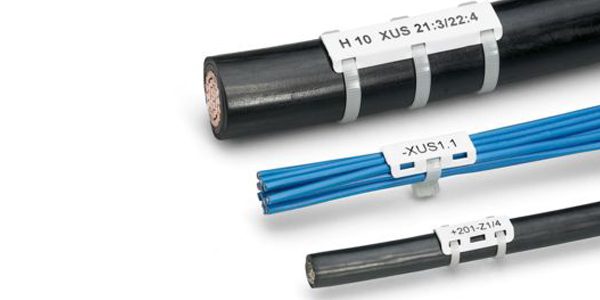
A cable tie (also called zip tie, wire tie, or tie-wrap) is a simple engineered fastener commonly used in electronics. It consists of a strap with a row of teeth (a ratchet) on one face and a small housing at one end. When the tail is threaded through the housing, or head, and pulled snug, the pawl locks against the teeth so the loop can tighten but not loosen. Cable ties are used for bundling wires/cables inside equipment, chassis, and harnesses; strain relief; securing cables to PCB standoffs, chassis studs, or panels via mounting-hole ties or adhesive-backed tie mounts; labeling/identification; color coding circuits or harness branches; temporary fixturing.
Origin & Development
Cable ties were invented by Thomas & Betts engineer Maurus C. Logan to address an issue he witnessed at a Boeing aircraft plant. The workers were knotting together thousands of feet of electrical cable by hand with waxed nylon cord, a time-consuming, laborious process that resulted in injuries to their fingers. Logan experimented with materials and mechanisms for about two years before filing a patent for the “Ty-Rap” cable tie on June 24, 1958. Thomas & Betts (now part of ABB Installation Products) later extended the patent in 1965 to cover the locking barb mechanism in the “Original Oval” head design. Cold War-era military and aerospace programs were scaling up, and the U.S. military quickly adopted cable ties for aircraft, ships, and other defense wiring. This led to the development of the MIL-spec cable tie standards that exist today.
Design Highlights
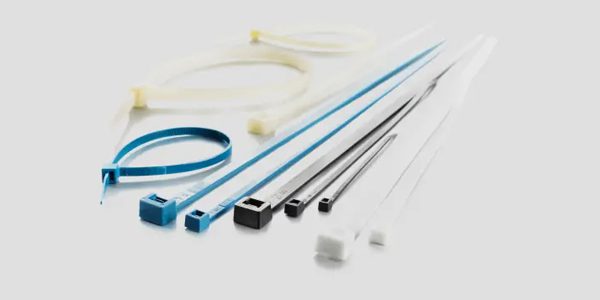
Cable ties are selected based on multiple considerations: loop tensile strength, length and width, operating temperature range, UV- and weather-resistance, flammability rating, material chemical compatibility, locking mechanism, mounting style, metal content, certifications, and color. Most cable ties are one-piece, injection-molded nylon, but a variety of materials are available.
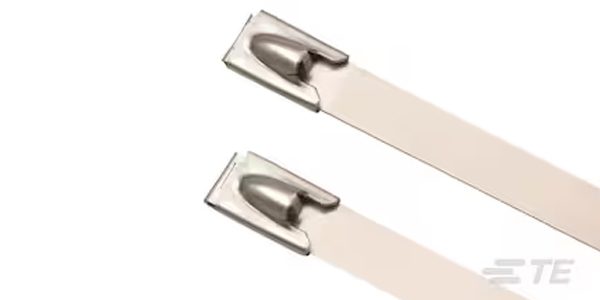
Nylon is the most used material due to its cost and flexibility. However, for harsh environments where heat, corrosion, and fire resistance are top priorities, stainless steel and specialty polymers are used.
Cable ties may be colored for identification/coding, or for cosmetic/black-cabinet applications.
Markets & Applications
Cable ties are used in all major markets that need to manage wires, hoses, or cables, including:
Electronics & electrical. Cable management for internal device wiring and inside enclosures and racks; PCB and component mounting; and general assembly of consumer electronics, appliances, and industrial control panels.
Automotive. Secure wiring harnesses, fluid hoses (coolant, brake fluid, fuel lines), and components under the hood and throughout the chassis.
Aerospace. Cable management in aircraft wiring systems; must meet strict safety and weight requirements.
Construction/building & electrical installations. Secure electrical wiring, conduit, cable trays, HVAC ductwork, and scaffolding-related cabling. Weather-resistant and heavy-duty ties are common for exterior or long-term installations, and this segment often requires the UL 62275-type electrical-installation certifications discussed earlier.
Telecom/datacom. Management of dense cable runs in server racks, data centers, and telecom infrastructure, including buildouts supporting fiber and 5G network expansion.
Marine & shipbuilding. Onboard wiring; requires corrosion-resistant (often stainless steel or specialty polymer) ties due to exposure to saltwater and humidity.
Oil & gas/chemical processing. Cable management; requires stainless steel or chemically resistant polymer ties (PVDF, ETFE) that can handle corrosive atmospheres and extreme temperatures.
Energy & utilities. Renewable energy installations like solar farms use UV-resistant ties for long-term outdoor cable runs; utility and smart-grid work uses heavy-duty ties for overhead and underground cabling.
Agriculture. Secure wiring, tubing, and equipment in agricultural machinery and irrigation systems.
Technical Specifications
NOTE: The data in this table is subject to change. Standards undergo periodic review and updates and connector manufacturers offer distinctive features and configurations. Please consult supplier data sheets to verify that a given product meets your application requirements.
| IDENTIFICATION | |
| Common Name | Cable tie. Also called zip tie, wire tie, or tie-wrap. Originally patented as Ty-Rap. |
| Relevant Standards | IEC 62275 / UL 62275 / CSA C22.2 No. 62275 — Type 1 (basic), Type 2 (higher-performance), Type 11/21, and Type 2S/21S; UL 2043; UL 746B / UL 746C; MIL-DTL-23190. (IEC/UL 62275 superseded UL1565.) |
| MECHANICAL SPECIFICATIONS | |
| Loop Tensile Strength | Rated in lbs or N, this is the load the closed loop can hold before failing (common ratings: 18, 30, 40, 50, 75, 120, 175 lb, etc.) |
| Length and Width | Must accommodate the bundle diameter (check max bundle diameter spec) and fit the application (too long wastes material and looks sloppy; too short won’t close) |
| Mounting Style | Standard, mounting-head (screw-hole), push-mount (fits into a panel hole with no separate anchor), or adhesive-backed base |
| Locking Mechanism | Standard one-way barb, releasable (reusable) tie, or ladder-style low-profile for tight spaces. Some plastic ties use a stainless locking tooth for higher strength while keeping a plastic body. |
| ENVIRONMENTAL | |
| UV/Weather Resistance | Black UV-stabilized nylon for outdoor; indoor-rated ties degrade and become brittle outdoors |
| Flammability Rating | UL 94V-2 is common for standard ties; plenum-rated applications need ties separately listed to UL 2043 for flame spread/smoke generation |
| Operating Temperature Range | Especially important near heat sources, power supplies, or outdoor/automotive use |
| MATERIALS & COMPLIANCE | |
| Material Options |
Nylon 6,6 for good tensile strength, some flexibility, and reasonable temperature range (roughly -40 °C to 85 °C continuous for standard grades, though “heat-stabilized” nylon variants push higher). Nylon 12 and other nylon blends for greater flexibility in cold environments. UV-stabilized nylon (usually black) for outdoor/sunlight exposure. Weather- or chemical-resistant polymers like ETFE, PVDF, or PEEK for harsh chemical or high-temp environments (aerospace, chemical plants). Stainless steel (304 or 316) for high-heat, high-strength, or UV-degradation-proof applications — either all-metal ties or metal ties with a plastic/polymer coating for cosmetics or scratch protection. Metal detectable / RFID compounds for food and pharma industries. |
| Material Chemical Compatibility | Oils, solvents, or cleaning agents can degrade standard nylon |
| RoHS / REACH | Relevant for material compliance in most modern electronics builds. |
SUPPLIERS
Manufacturers: TE Connectivity, Molex, Weidmüller, Phoenix Contact, H.F. Hanscom and Co, HellermannTyton, Panduit, Thomas and Betts, and others.
Manufacturers: DigiKey, Mouser Electronics, Heilind Electronics, and others.
RELATED PRODUCTS
- Cable tie mounts
- Adhesive tie bases
- Heat-shrink tubing
- Wire markers
- Cable tie guns/tensioning tools
- Hook-and-loop straps
Like this article? Check out our other Meet the Connector and Connector Basics articles, our Military and Aerospace Market Page, and our 2026 Article Archives.
Subscribe to our weekly e-newsletters, follow us on LinkedIn, Twitter, and Facebook, and check out our eBook archives for more applicable, expert-informed connectivity content.

- USB-C Serves Industrial Design with Rugged Variants - September 22, 2026
- What is a Solid-State Lighting Connector? - September 22, 2026
- What is an Ultrasound Cable Assembly? - September 15, 2026