Technology Brings Sustainability to Distribution
Manufacturers and distributors can have a positive impact on their customers’ carbon footprint through supply chain management and innovative shipping solutions. Technology is improving efficiency, eliminating waste, and saving energy.
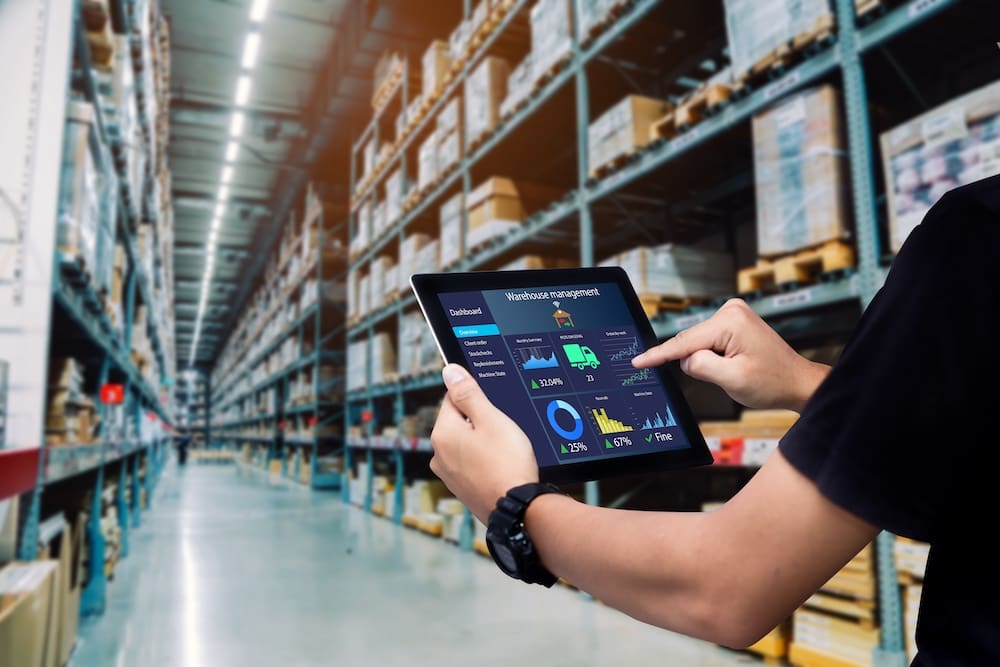
Natalie Emerson, distribution manager at Amphenol PCD, explained that one of the most significant ways to address sustainability is through the company’s distribution channels. “Distribution is a bridge between the production and the end user. The distributors are well-positioned to obtain and share feedback from customers on their expectations regarding sustainability. As a manufacturer, we have opportunities to affect sustainability, through logistics or supply chain, balancing the cost of the product and its environmental impact,” she said.
Distributors can lessen the carbon footprint of their customers. Their expertise includes understanding the supply chain and finding better ways to ship product. “Distributors typically have very large, well-maintained warehouses. They are able to consolidate orders containing multiple part numbers from different manufacturers into a single box that is easy to ship and easy for our customers to receive,” said Emerson. “Many of our distributors have multiple locations which puts them close to their customers. They are the route and network optimization experts. They analyze hundreds and hundreds of shipping routes, because their goal is to provide parts and products to customers in a simplified, easy way that also contributes to sustainability.” Consolidating orders also means potentially fewer trucks and planes used for shipping.
In terms of distribution, efficiency translates to eliminating unnecessary or duplicated effort, using less material for packing, and spending less time on activities such as placing, tracking, and receiving orders. All that equates to less energy. “Efficiency in my mind is the ability to take an order from a customer that includes not just multiple parts from our manufacturing facilities, but from multiple manufacturers and consolidating them in one place quickly and accurately, and then getting that out to the customer,” Emerson said.
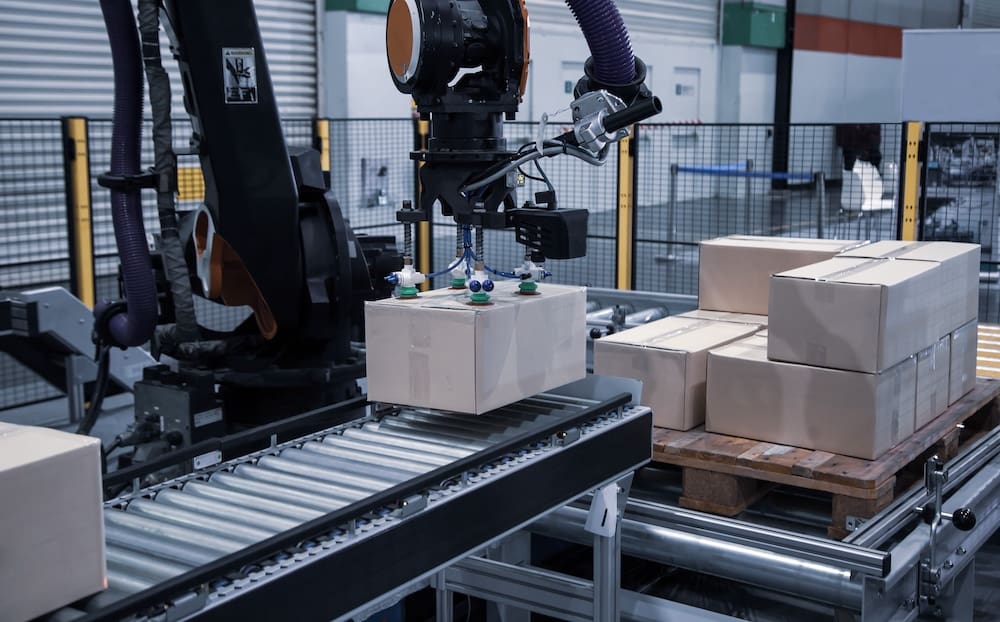
Many of these warehouses manage millions of dollars in inventory. Their efficiency expertise comes from using technology that streamlines their operations. “A lot of our distributors utilize smart warehouses, or they have robotic systems within their warehouse to help pick and pack,” Emerson said. These systems eliminate the need for multiple people to walk up and down aisles across hundreds of thousands of square feet. Parts for a specific order can quickly be looked up and located, then placed on a conveyor belt, transported through the warehouse and ultimately to the shipping department where they can be bundled together, reducing the number of boxes and the number of shipments.
“Technology plays a huge role. We see more and more AI being utilized in distributors’ warehouses as well as in their system updates. AI-powered route planning, load optimization, and real-time time tracking helps achieve fewer shipments, fewer miles, and shipping larger loads,” Emerson said.
Smart labels on shipments from suppliers like Amphenol PCD to the distributors can be immediately scanned on arrival at the warehouse and provide all the necessary information to get the items quickly checked, inventoried, and properly routed. Smart warehouses and automation robotics for picking, packing, and sorting of products speeds up fulfillment and reduces human error, such as shipping the wrong parts or shipping too many. It also frees up humans for other tasks that can’t be easily automated. “Fewer errors means fewer returns and wasted shipments. I think that’s something that, even as a manufacturer, we’re aware of. We know that sometimes mistakes are made, human errors happen, but when the wrong parts are shipped, they have to be shipped back and that could be from across the world,” said Emerson. Eliminating returns and replacement shipments is vital to sustainability efforts.
Predictive analytics is another tool distributors are beginning to use to forecast customer demand and tailor shipments to maximize efficiency, cost, and sustainability. Rather than buying 500 of the same part every month, predictive analysis technology may determine, for example, that buying 5,000 once every six months will optimize the customer’s inventory levels. “That means we are not doing so many shipments, and beyond just the shipments, that eliminates more hours of work at the human level to make sure that those multiple orders are entered and double checked and packaged and shipped. Making sure that the demand is correct and reducing those numbers of shipments has a significant impact on sustainability as well,” Emerson said.
Visit the Preferred Supplier page for Amphenol PCD to learn more about the company and its products.
Like this article? Check out our other articles on our Wire and Cable Assemblies Market Page, and our 2025 Article Archive.
Subscribe to our weekly e-newsletters, follow us on LinkedIn, Twitter, and Facebook, and check out our eBook archives for more applicable, expert-informed connectivity content.

- Ceramics in Space: BME X7R MLCC - October 20, 2026
- Test & Measurement Product Roundup - October 20, 2026
- Advanced Connectivity-Automation, Robotics, AI, and Machine Learning - October 20, 2026