Connector Considerations for Smart Glasses Design
Since the launch of Google Glass in 2013 and the development of augmented reality (AR), virtual reality, mixed reality, and now AI, smart glasses have been finding practical application in a wide range of areas such as healthcare, education, industrial settings, and consumer experiences. ATTEND’s Leon Hung explains the connectivity demands of this wearable technology.

Since the launch of Google Glass in 2013 and the development of augmented reality (AR), virtual reality (VR), mixed reality (MR), and now AI, smart glasses have been finding practical application in a wide range of areas such as healthcare, education, industrial settings, and consumer experiences. Leon Hung, product manager with connectivity solutions provider ATTEND, shared his expertise on how connectors are driving this transformative technology.
Connector Supplier: Flexible printed circuit (FPC) connectors, micro board-to-board connectors, high-speed transmission connectors, and power connectors (pogo pin) are considered the backbone of smart glasses technology. How are they used in this application?
Leon Hung: FPC connectors serve as the internal signal bridge in smart glasses, primarily connecting different circuit boards such as the mainboard, sensor modules, display, and battery. These connectors handle low-voltage signal and power transmission. Their flexibility and miniaturized design enable stable electrical connections within limited space while supporting complex three-dimensional routing requirements.
Micro board-to-board connectors are critical for integrating core modules in smart glasses, primarily connecting the mainboard with secondary modules such as micro-display driver boards, AI chip modules, and camera modules. These connectors handle high-density signal transmission, ensuring efficient communication between modules and supporting high-speed data transfer to meet high-resolution display requirements.
High-speed transmission connectors function as the high-bandwidth data channel in smart glasses, specifically designed to transmit high-resolution images, massive sensor data (such as simultaneous localization and mapping, or SLAM, data, and 3D sensor data), and high-speed computational results. These connectors typically link the display with the main processor, ensuring smooth visual experiences and real-time data processing, which is crucial for enhancing user immersion.
Pogo pin connectors are primarily used for charging interfaces in smart glasses, or for connecting external batteries and computational units. These connectors are commonly found in magnetic charging or external data cable interfaces. Their design facilitates quick alignment and connection, improving user convenience and charging efficiency. The spring-loaded structure of pogo pins ensures stable electrical connections and can withstand numerous insertion cycles without performance degradation.
What makes these connectors well-suited for use in smart glasses?
Smart glasses have limited frame space, requiring connectors with minimal dimensions and ultra-low profile heights. Micro board-to-board and FPC connectors are specifically designed for high-density, compact applications. Achieving complex functionality (computing, display, sensing) within minimal space requires connectors capable of handling numerous I/O pins. FPC connectors, paired with flexible circuit boards, can accommodate irregular or bendable structures within the glasses. Pogo pins (often combined with magnetic designs) provide foolproof, easy plug-and-unplug external interfaces that withstand frequent mating cycles and can even achieve certain levels of water and dust resistance. AR/VR experiences are extremely sensitive to latency. High-speed transmission connectors ensure signal integrity and real-time performance for display signals, which is key to achieving immersive experiences.
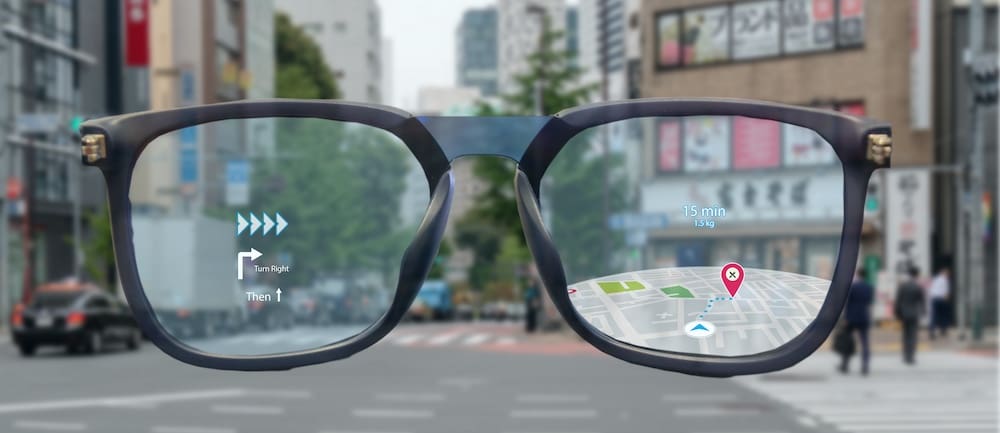
Connectors have enabled smart glasses technology through connectivity evolution, and display and power innovation.
How have these connector types been modified or adapted to meet the specific requirements of smart glasses?
Connector designs have undergone multiple specialized adjustments for this application. The adoption of lighter, more robust materials reduces weight while improving shock resistance and reliability. Particularly for FPC connectors, structural adjustments facilitate automated assembly and reduce damage to flexible circuit boards. High-speed connectors employ differential pair design, precise impedance matching, and optimized ground planes to ensure stable transmission of data rates (up to several Gb/s) even in extremely small form factors. External pogo pin connectors integrate magnets for automatic alignment and attachment, and feature waterproof structures (such as O-rings or special seals) to enhance wearing comfort and outdoor durability. The addition of shielding structures or optimized grounding paths reduces electromagnetic interference from the connectors themselves or external signals on highly sensitive sensors within the glasses.
How are connector solutions aiding advances in smart glass technology?
Smart glasses require real-time exchange of massive amounts of data with cloud AI and external devices. 5G/Wi-Fi 6E/UWB high-speed transmission connectors ensure efficient connection between internal antenna modules and the mainboard, meeting low-loss requirements for high-frequency signal transmission. External connectors must support USB 3.0/4.0 standards, ensuring rapid data export or connection to external computational units.
Connectors must support high-bandwidth, low-latency signal transmission required for extremely high resolution and high refresh rates. High-speed transmission connectors ensure lossless transmission of display interface signals such as MIPI/eDP/V-by-One and deliver clear and stable virtual images. MicroLED/OLED micro-displays provide ultra-fine pitch connection solutions to accommodate the extremely small size of micro-display modules.
Power connectors extend usage time while shortening charging intervals. Pogo pins require high current-carrying capacity and extremely low contact resistance to minimize thermal loss during charging and support fast-charging protocols. Their stability also ensures precise operation of battery management systems.
How does the introduction of AI enhance smart glass technology?
AI integration is the key to smart glasses evolving from “displays” to “AI assistants.” AI, particularly edge AI, needs to process data from multiple high-resolution sensors (visual, auditory, depth) for functions like real-time recognition, translation, navigation, and contextual awareness. This significantly increases internal data transmission volumes and power consumption in the glasses. AI’s real-time response (such as conversational AI, real-time translation) requires ultra-low latency connections between sensors and AI chips, and between AI chips and displays; otherwise, users will experience lag. AI computation is power-intensive. Connectors in the power path require extremely low impedance, working with AI-driven intelligent power management chips to optimize battery efficiency. AI chips update rapidly; future designs may require modular connection solutions to facilitate upgrading or replacing computational units.
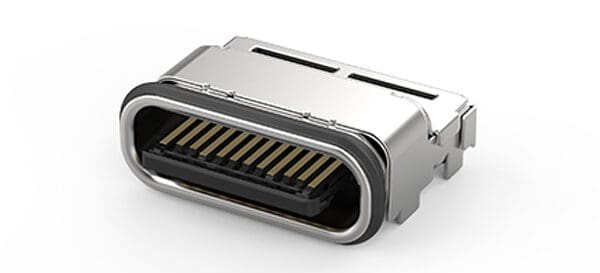
External USB-C Connectors, like ATTEND’s USB4 Gen3 IP68 Waterproof Connector address AI data export and connectivity revolution.
How are connectors involved with the addition of AI?
Connectors are no longer merely physical connections; they become high-bandwidth, low-noise data superhighways. From a design standpoint, they must support data transmission rates of tens of Gb/s between AI chips. Optimizing crosstalk and reflections to ensure stable transmission and low-latency performance during high-speed computation is a bigger job, as is managing the heat generated by AI chip operation, which requires effective conduction. Connector structural design, including soldering interfaces with PCBs, must also consider thermal conduction paths. In addition, AI computation is extremely power-intensive. Pogo pins and internal power connectors need to be designed to handle higher and more stable currents to ensure power supply to AI chips.
How do you work with your customers in this space to develop solutions that meet their needs? Are custom solutions involved?
We adopt a highly collaborative, co-design development approach. We participate from the concept design stage, jointly discussing mechanical integration, assembly conditions, and connection interface placement with customers to ensure stable electrical contact and excellent durability within constrained spaces. We work closely with customer engineering teams to define key performance indicators such as contact resistance, durability, shock resistance, and waterproofing. We provide simulation and test data to support design verification.
Based on customers’ product iteration needs, we rapidly provide customized samples and small-batch trial production parts to help customers accelerate overall system integration and functional testing. Our customization development currently focuses on pogo pin connection modules to meet stringent requirements for specific applications regarding space constraints, structural integration, and electrical performance.
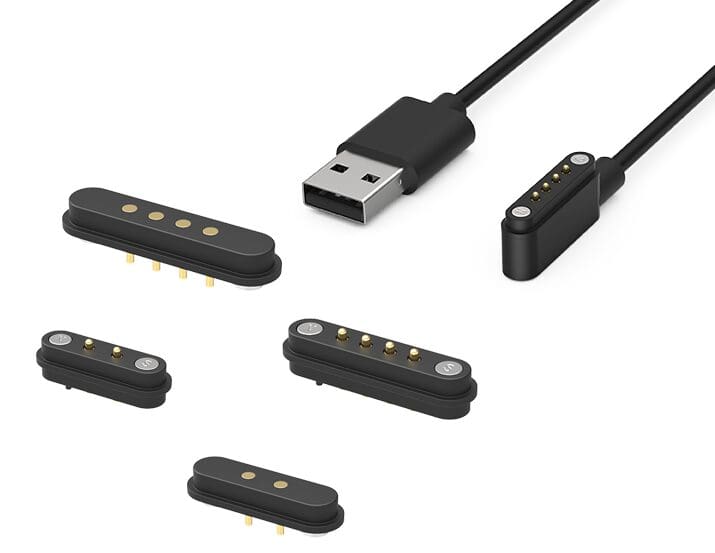
Spring-loaded pogo pins from ATTEND
The main directions for customization include integrated structural design, pitch and travel optimization, waterproof and weather-resistant encapsulation, mixed signal and power configuration, and electrical performance tuning. Through our co-design approach, we work with customer R&D teams to jointly define specifications, participating from the concept stage to prototype testing and mass production introduction, ensuring the final connection module fully meets application requirements.
How would you sum up the importance of connector selection in the successful development of smart glasses?
The connection challenge in smart glasses is a design art. Many people may think connectors are merely supporting actors in electronic products, but in the smart glasses domain, they are key in determining success or failure. Designers must make trade-offs between optics, batteries, computing chips, and connectors within the extremely limited frame space. The connector engineer’s task is to yield as much space as possible without sacrificing performance. An excellent miniature connector might free up a few cubic millimeters for the battery, enough to provide users with several additional hours of battery life.
As wearable devices in close contact with the human body, connector failures (such as short circuits and overheating) directly affect user safety. Connector material selection, fire rating, and safety margins for current-carrying are subject to more stringent requirements than general consumer electronics.
Miniaturized connectors pose enormous challenges for manufacturing and assembly. Developing connector solutions that are easy for high-precision automated placement, easy to assemble, and easy to repair is a top priority. These factors directly impact the mass production yield and cost of smart glasses. Only when connectors are small enough, fast enough, and reliable enough can users forget their existence and truly focus on the immersive digital experience that smart glasses provide.
Like this article? Check out our Consumer Market Page, and our 2025 Article Archives.
Subscribe to our weekly e-newsletters, follow us on LinkedIn, Twitter, and Facebook, and check out our eBook archives for more applicable, expert-informed connectivity content.
Visit the Preferred Supplier page for ATTEND to learn more about the company and its products.

- Ceramics in Space: BME X7R MLCC - October 20, 2026
- Test & Measurement Product Roundup - October 20, 2026
- Advanced Connectivity-Automation, Robotics, AI, and Machine Learning - October 20, 2026