Featured

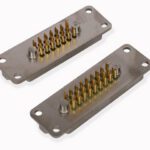
What is a MIL-DTL-28748 Connector?

MIL-DTL-28748 (formerly MIL-C-28748) is a U.S. military specification that defines rectangular, rack-and-panel electrical connectors with non-removable solder-type contacts or removable crimp-type contacts. It is commonly specified for airborne, ground-support, and shipboard equipment as a compact, high-contact-density, multi-source connector interface that is already proven for severe-environment military and aerospace use. Technical Standard MIL-DTL-28748 was first issuedRead More

IMS2026: New Connectors Enable Higher Frequency Performance

5G & 6G, SATCOM, UAVs, quantum computers, and test equipment all push for higher performance. David Shaff’s review of this year’s premier microwave industry event finds new RF interconnects are ready for the next advancements. All sections of the RF/microwave industry came together at the IEEE International MTT Symposia (IMS) in Boston the week ofRead More

EU Battery Regulation Prompts Design Changes for Battery Connectors

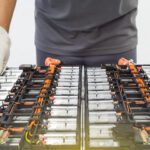
Regulation (EU) 2023/1542 is the EU’s comprehensive batteries regulation, covering safety, ease of use, labeling, and sustainability for batteries and the products they power. Battery connectors are part of the compliance picture. Regulation (EU) 2023/1542 is the EU’s comprehensive batteries regulation, covering sustainability, safety, labeling, and end-of-life management for all battery categories, including consumer, electricRead More

Inside Device Connectivity: The Hidden Enabler of Software‑Defined Vehicles

As the automotive industry moves rapidly toward software‑defined vehicles (SDVs), attention often centers on large‑scale architectural change. Centralized computing, zonal controllers, and high‑speed vehicle networks are widely recognized as foundational to this transition. These shifts are essential—but they do not tell the full story. By Mike Spaccarotella, Product Manager, TE Connectivity, Automotive A less visibleRead More

What is a PBOF Interconnect?

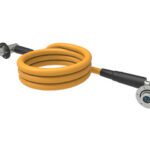
Pressure-balanced oil-filled (PBOF) interconnects are specialized electrical and fiber optic connectors and cable assemblies designed to survive and operate reliably in extreme, high-pressure deep-sea or subsea environments. Flexible elastomeric tubing (the conduit for electric wires and fiber optic lines) filled with a compensating fluid, such as a non-conductive silicone oil (a dielectric and pressure compensator),Read More

XPO, Addressing the I/O Panel Bottleneck

Introduced at OFC 2026, the new XPO pluggable modules provide a solution to the challenges of signal density, thermal management, field serviceability, and power efficiency. Continuing advances in artificial intelligence face multiple constraints including power consumption, access to memory, thermal management, and limitations of copper connectivity. Solving these challenges could still result in hobbled systemsRead More

Bringing Modularity to Multi‑Board Systems

Characterization and modeling of connector losses in internal connector interfaces. Article Contributed By Baptiste Bouix, Product Manager, Würth Elektronik When two or more PCBs need to be interconnected, designers must select the appropriate connectors for their application. However, choosing the wrong connector can compromise the entire design. Larger pitches like 0.8 mm and 1.0 mmRead More

Bulgin’s Thisen Bird Becomes a Whitworth Scholar

Whitworth Scholarships support the engineering careers of apprentices by helping to fund their education. In 1841, Sir Joseph Whitworth, an English engineer, entrepreneur, inventor, and philanthropist, devised the British Standard Whitworth (BSW), the world’s first screw thread standard. The BSW was widely accepted throughout the United Kingdom and internationally, influencing engineering practices globally, and formingRead More

What is an LGA Socket?

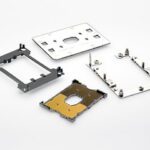
An LGA (land grid array) socket is a zero-insertion-force or low-insertion-force CPU interconnect in which the electrical contacts reside in the socket on the motherboard rather than on the processor package itself. LGA sockets are the dominant CPU interface in desktop, server, and workstation platforms. The socket format allows OEMs to design boards for multipleRead More

COM-HPC 1.3 Takes Computing to the Intelligent Edge

To increase functionality at the edge of the network requires more compute power, higher speeds, and higher I/O, to support more memory, especially with IoT and AI. The original COM-HPC® specification was released by PICMG (PCI Industrial Computer Manufacturers Group) in 2021 to meet the evolving demands of embedded computing. COM-HPC 1.3 is the thirdRead More

Engineering’s Future is AI-Inspired, Human-Led

For many organizations, AI is now starting to move beyond early-stage experimentation and into the realm of quantifiable value creation. Article Contributed By Megan Lampinen, automotive technology writer and future mobility specialist, for TE Connectivity Artificial intelligence is reshaping the global innovation landscape, speeding up the pace of development while improving product quality and operationalRead More

How High-Reliability Connectors Meet the Demands of Satellite Engineering

Satellites must be designed to endure conditions from launch to the complex space environment. High-reliability connectors help these systems operate in various extreme conditions. Article Contributed By iConnexion Spacecraft electronics are held to a standard that few terrestrial systems ever face: years of unattended operation, no possibility of repair, and an environment that actively worksRead More

Analysis of the World’s Top 100 Electronic Connector Manufacturers
x