Cable Protection Starts at the Harness: Braided Sleeving
Modern wire and cable systems are under more pressure than ever, both physically and functionally. Braided sleeving is one value-added solution that can help protect harnesses from common challenges like abrasion, vibration, heat, chemical exposure, and service access. This type of cable protection is especially important in evolving industries such as automotive, electric vehicles, and heavy equipment, where wiring systems are more compact, more exposed, and more critical to overall system reliability. Braided sleeving is gaining attention for its ability to solve these challenges without adding complexity.

Sleeving under the hood. Suppliers like Techflex offer a range of cable sleeving products that are making it easier for engineers to intergrate cable protection into system design.
What’s driving the shift toward braided sleeving?
Today’s electrical systems demand wiring solutions that can sustain continuous movement, harsh environmental conditions, and higher temperatures. Traditional protection methods such as heat shrink, spiral wrap, and conduit often fall short due to their bulk, rigidity, or lack of serviceability. These legacy solutions can restrict flexibility or make rework nearly impossible, especially in confined applications.
When cables are under-protected or left exposed, they are more likely to suffer from abrasion and wear. This often leads to early application failure, unplanned downtime, and higher repair costs. In contrast, braided sleeving provides a flexible and lightweight solution that helps extend the systems lifecycle, simplify maintenance, and reduce total cost. It’s a solution that meets both functional and visual demands, all while adapting to the increasingly complex environments in which modern wiring systems operate.
What sets braided sleeving apart?
Braided sleeving is becoming the go-to choice for cable protection because it solves several design demands at once. Its woven configuration makes it flexible enough to fit around irregular bundles while still holding everything together securely. That combination helps with both physical protection and keeping wiring layouts clean.
Engineers should think about sleeving early in the design process to take full advantage of its benefits. It’s not just about shielding cables from damage; it also helps keep things organized and makes it easier to trace or replace wires later on. That’s especially useful in tight assemblies where space is limited.
The type of sleeving used depends on the overall application requirements. Some sleeving products are designed to handle high temperatures, and others resist wear or block electrical interference. Fiberglass options are often used in engine bays or EV battery packs because they can take the heat. Other sleeves are chosen for flame resistance or EMI shielding, especially in areas where sensitive signals or high voltage need extra protection.
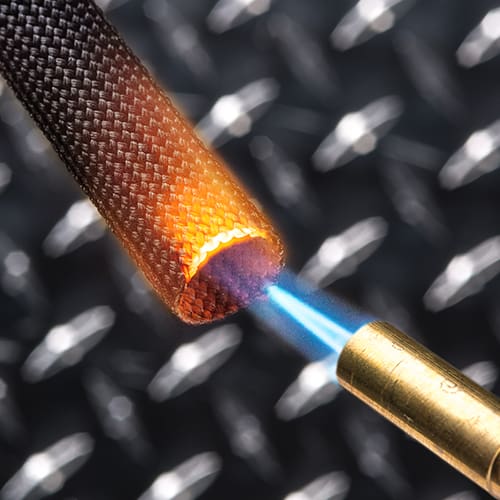
Techflex’s FireFlex and Insultherm braided sleeving from Chief Enterprises withstands flame exposure and temperatures up to 1,200 °F.
When to choose sleeving over other protection
While braided sleeving is not a one-size-fits-all answer, it often outperforms other cable protection strategies in scenarios that require re-entry, flexibility, or layered routing.
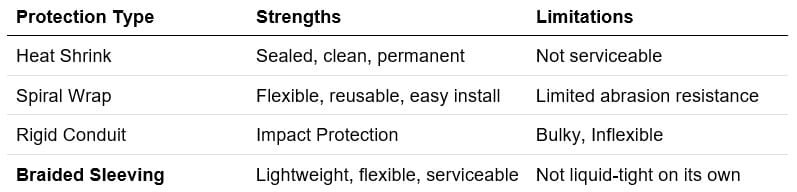
Sleeving as a value-add solution
Braided sleeving is the preferred cable protection method for wire harnesses, recommended by engineers for long-term performance. When specified, sleeving is incorporated as part of the assembly process using pre-cut lengths. This ensures consistency in material quality and fit, especially across harnesses with complex configurations or multiple breakout points.
Sleeving is applied during the build alongside other elements like connectors and labels. This approach allows for accurate alignment at termination points and supports system requirements without adding unnecessary bulk. This integration improves handling during installation and contributes to long-term protection in environments with movement, abrasion, or thermal stress.
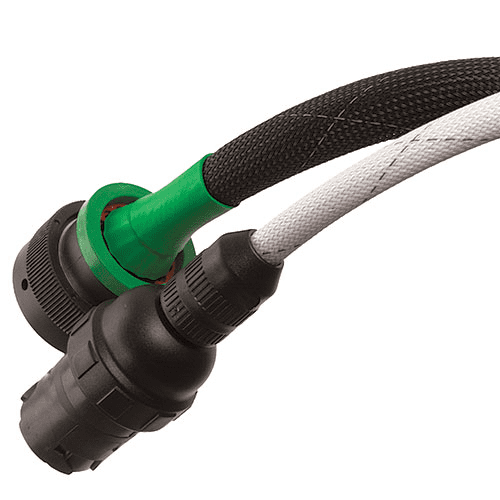
Chief Enterprises delivers sleeving as a value-add solution for long-term performance within a wire harness, using pre-cut lengths provided by Techflex.
Application case study
Not all cable protection challenges come from new technology. They can also arise in the restoration of classic machines. That was the case with a 1971 BSA Lightning motorcycle, part of a long-time family collection that spent years disassembled before being rebuilt from the ground up.
The restoration, led by John Holms and owner Bill Dermody III, involved completely rewiring the bike and protecting its updated electrical system using Flexo Clean Cut sleeving from Techflex. This choice helped shield the harness from common electrical issues historically associated with the Lucas system found on many British bikes of the era. Clean routing and abrasion protection were essential in a frame as compact and exposed as the BSA’s oil-filled chassis.
Now fully restored, the bike is road-ready and currently being ridden by BSA enthusiast Matt Mercier in Gainesville, Florida. It’s a strong example of how braided sleeving brings real benefits to vehicle builds, classic or contemporary, by improving reliability without compromising design.
Case study adapted with permission from Techflex’s BSA Restoration Project.
Looking ahead
As electrification and automation continue to expand across industries, the demands on cable protection are changing. Braided sleeving is no longer a backup option. It’s becoming a standard product in systems where performance and longevity are critical.
Incorporating sleeving during the harness design and assembly process helps support evolving system requirements while simplifying routing and maintenance. Whether applied in electric mobility or specialized machinery, sleeving plays an increasingly important role in building wiring systems that are both resilient and adaptable.
Visit Chief Enterprises to see wire harnessing and other system design solutions.
Like this article? Check out our other articles on EVs and HEVs, our Wire and Cable Assemblies Market Page, and our 2025 Article Archive.
Subscribe to our weekly e-newsletters, follow us on LinkedIn, Twitter, and Facebook, and check out our eBook archives for more applicable, expert-informed connectivity content.

- Sealed Solutions: Why IP-Rated Connectors Are Critical in Transportation - September 30, 2025
- Cable Protection Starts at the Harness: Braided Sleeving - July 29, 2025