Featured Articles
  • What is a Ballast Connector?

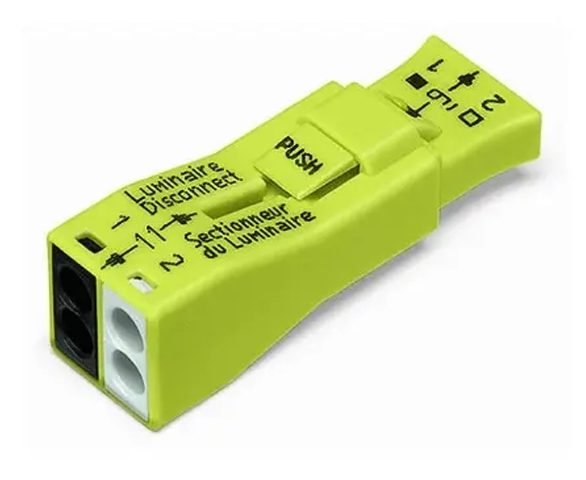
    A ballast connector is used to link a fluorescent or igh-intensity discharge (HID) lamp to its ballast — the device that regulates current and voltage to the bulb. In carrying the controlled electrical current from the ballast to the lamp, the ballast connector ensures stable power delivery. The increase in LED use is driving downRead More

  • What is an Adhesive Mount Antenna?

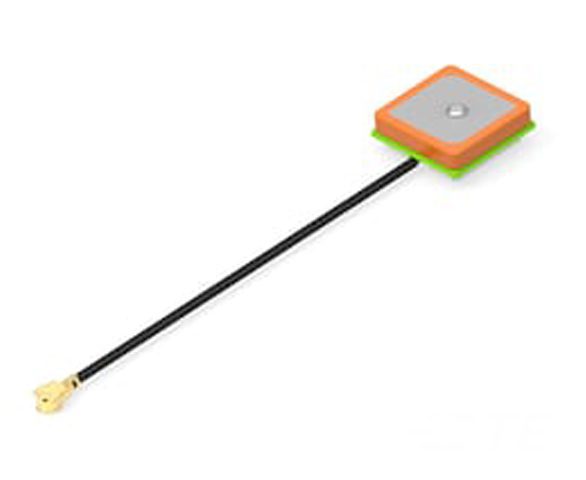
    An adhesive mount antenna is a low-profile external antenna that is attached to a surface using a pressure-sensitive adhesive backing, typically a foam tape. Available in single-band and multiband configurations covering cellular (2G through 5G), GNSS, Wi-Fi, Bluetooth, and combinations, adhesive mount antennas are commonly used for vehicle telematics, fleet tracking, IoT gateways, and assetRead More

Learning Tools

What are 4.3-10, 2.2-5, 1.5-3.5 Connectors?

Meet the Connector: 4.3-10, 2.2-5, 1.5-3.5 Connectors The size of the connectors has often determined the footprint of antennas and base stations. As demand for miniaturization increased, the 4.3-10 connector system was designed to be smaller, while maintaining excellent electrical performance and lowering passive intermodulation (PIM). 2.2-5 and 1.5-3.5 followed as even smaller versions forRead More

Shielded Connectors Improve Electromagnetic Compatibility

Adding EMI shielding to connectors prevents electromagnetic noise from becoming a problem. Signal speeds in all types of electronic devices have been getting faster and faster as devices from smartphones to medical equipment to automobiles process greater volumes of data. Electromagnetic interference (EMI) is a type of unwanted noise in an electrical net generated byRead More

What are Heat Sinks?

Meet the Connector: Heat sinks Heat sinks provide thermal management in electronic or mechanical devices for components that can’t sufficiently dissipate heat to moderate temperature. For example, they are used to cool central processing units (CPUs) and graphics processing units (GPUs) in computers, with power transistors and other high-power semiconductor devices, and for optoelectronics suchRead More

What are Push-Pull Circular Connectors?

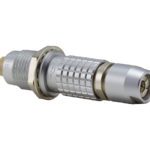
Meet the Connector: Push-pull Connectors Push-pull connectors are circular connectors that have a spring-action cylindrical sleeve surrounding — or within — the integral connector housing that self-latches during mating. The connection is released through a squeeze-and-pull, rotate-and-pull, or other specific unlocking action that prevents accidental disconnection. Push-pull circular connectors are available in numerous sizes, voltages,Read More

What are Loopback Cables?

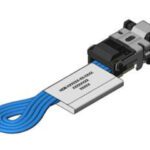
Meet the Connector: Loopback Cables A loopback cable is a diagnostic tool for testing the functionality of a physical port in networking systems. They are used to assess and resolve any issues with a network interface or network interface card (NIC) without linking to an external device. The loopback cable simulates a network connection. ItRead More

What are EN3645 and EN3646 Connectors?

Meet the Connector: EN3645 and EN3646 Connectors EN3645 and EN3646 connectors are named for European technical standards (EN). They are similar to MIL-DTL-38999 Series III and MIL-DTL-26482, respectively. They have additional requirements, specifically in terms of performance under lightning strikes and resistance to fluids. Scoop-proof EN3645 connectors were created for broad use in a wideRead More

What are MIL-DTL-26482 Connectors?  

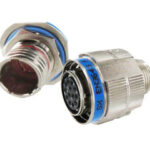
Meet the Connector: MIL-DTL-26482 Connectors The MIL-DTL-26482 specification outlines the requirements for two series of miniature circular harsh environment connectors. These input-output (I/O) connectors are used to connect systems that require electrical power and signal, such as aircraft, ground vehicles, radar systems, shipboard applications, or mobile power-generation systems. MIL-DTL-26482 (originally MIL-C-26482) was developed in the1950sRead More

What are DIN Standard Connectors?

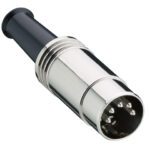
Meet the Connector: DIN Standard Connectors The German standards organization DIN is behind the quality, safety, and interoperability of electronic components used around the world. The term “DIN connector” refers to a wide range of connectors that adhere to standards set by the Deutsches Institut für Normung (DIN) or German Institute for Standardization. DIN standardsRead More

What are ARINC 801 Connectors?  

Meet the Connector: ARINC 801 ARINC 801 connectors are precision fiber optic, multi-channel connectors and termini designed for harsh environments and high-speed, high-performance data transfer. They comply with ARINC 801 specifications and 38999 Series III standards. They feature removable alignment sleeve retainers and have the advantage of fitting standard D38999 shells. Guide pins simplify installationRead More

The Universal Genius of M12 Connector Technology

When it comes to sensor and actuator applications, the M12 circular connector with A-coding is the first choice. Regardless of whether it is a matter of transmitting signals, data, or electrical power, M12 connectors have become indispensable as an interface for device networking. M12 circular connectors have become the common standard for industrial plug connections.Read More

What are 3D-Printed Connectors?

Meet the Connector: 3D-Printed Connectors From EVs to drones to autonomous robots and more, electrification is creating a demand for connectors that can be produced quickly and economically in small volumes. Suppliers are filling that need with 3D-printed connectors. Typically, the process of manufacturing electronic connectors involves injection molding. Creating the steel molds, or tooling,Read More

What are LVDT Sensors?

Meet the Connector: LVDT sensors An LVDT (linear variable differential transformer) is a commonly used metrology tool. It is referred to as a sensor or transducer (a device that can transform one form of energy into another). In this case, it transforms linear motion into an electrical signal. Use of an LVDT is a highlyRead More

2026 World Connector Market Handbook 2025-2031F
x