
Featured Articles
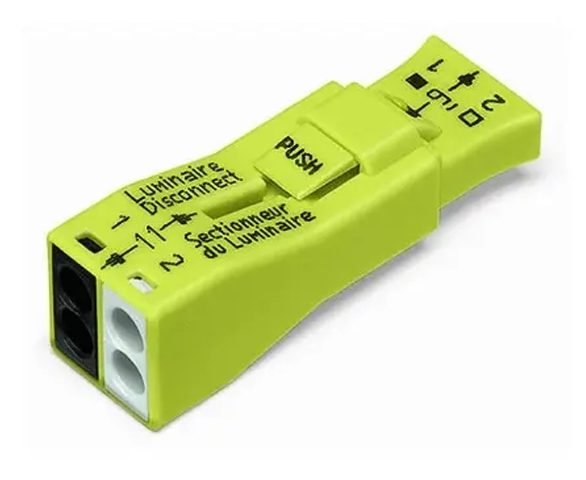
  • What is a Ballast Connector?

    A ballast connector is used to link a fluorescent or igh-intensity discharge (HID) lamp to its ballast — the device that regulates current and voltage to the bulb. In carrying the controlled electrical current from the ballast to the lamp, the ballast connector ensures stable power delivery. The increase in LED use is driving downRead More

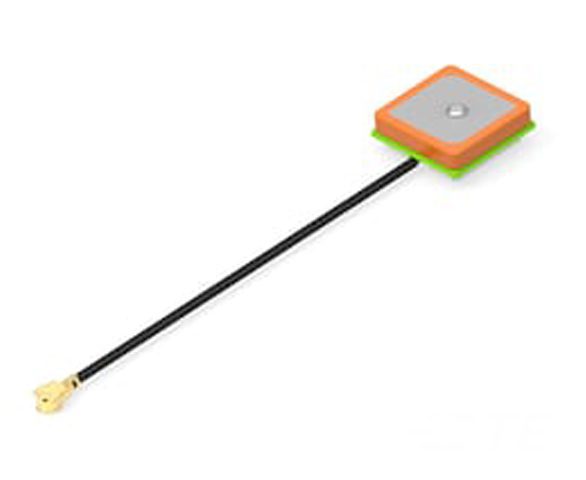
  • What is an Adhesive Mount Antenna?

    An adhesive mount antenna is a low-profile external antenna that is attached to a surface using a pressure-sensitive adhesive backing, typically a foam tape. Available in single-band and multiband configurations covering cellular (2G through 5G), GNSS, Wi-Fi, Bluetooth, and combinations, adhesive mount antennas are commonly used for vehicle telematics, fleet tracking, IoT gateways, and assetRead More

Learning Tools

Harsh Environment Connectors: Standards vs. Real-World

Technical or MIL-Spec standards are often the minimum criteria for compliance. When the real expectation is performance beyond a standard, innovative, faster, and longer-lasting components are needed. Aerospace, defense, and industrial customers continually raise the bar for their performance requirements for rugged duty and harsh environment connectors. Not only must the current requirements be met,Read More


What are Expanded Beam Connectors?

Meet the Connector: Expanded Beam Connectors Datacom and telecom systems originally relied on physical contact fiber optic connectors, which worked well in data centers and other controlled, protected locations. As the need for this type of connection extended to rugged environments, such as civil and military aerospace, military ground applications, naval systems, industrial sites, andRead More

First Mate Last Break Connectors Boost Safety and Reliability

A surgical device manufacturer needed a connector with a mixed configuration of power and data contacts to pair with a 12-foot silicone overmolded cable assembly, making autoclave sterilization difficult. FMLB connectors met the challenge. To choose the best connector for a medical device, a designer must move through a maze of often conflicting requirements. ARead More

What are AISG Interconnects?

Meet the Connector: AISG Interconnects AISG interconnects are circular connectors and cables used in telecommunications to connect antennas, amplifiers, and sensors to controllers, usually base stations, such as in 5G networks and various cell tower equipment. AISG interconnects are named for the Europe-based Antenna Interface Standard Group, which develops the standards that define the physicalRead More

Design Planning to Insure Performance in Harsh Environments

The range and expansion of electronic applications today has extended the need for analysis and preparation of circuit designs to survive new operating settings in extreme harsh environments. Navigation electronics that have been employed in automobiles for navigating our city streets are now playing a role in deep space exploration. As technologies move into newRead More

What are Jam Nut Connectors?

Meet the Connector: Jam Nut Connectors Jam nut connectors feature a jam nut (hex nut) that screws onto a circular connector’s threads to mount it and secure the electrical connection. Jam nut connectors are used to save space in crowded panels, walls, or boxes. They also improve stability, making them an ideal choice for applicationsRead More

What are Solderless Terminals? 

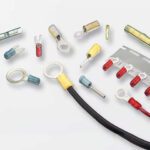
Meet the Connector: Solderless Terminals Solderless terminals provide a simplified wire joining solution. Whereas soldering provides a permanent connection, solderless terminals are advantageous in applications where connections may need to be disconnected for repair or if a change in design or components is imminent. TE Connectivity pioneered crimping technology and termination products in the 1940s,Read More

Do You Know Basic Connector Attributes?

Guidelines for Connector Specification During Product Design Connectors, unfortunately, may contribute to an unacceptably high product failure rate. One reason for this is that connectors are typically a low priority in the initial design phase of the system. This can lead to a design engineer getting boxed in with limited connector space and access ifRead More

What are Nano-D Connectors?

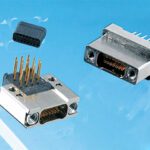
Meet the Connector: Nano-D Nano-D connectors, along with Micro-D connectors, were developed in the 1970s as a variation of D-sub (D-subminiature) connectors. ITT Cannon (formerly Cannon) holds the trademark for the D-sub and its smaller variants, although other companies offer their own compatible versions. Like the Micro-D and D- sub connectors before it, the Nano-DRead More

What are Mini-FAKRA Connectors?

Meet the Connector: Mini-FAKRA Connectors Mini-FAKRA Connectors are a scaled down version of the popular FAKRA connector that is used in automotive as well as personal electric vehicles (PEVs) and light electric vehicles (LEVs) because of their small size and lightweight, which is especially prized in electric mobility applications. Mini-FAKRA High Speed Mini-FAKRA (HFM) connectorsRead More

What are SFP (Small Form Factor Pluggables)?

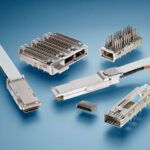
Meet the Connector: SFP (Small Form-Factor Pluggable) An SFP (small form-factor pluggable) is a hot-pluggable transceiver that allows devices to communicate with one another through data transmission. SFPs provide the required optical or electrical reach via copper or fiber optic cables. SFPs transmit and receive data at the same time, eliminating the need for additionalRead More

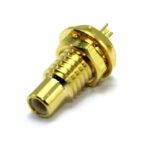
What are SMB/SMC Connectors?

Meet the Connector: SMB/SMC Connectors The SMB (Sub-Miniature type B) and SMC (Sub-Miniature type C) coaxial RF connectors were first developed in the 1960s as sub-miniature connectors for fitment on RF cable and equipment. The SMB offers quick connect/disconnect snap-on mating, while the SMC has a #10-32UNF-threaded screw-type coupling mechanism that is suitable for high-vibration,Read More

2026 World Connector Market Handbook 2025-2031F
x